
Schalow's Turaco
Tauraco schalowi
Order: Musophagiformes / Family: Musophagidae
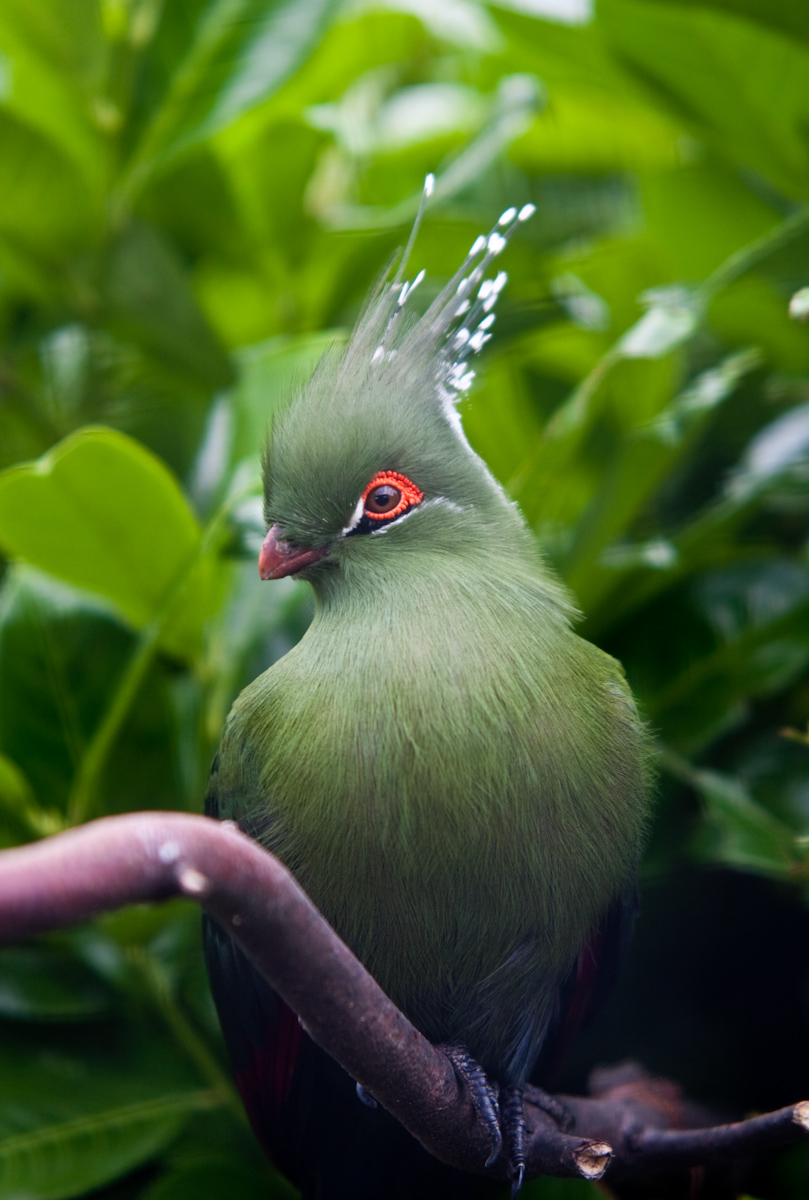
Wikimedia Commons
About the Schalow's Turaco
Schalow's Turaco (Tauraco schalowi) is a captivating bird native to the central and southern regions of Africa. Known for its striking appearance, this species plays a significant ecological role as both a seed disperser and a part of the food web. Occupying woodlands and forest edges, the Schalow's Turaco is particularly found in countries such as Zambia, Angola, and the Democratic Republic of the Congo. These birds are not only visually stunning but also contribute to the ecological dynamics of their habitats. Their presence indicates healthy forest environments, as they rely on fruit-bearing trees and shrubs for sustenance. The turacos are active throughout the year, with no significant migrations observed, although they may undertake local movements in search of food. Schalow's Turaco exhibits seasonal behaviors, particularly during the breeding season when pairs become more conspicuous. As a member of the Musophagidae family, this bird shares its lineage with other fruit-loving turacos. Schalow's Turaco stands out due to its unique coloration and longer tail feathers compared to other turaco species. The bird's vivid red primary feathers become visible in flight, providing a striking contrast to its predominantly green body. In their natural habitats, these turacos contribute to forest regeneration through seed dispersal, a process critical for maintaining biodiversity. Schalow's Turaco is an essential part of the avian community, playing a vital role in its ecosystem. Observing these birds in their natural setting offers insight into the health of African woodlands and highlights the importance of conserving their habitats.
The Schalow's Turaco belongs to the family Musophagidae, within the order Musophagiformes. These birds typically live 10-14 years, with a maximum recorded of 17 years..
How to Identify a Schalow's Turaco
Schalow's Turaco is readily identifiable by its vibrant green plumage and distinctive crest. The adult bird's body is a rich, leafy green, with a white-tipped crest that adds an elegant touch to its profile. The most striking field mark is the crimson primaries, visible in flight, contrasting sharply with the green. Juvenile Schalow's Turacos tend to have duller plumage, with less pronounced red in the wings. Both males and females look similar, making gender differentiation in the field challenging without behavioral cues. Confusion might arise with other turaco species, especially the Livingstone's Turaco, but Schalow's can be distinguished by its longer tail and slightly different vocalizations. In flight, Schalow's Turaco presents a compact silhouette with rounded wings and a long, trailing tail, often seen gliding between trees. When perched, they exhibit an upright posture, often remaining still and blending into the foliage, making them challenging to spot despite their vivid colors.
Having trouble telling birds apart? Upload a photo to our bird identification tool for an instant species match.
Schalow's Turaco Habitat and Range
Preferred Habitat
Schalow's Turaco primarily inhabits woodlands and forest edges, thriving in areas rich in fruit-bearing vegetation. These birds are most commonly found at elevations ranging from 1,000 to 2,500 meters. They prefer areas with a dense canopy that provides ample cover and feeding opportunities. While primarily rural, Schalow's Turaco can occasionally be found near urban areas if suitable tree cover exists. Seasonal habitat shifts are minimal, with the turacos generally remaining within their established territories throughout the year. Their presence in a habitat is often indicative of a healthy ecosystem with a diverse range of fruiting trees and shrubs.
Geographic Range
The range of Schalow's Turaco spans several countries in central and southern Africa, including Zambia, Angola, and the Democratic Republic of the Congo. These birds are non-migratory, maintaining year-round territories. Schalow's Turaco's population density tends to be higher in regions with abundant fruit resources and suitable nesting areas. They do not follow specific migration corridors, but may undertake short movements locally in response to variations in food availability. Their distribution is relatively stable, with no significant range expansions or contractions reported in recent years.
Want to know which birds visit your area? Browse our backyard birds by location guides for region-specific species lists.
What Does the Schalow's Turaco Eat?
The diet of Schalow's Turaco is predominantly composed of fruits, making it an important frugivore in its ecosystem. It favors berries and figs, which are abundant in its forested habitats. Schalow's Turaco also consumes flowers and leaves occasionally, supplementing its diet with these plant materials. In the dry season, when fruits are less abundant, the turaco may expand its diet to include insects and other small invertebrates, showcasing its adaptability. Foraging usually occurs in the early morning and late afternoon, when the bird searches for ripe fruits by hopping through branches and using its strong bill to pluck food. Prey size is typically small, in keeping with the bird's primarily frugivorous diet.
Schalow's Turaco Behavior and Social Structure
Schalow's Turaco exhibits a social structure that includes both solitary and paired behaviors. During the breeding season, pairs become more territorial, often engaging in vocal displays to assert their dominance. Courtship involves mutual preening and feeding, strengthening the bond between mates. Outside the breeding season, Schalow's Turacos may form small, loose flocks, particularly when feeding. They exhibit strong territorial behavior, defending prime feeding areas against intruders. Predators include raptors and larger mammals, prompting Schalow's Turaco to use its strong flight ability and dense foliage for cover. The daily activity pattern includes periods of rest during the hottest parts of the day, with increased activity in the cooler morning and late afternoon hours.
Schalow's Turaco Nesting and Reproduction
Schalow's Turaco constructs a platform nest using twigs and leaves, typically located high in a tree to avoid ground-dwelling predators. The nest is often well-concealed within the dense canopy. A typical clutch consists of two to three eggs, which both parents incubate for approximately 22 to 24 days. After hatching, the chicks are altricial, requiring significant care and feeding from both parents. Fledging occurs around four weeks after hatching, with young birds remaining dependent on their parents for several additional weeks. Schalow's Turaco generally raises one to two broods per year, depending on food availability and environmental conditions.
Schalow's Turaco Sounds and Vocalizations
The primary song of Schalow's Turaco is a series of repetitive, resonant calls that carry well through the forest. These calls have a rhythmic quality, often described as a deep 'kow-kow-kow' sound. The turaco also produces sharp, alarm calls that alert others to potential threats. During the dawn chorus, their calls contribute significantly to the soundscape of their forest habitat. Compared to other bird sounds, the Schalow's Turaco's vocalizations can be likened to a mix of cackles and squawks, making them quite distinctive and useful for identification.
Interesting Facts About the Schalow's Turaco
- 1Schalow's Turaco is known for its striking crimson flight feathers, which contain a unique copper pigment found only in turacos.
- 2The bright green coloration of Schalow's Turaco comes from a pigment called turacoverdin, rare in the bird world.
- 3Unlike many birds, Schalow's Turaco has a unique toe arrangement, with the outer toe able to rotate backward for better grip.
- 4Schalow's Turaco can often be heard before it is seen, thanks to its loud and distinctive calls that resonate through the forest.
- 5Despite being brightly colored, Schalow's Turaco can blend into the foliage, making it challenging to spot in the dense canopy.
- 6Turacos like Schalow's are one of the few bird groups that can produce true green and red colors through pigments rather than structural coloration.
- 7Schalow's Turaco plays a crucial ecological role by dispersing seeds, helping maintain the health and diversity of its forest habitat.
Schalow's Turaco Conservation Status
Currently, Schalow's Turaco is classified as Least Concern by the IUCN, with a stable population trend. Primary threats include habitat destruction due to logging and agricultural expansion, which reduce the availability of suitable nesting and feeding sites. Conservation efforts focus on habitat protection and the establishment of protected areas to ensure the preservation of forest environments. Historically, the population of Schalow's Turaco has remained relatively stable, though localized declines have occurred where deforestation is significant.


