Shelley's Crimsonwing
Cryptospiza shelleyi
Order: Passeriformes / Family: Estrildidae

Wikimedia Commons
About the Shelley's Crimsonwing
Shelley's Crimsonwing (Cryptospiza shelleyi) is an enchanting bird species belonging to the family Estrildidae. Renowned for its vivid crimson plumage, this species resides primarily in the montane forests of Central Africa, specifically in regions such as the Albertine Rift montane forests. Found in countries including Uganda, Rwanda, and the eastern Democratic Republic of the Congo, Shelley's Crimsonwing thrives in dense, high-altitude forest habitats. This bird's range is restricted, making sightings particularly prized among bird enthusiasts. Its ecological role within these forests is significant, as it contributes to seed dispersal through its diet, which primarily comprises seeds and small fruits.
Seasonally, Shelley's Crimsonwing displays variations in its activity patterns, with breeding typically occurring during the rainy season when food resources are abundant. This species' breeding behavior is marked by monogamous pairings and intricate courtship displays. The male's vibrant plumage plays a crucial role in attracting a mate, while both parents participate in rearing their young. Shelley's Crimsonwing is an integral part of its ecosystem, with its presence indicating the health of its forest habitat.
Despite its vibrant appearance, Shelley's Crimsonwing faces several conservation challenges, primarily due to habitat loss and fragmentation. The dense forests it inhabits are under threat from logging, agricultural expansion, and human encroachment. As such, conservation efforts are crucial to preserving the delicate balance of these montane ecosystems. Shelley's Crimsonwing serves as both an ambassador for its environment and a reminder of the biodiversity present within the African montane forests.
The Shelley's Crimsonwing belongs to the family Estrildidae, within the order Passeriformes. These birds typically live average 3-5 years, maximum recorded to 7 years..
How to Identify a Shelley's Crimsonwing
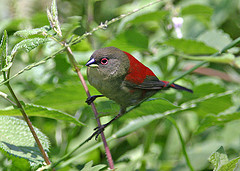
Shelley's Crimsonwing is a small, striking bird characterized by its vivid crimson plumage, which covers the head, breast, back, and rump. The wings and tail exhibit a darker, almost blackish tint, providing a dramatic contrast to the bird's bright red body. In adult males, the intensity of the crimson is particularly notable, making them easier to distinguish from the females, which may possess slightly duller hues.
Juvenile Shelley's Crimsonwings often display a more subdued coloration, with brownish tones replacing the vibrant reds seen in adults. This coloration provides better camouflage in their densely forested environments, offering protection from predators. In the field, observers should note the bird's petite size and delicate build, which are typical of many estrildid finches.
Though similar in appearance to other crimsonwing species, such as Jameson's Crimsonwing, Shelley's Crimsonwing can be identified by its specific combination of plumage and habitat preference. Observing the bird's flight pattern, which is characterized by rapid, fluttering wingbeats and brief glides, can also aid in identification. When perched, Shelley's Crimsonwing often adopts a slightly upright posture, accentuating its slender form.
Having trouble telling birds apart? Upload a photo to our bird identification tool for an instant species match.
Shelley's Crimsonwing Habitat and Range
Preferred Habitat
Shelley's Crimsonwing predominantly inhabits dense montane forests within the Albertine Rift region. These forests, rich in biodiversity, provide an ideal environment for the species, with an abundance of seeds and fruits essential to their diet. The bird typically resides at elevations ranging from 1,500 to 3,000 meters, where the canopy offers both food resources and protection from predators.
Seasonal variations can influence the specific habitat preferences of Shelley's Crimsonwing. During the breeding season, they may be found at slightly lower elevations where food is more plentiful. Unlike some other bird species, Shelley's Crimsonwing shows a strong preference for forested environments and is rarely observed in urban or highly disturbed areas.
The preference for dense forest cover means that conservation of their habitat is vital. The health of these montane forests directly impacts the survival of Shelley's Crimsonwing, as the bird's presence is closely tied to the availability of undisturbed forest tracts.
Geographic Range
The range of Shelley's Crimsonwing is relatively restricted, confined to the montane forests of Central Africa. The bird is primarily found within the Albertine Rift, a region known for its rich biodiversity. This area spans across several countries, including Uganda, Rwanda, and the eastern Democratic Republic of the Congo.
Breeding populations of Shelley's Crimsonwing are concentrated within these areas, where the dense, high-altitude forests provide the necessary resources and habitat structure. Unlike some bird species that undertake extensive migrations, Shelley's Crimsonwing is largely sedentary, remaining within its montane forest home year-round.
While the bird's range is limited, certain hotspots for population density exist within protected areas such as Bwindi Impenetrable National Park in Uganda and Volcanoes National Park in Rwanda. These regions offer critical refuge for Shelley's Crimsonwing, safeguarding it from the pressures of habitat loss and human encroachment.
Want to know which birds visit your area? Browse our backyard birds by location guides for region-specific species lists.
What Does the Shelley's Crimsonwing Eat?
The diet of Shelley's Crimsonwing primarily consists of seeds, which form the staple of their nutritional intake. They exhibit a preference for the seeds of various grass species found within their montane forest habitats. Small fruits complement their diet, providing essential vitamins and minerals, especially during breeding season when energy demands increase.
Shelley's Crimsonwing employs a methodical foraging technique, often observed hopping among low shrubs and the forest floor while searching for food. Their small size allows them to access seeds and fruits that larger birds might overlook. This foraging behavior plays a critical role in the dispersal of seeds, contributing to the regeneration of their forest habitat.
During certain times of the year, particularly when seeds are less abundant, Shelley's Crimsonwing may expand its diet to include small insects, providing an additional protein source. This dietary flexibility aids in their survival across seasons, ensuring they can adapt to fluctuations in food availability.
Shelley's Crimsonwing Behavior and Social Structure
Shelley's Crimsonwing exhibits a social yet somewhat secretive behavior, often forming small groups or loose flocks. These flocks typically consist of family units or pairs, reflecting the bird's monogamous breeding nature. During the breeding season, Shelley's Crimsonwing becomes more territorial, with males vigorously defending their nesting sites from intruders.
Courtship displays are a notable aspect of their behavior, with males showcasing their vibrant plumage through a series of fluttering flights and vocalizations to attract females. These displays highlight the male's fitness and ability to provide for offspring. Once paired, both parents share responsibilities in nest building, incubation, and feeding of the chicks.
Shelley's Crimsonwing is generally more active during the early morning and late afternoon, a common pattern among birds inhabiting dense forest environments. Their response to predators includes a variety of alarm calls and evasive maneuvers, often retreating to thicker canopy cover for protection. Despite their vivid coloration, their small size and agility make them adept at evading potential threats.
Shelley's Crimsonwing Nesting and Reproduction
Shelley's Crimsonwing constructs its nest using a variety of natural materials, including grasses, moss, and small twigs. These nests are typically well-concealed within dense foliage or shrubs, providing protection from predators and harsh weather conditions. The choice of nesting site is crucial, as it needs to offer both safety and proximity to food resources.
A typical clutch consists of 3 to 4 eggs, with both male and female participating in incubation duties. The incubation period lasts approximately two weeks, after which the chicks hatch. Both parents are actively involved in feeding and caring for the young, ensuring they receive a diet rich in seeds and insects.
Fledging occurs around three weeks after hatching, with the young birds gradually gaining independence as they learn to forage and fly. Shelley's Crimsonwing may produce one or two broods per year, depending on environmental conditions and food availability, highlighting the importance of preserving their habitat to ensure successful reproduction.
Shelley's Crimsonwing Sounds and Vocalizations
The primary song of Shelley's Crimsonwing is a series of high-pitched trills and whistles that resonate through the forest canopy. This song is both melodious and complex, serving as a means of communication between individuals, particularly during the breeding season.
In addition to their song, Shelley's Crimsonwing produces a variety of call notes. These include short, sharp chips used as contact calls between flock members and softer, more plaintive calls when alarmed or threatened. The bird's alarm calls are particularly distinctive, often increasing in frequency and intensity when predators are near.
During dawn and dusk, Shelley's Crimsonwing may participate in a communal chorus, their songs blending with those of other forest birds to create a symphony of sounds. This behavior is not only an auditory display but also a social activity that strengthens bonds within flocks and aids in territory establishment.
Interesting Facts About the Shelley's Crimsonwing
- 1Shelley's Crimsonwing is named after George Ernest Shelley, a renowned British ornithologist.
- 2The bird's striking red color is due to carotenoid pigments in its diet, similar to flamingos.
- 3Shelley's Crimsonwing is one of the most elusive birds in Africa, making it a coveted sighting for birders.
- 4The Albertine Rift montane forests, home to Shelley's Crimsonwing, are one of the world's most biodiverse regions.
- 5Unlike many finches, Shelley's Crimsonwing rarely visits bird feeders due to its preference for dense forest habitats.
- 6This species' preference for high-altitude forests makes it less susceptible to certain lowland predators.
- 7Shelley's Crimsonwing contributes to forest regeneration through seed dispersal, highlighting its ecological importance.
Shelley's Crimsonwing Conservation Status
Shelley's Crimsonwing is currently listed as Vulnerable on the IUCN Red List, primarily due to its limited range and the ongoing threats to its montane forest habitat. The primary threat to this species is habitat destruction caused by logging, agricultural expansion, and human encroachment. As forests are cleared, the suitable habitat for Shelley's Crimsonwing diminishes, posing a significant risk to its population. Conservation efforts are underway in several regions, with protected areas such as Bwindi Impenetrable National Park providing crucial habitat refuges. These protected areas help mitigate some threats by preserving large tracts of forest. Additionally, community-based conservation initiatives aim to engage local populations in habitat preservation, promoting sustainable land-use practices. Historically, the population trend of Shelley's Crimsonwing has shown fluctuations in response to habitat changes. Continued monitoring and conservation efforts are essential to ensure the species' survival and the preservation of its unique montane forest ecosystem.
Other Estrildidae Species


Birds Similar to the Shelley's Crimsonwing
These species are often confused with the Shelley's Crimsonwing due to similar appearance or overlapping range.