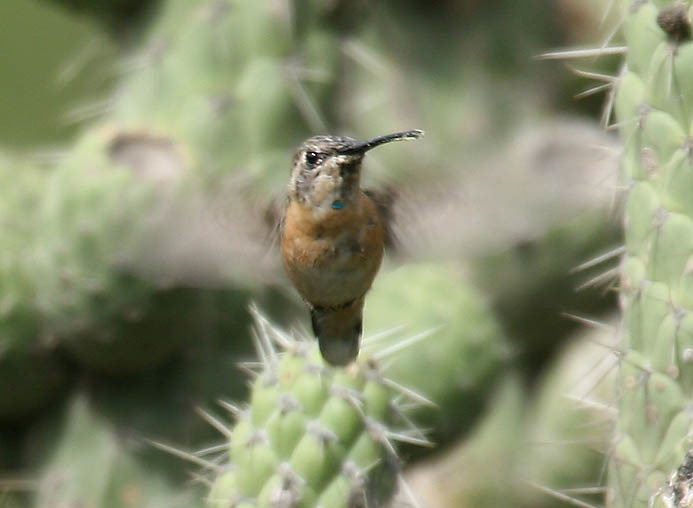
Shining Sunbeam
Aglaeactis cupripennis
Order: Apodiformes / Family: Trochilidae

Wikimedia Commons
About the Shining Sunbeam
The Shining Sunbeam, Aglaeactis cupripennis, enchants birdwatchers with its striking coppery plumage and graceful flight. This species of hummingbird belongs to the family Trochilidae and is a standout feature of the Andean highlands in South America. Found primarily in countries like Colombia, Ecuador, Peru, and Bolivia, the Shining Sunbeam thrives in montane forests and shrublands, particularly favoring the humid, moss-laden cloud forests that drape the eastern slopes of the Andes.
In these ecosystems, the Shining Sunbeam plays a pivotal role as both a pollinator and an indicator of ecological health. Its feeding habits facilitate the pollination of numerous high-altitude flora, contributing to the biodiversity of these mountainous regions. The bird's presence often signals a healthy habitat, as it requires a rich array of flowering plants to sustain its energetic lifestyle.
The Shining Sunbeam exhibits seasonal behaviors that correlate with the availability of its floral food sources. During the wet season, when flowers are abundant, it can be observed actively foraging and exhibiting territorial behaviors. In contrast, during drier periods, the bird may range more widely in search of scarce resources. Despite its small size, it is a resilient and adaptable species, capable of surviving in a variety of microhabitats within its range.
This hummingbird's ecological significance extends beyond its role in pollination. It serves as prey for a variety of forest predators, thus fitting into the larger food web. Its presence also attracts ecotourism, drawing nature enthusiasts and birders eager to witness its shimmering beauty. By understanding the Shining Sunbeam's behaviors and habitats, conservationists can better protect these vital ecosystems.
The Shining Sunbeam belongs to the family Trochilidae, within the order Apodiformes. These birds typically live average 5-6 years, with a maximum recorded of 9 years..
How to Identify a Shining Sunbeam
The Shining Sunbeam, Aglaeactis cupripennis, is distinguished by its vibrant copper-colored back and rump, which catch the sunlight with a striking iridescence. This medium-sized hummingbird measures approximately 11 to 12 centimeters in length, making it slightly larger than many other hummingbird species. Adults possess a white vent and underparts, while the wings and tail exhibit a more subdued brownish tint.
Juveniles resemble adults but may show less brilliance in their plumage until they mature. Both sexes share similar coloration, although females might display slightly less intense copper tones. The bill of the Shining Sunbeam is short and straight, which aids in accessing a variety of flowers for nectar feeding. Its flight silhouette is characterized by rapid wingbeats and agile maneuvers, typical of hummingbirds.
Though often mistaken for other sunbeams or similarly sized hummingbirds, the Shining Sunbeam's unique coloration helps distinguish it from relatives. When perched, it often holds its tail slightly fanned out, showcasing its distinct coppery hues. Birders can best identify this species by observing its behavior and habitat, focusing on the characteristic shimmer of its plumage.
Having trouble telling birds apart? Upload a photo to our bird identification tool for an instant species match.
Shining Sunbeam Habitat and Range
Preferred Habitat
The Shining Sunbeam inhabits montane forests, particularly thriving in the cloud forests of the Andes. These regions, which span elevations from 2,500 to 4,000 meters, provide the humid, lush environments necessary for its survival. The dense vegetation offers abundant nectar sources and nesting sites.
This species exhibits a preference for areas with a rich array of flowering plants, including bromeliads and other epiphytes that clothe tree branches. While primarily found in dense forested areas, the Shining Sunbeam can also be spotted along forest edges and clearings where sunlight can illuminate its plumage.
During seasonal changes, as certain flowers come into bloom, the Shining Sunbeam may shift elevations slightly to follow its food sources. Unlike some hummingbirds, it is less commonly seen in urban or suburban settings, remaining closely tied to its natural, pristine habitats.
Geographic Range
The Shining Sunbeam's range extends across the Andean regions of northern South America. It is predominantly found in Colombia, Ecuador, Peru, and Bolivia. Within these countries, it resides primarily in the high-altitude cloud forests on the eastern slopes of the Andes.
During the breeding season, these hummingbirds can be found in greater densities in areas where flowering plants abound, often at elevations between 2,500 and 4,000 meters. While they do not undertake long-distance migrations, they may engage in altitudinal movements to adapt to seasonal flowering cycles.
Population densities of the Shining Sunbeam can vary, with some regions hosting more abundant populations due to favorable habitat conditions. Areas like the eastern Andes of Ecuador and Peru are considered hotspots for this species, where their presence is a common delight for birdwatchers.
Want to know which birds visit your area? Browse our backyard birds by location guides for region-specific species lists.
What Does the Shining Sunbeam Eat?
The diet of the Shining Sunbeam centers around nectar, which it obtains from a diverse array of flowering plants. This nectar is the primary energy source, and the bird's short, straight bill is well adapted for accessing it. Flowers from genera such as Fuchsia, Bomarea, and Passiflora are particularly favored.
In addition to nectar, the Shining Sunbeam supplements its diet with small insects and spiders, which provide essential proteins. These are often captured in flight or gleaned from foliage during foraging excursions.
Seasonal changes can influence the Shining Sunbeam's diet as the availability of flowering plants fluctuates. During periods of low floral abundance, the bird may rely more heavily on insects to meet its nutritional needs. The Shining Sunbeam typically feeds throughout the day, with heightened activity during early morning and late afternoon when flowers are most nectar-rich.
Shining Sunbeam Behavior and Social Structure
The Shining Sunbeam exhibits fascinating behavioral traits that enhance its survival in the Andean highlands. These birds are generally solitary, though they may form loose associations in areas with high flower densities.
Territoriality is a notable aspect of their behavior. The Shining Sunbeam vigorously defends its chosen feeding territory against intruders, often engaging in aerial chases and vocalizations to deter competitors. This territorial aggression ensures ample nectar resources within its domain.
Courtship displays are less pronounced than in some hummingbird species, but males may perform brief aerial maneuvers to attract females. Once paired, the birds do not form long-term bonds, as is typical in hummingbird species.
In response to predators, the Shining Sunbeam relies on its agility and speed, quickly taking cover in dense foliage. Its daily activities are largely diurnal, with peak feeding times aligning with flower nectar availability. During non-breeding seasons, these birds may travel more extensively within their range in search of food.
Shining Sunbeam Nesting and Reproduction
The nesting habits of the Shining Sunbeam are adapted to its high-altitude environments. Nests are small, cup-shaped structures constructed from plant fibers, moss, and spider silk, providing both strength and flexibility. These nests are typically located on horizontal branches or in sheltered areas of dense vegetation, offering protection from predators and harsh weather.
Females take on the primary responsibilities of nest building, incubation, and chick rearing. A typical clutch consists of two eggs, which are incubated for approximately 15 to 18 days.
After hatching, the altricial chicks remain in the nest for another 20 to 25 days before fledging. During this period, the female diligently feeds her young with regurgitated nectar and insects. The number of broods per year can vary, but generally, the Shining Sunbeam raises one to two broods annually.
Shining Sunbeam Sounds and Vocalizations
The vocalizations of the Shining Sunbeam, while not as elaborate as some songbirds, play a crucial role in communication. Its primary song consists of a series of sharp, metallic chips delivered in rapid succession. These notes, while not melodious, are distinct and can carry over long distances.
In addition to its song, the Shining Sunbeam produces various call notes used in territorial disputes and during interactions with other hummingbirds. These calls are typically short, sharp, and can be likened to the sound of pebbles clicking together.
Alarm calls are employed when predators are nearby, alerting others to potential danger. The dawn chorus, where multiple sunbeams may vocalize simultaneously, occurs at first light and serves to reinforce territorial boundaries.
Interesting Facts About the Shining Sunbeam
- 1The Shining Sunbeam's copper coloration is not due to pigmentation but rather structural coloration, which reflects light to create its iridescent glow.
- 2Unlike many hummingbirds, the Shining Sunbeam does not have a forked tail, which aids its unique flight style.
- 3This species can beat its wings up to 50 times per second, enabling its agile flight through dense Andean forests.
- 4Despite their small size, Shining Sunbeams can consume up to twice their body weight in nectar each day.
- 5The Shining Sunbeam's heart can beat over 1,200 times per minute during flight, a common trait among hummingbirds.
- 6During cold nights, the Shining Sunbeam can enter a state of torpor, reducing its metabolic rate to conserve energy.
- 7The Shining Sunbeam is one of the few hummingbirds that can tolerate higher altitudes, often seen at elevations up to 4,000 meters.
Shining Sunbeam Conservation Status
Currently, the Shining Sunbeam is classified as Least Concern by the IUCN, indicating a stable population trend. However, its habitats face threats from deforestation and agricultural expansion in the Andes. Conservation efforts focus on preserving cloud forests, which are vital not only for the Shining Sunbeam but for numerous other endemic species. Protected areas and national parks across its range, such as Podocarpus National Park in Ecuador, play a crucial role in conservation. Historically, the population of the Shining Sunbeam has remained relatively stable, but ongoing habitat loss necessitates continued vigilance. Conservation organizations work to balance human activities with the need to maintain these biodiverse ecosystems.
Other Trochilidae Species


Birds Similar to the Shining Sunbeam
These species are often confused with the Shining Sunbeam due to similar appearance or overlapping range.