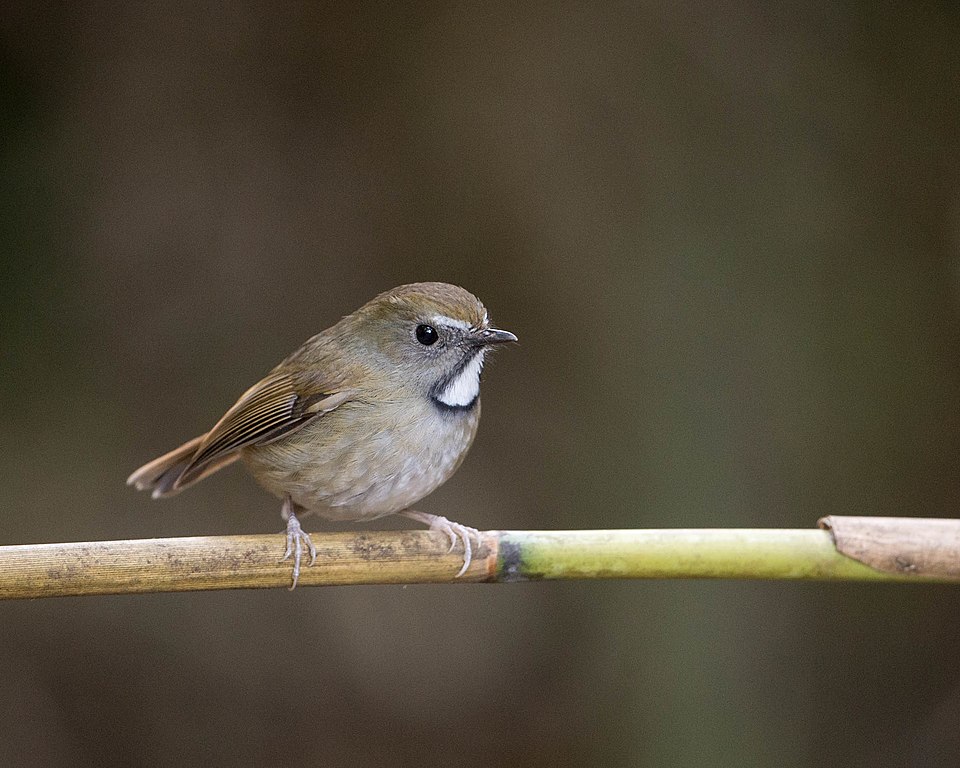
Siberian Blue Robin
Luscinia cyane
Order: Passeriformes / Family: Muscicapidae

Wikimedia Commons
About the Siberian Blue Robin
The Siberian Blue Robin (Luscinia cyane) is a small, migratory songbird belonging to the family Muscicapidae. Revered for its vibrant blue plumage and enchanting song, this species inhabits the dense understory of forests across a wide range of Asia. From the taiga forests of Siberia to the subtropical woodlands of Southeast Asia, the Siberian Blue Robin plays a crucial role in the ecosystem as an insectivore, helping to control pest populations. During the breeding season, this bird makes its home in northern regions such as Siberia, northeastern China, Korea, and Japan. It favors dense, moist forests with plenty of ground cover, where it can forage for insects and other invertebrates. As autumn approaches, the Siberian Blue Robin undertakes a long migration to its wintering grounds in Southeast Asia, including Thailand, Malaysia, and the islands of Indonesia. This seasonal movement is crucial for its survival, allowing the bird to exploit different ecological niches throughout the year. The Siberian Blue Robin is often considered a symbol of pristine forest ecosystems, its presence indicating a healthy, biodiverse environment. As forests face the threat of deforestation and habitat fragmentation, the conservation of this species and its habitat becomes increasingly important. The bird's ecological role extends beyond insect control, as it also participates in seed dispersal, contributing to forest regeneration. The Siberian Blue Robin's migratory habits also highlight the interconnectedness of ecosystems across vast geographic regions. By studying this bird, researchers gain insights into the health of forest ecosystems and the impacts of climate change on migratory patterns. In this way, the Siberian Blue Robin serves as both a subject of scientific inquiry and a symbol of the natural world's intricate balance.
The Siberian Blue Robin belongs to the family Muscicapidae, within the order Passeriformes. These birds typically live average 4-5 years, with a maximum recorded of 8 years..
How to Identify a Siberian Blue Robin
Identifying the Siberian Blue Robin involves noting its vivid coloration and distinct features. Adult males boast a striking cobalt blue plumage on their upperparts, with a contrasting white belly and undertail. Their face features a dark mask, adding to the bird's striking appearance. In contrast, females and juveniles present a more subdued coloration, with olive-brown upperparts and a pale throat. This sexual dimorphism aids birders in distinguishing between genders. The Siberian Blue Robin's flight silhouette is characterized by rapid, low flights through dense underbrush, where it appears more like a darting shadow than a bird in plain view. When perching, it often remains motionless, blending seamlessly into the forest floor, making detection challenging. At times, the Siberian Blue Robin might be confused with the similar-looking, but larger, Blue-and-White Flycatcher. However, the latter's deeper blue hue and more prominent white markings help differentiate the two species. The robin's small size and distinctive posture when foraging on the forest floor further aid in its identification.
Having trouble telling birds apart? Upload a photo to our bird identification tool for an instant species match.
Siberian Blue Robin Habitat and Range
Preferred Habitat
The Siberian Blue Robin thrives in dense, moist forests, particularly favoring areas with thick undergrowth and abundant leaf litter. These environments provide ample cover and feeding opportunities. During the breeding season, it occupies temperate and boreal forests across Siberia, northeastern China, Korea, and Japan. These habitats often feature a mix of deciduous and coniferous trees. As winter approaches, the robin migrates to subtropical and tropical forests in Southeast Asia. In regions such as Thailand, Malaysia, and Indonesia, it utilizes lowland rainforests and montane forests. Despite its adaptability, the Siberian Blue Robin remains largely absent from urban environments, preferring the seclusion offered by remote forested areas. While it can be found at various elevations, it generally prefers lower mountain slopes or valleys, where moisture levels and vegetation density are optimal.
Geographic Range
The breeding range of the Siberian Blue Robin extends across the vast forests of Siberia, northeastern China, Korea, and Japan. In these regions, it occupies dense, moist woodlands during the warmer months, taking advantage of the abundant insect populations. As a long-distance migrant, the Siberian Blue Robin travels thousands of kilometers to reach its wintering grounds in Southeast Asia. Countries such as Thailand, Malaysia, and Indonesia host this species during the colder months, where it inhabits lush rainforests and mountainous regions. Migration corridors often follow the East Asian-Australasian Flyway, with birds passing through China, Vietnam, and the Philippines. Within its range, the Siberian Blue Robin tends to be more common in areas with extensive forest cover, though it can be locally abundant in suitable habitats.
Want to know which birds visit your area? Browse our backyard birds by location guides for region-specific species lists.
What Does the Siberian Blue Robin Eat?
The Siberian Blue Robin primarily feeds on a diet of insects and other small invertebrates, playing a significant role in controlling these populations within its habitat. Common prey items include beetles, ants, spiders, and caterpillars, which it forages from the forest floor. The robin employs a technique known as 'hop-and-peck,' where it hops along the ground, pecking at prey hidden beneath leaves and debris. During the breeding season, its diet remains largely insectivorous, providing the necessary protein for raising young. As it migrates to its wintering grounds, the Siberian Blue Robin may supplement its diet with small fruits and berries, taking advantage of seasonal availability. This dietary flexibility allows it to thrive in diverse environments, from the boreal forests of Siberia to the tropical jungles of Southeast Asia.
Siberian Blue Robin Behavior and Social Structure
The Siberian Blue Robin exhibits a solitary and secretive nature, often remaining hidden within dense vegetation. It defends its territory aggressively during the breeding season, with males singing persistently to ward off rivals and attract mates. The robin's song, a series of melodious notes, resonates through the forest, serving as both a declaration of presence and a lure for potential partners. Courtship displays involve wing quivering and tail fanning, which males perform to showcase their vibrant plumage. Despite its territorial nature, the Siberian Blue Robin joins mixed-species flocks during migration, benefiting from collective vigilance against predators. Daily activity patterns include foraging during the cooler parts of the day, while resting in the shade during midday heat. In response to predators, the robin relies on its camouflage, remaining motionless until the threat passes.
Siberian Blue Robin Nesting and Reproduction
The Siberian Blue Robin constructs its nest on or near the ground, utilizing natural depressions or bank cavities. The nest consists of a compact structure made from twigs, leaves, and moss, lined with finer materials like grass and feathers. Typically, the female selects the nest site and takes the lead in construction, though both parents participate in provisioning. A typical clutch comprises 3-5 eggs, which the female incubates for about 12-14 days. Once hatched, the chicks remain in the nest for approximately 12-15 days, during which both parents provide food and protection. The Siberian Blue Robin usually produces one brood per year, though favorable conditions may allow for a second. Parental roles are well-defined, with the male often defending the territory while the female focuses on incubation and chick-rearing.
Siberian Blue Robin Sounds and Vocalizations
The Siberian Blue Robin's primary song consists of a series of melodious, flute-like notes that rise and fall in pitch. This song is often delivered from a concealed perch within dense foliage, carrying through the forest and serving as both a territorial marker and an attractant for mates. Call notes are sharp and metallic, used primarily for communication between mates or as alarm calls when sensing danger. During the dawn chorus, the robin's song contributes to the symphony of the forest, adding a gentle, rhythmic quality to the morning air. Its vocalizations, though not as varied as some other songbirds, are distinctive and often likened to the sound of a soft, distant flute.
Interesting Facts About the Siberian Blue Robin
- 1The Siberian Blue Robin can travel over 3,000 kilometers during its migration from Siberia to Southeast Asia.
- 2Unlike many songbirds, the Siberian Blue Robin often builds its nest directly on the ground, hidden among dense vegetation.
- 3The robin's bright blue plumage, most vibrant in males, helps it stand out during courtship displays.
- 4Siberian Blue Robins have been observed joining mixed-species flocks during migration, which provides safety in numbers.
- 5This robin is known to participate in the dawn chorus, a natural phenomenon where many bird species sing at the start of the day.
- 6Despite its small size, the Siberian Blue Robin plays a vital role in pest control by consuming a large number of insects.
- 7The robin's secretive nature and preference for dense forest habitats make it a challenging species to observe in the wild.
Siberian Blue Robin Conservation Status
The IUCN currently lists the Siberian Blue Robin as a species of Least Concern, with a stable population trend. Despite this favorable status, the bird faces threats from habitat loss due to deforestation and land conversion for agriculture. Conservation efforts focus on preserving large tracts of forested land, particularly in breeding and wintering areas. Researchers monitor the species to better understand its migratory patterns and ecological requirements. Historically, the Siberian Blue Robin has maintained a relatively stable population, though localized declines may occur due to habitat degradation. Continued conservation actions are necessary to ensure the long-term survival of this visually striking and ecologically important bird.