
Slaty-backed Flycatcher
Ficedula sordida
Order: Passeriformes / Family: Muscicapidae

Wikimedia Commons
About the Slaty-backed Flycatcher
The Slaty-backed Flycatcher, scientifically known as Ficedula sordida, is a small passerine bird belonging to the Muscicapidae family. This bird predominantly inhabits the dense forests of the Himalayan foothills, extending across regions such as Bhutan, Nepal, and northern India. It also frequents areas in Myanmar and parts of southeastern Tibet. The species thrives in subtropical or tropical moist montane forests, often found at elevations ranging from 1,500 to 3,500 meters. The Slaty-backed Flycatcher plays a crucial role in controlling insect populations in these ecosystems, as its diet primarily consists of small insects and arthropods. During the breeding season, typically spanning from April to July, these flycatchers are more conspicuous due to their vocalizations and territorial displays. Outside the breeding season, they may descend to lower altitudes, adapting to the availability of food resources. The ecological significance of the Slaty-backed Flycatcher extends beyond its dietary habits, as it also serves as an indicator of forest health. Its presence in a particular area often suggests a well-preserved forest ecosystem. Conservationists monitor populations of the Slaty-backed Flycatcher to assess the impacts of deforestation and habitat degradation in its native range. Despite being relatively common within its range, habitat loss poses a significant threat to its populations. The Slaty-backed Flycatcher's adaptability to different forest types, although primarily montane, allows it to persist in varying environmental conditions, but ongoing habitat fragmentation could challenge this adaptability. Understanding the behavior and ecological role of Ficedula sordida helps in formulating effective conservation strategies to protect not only this species but the broader montane forest communities in which it resides.
The Slaty-backed Flycatcher belongs to the family Muscicapidae, within the order Passeriformes. These birds typically live average 3-5 years, with a maximum recorded of 7 years.
How to Identify a Slaty-backed Flycatcher
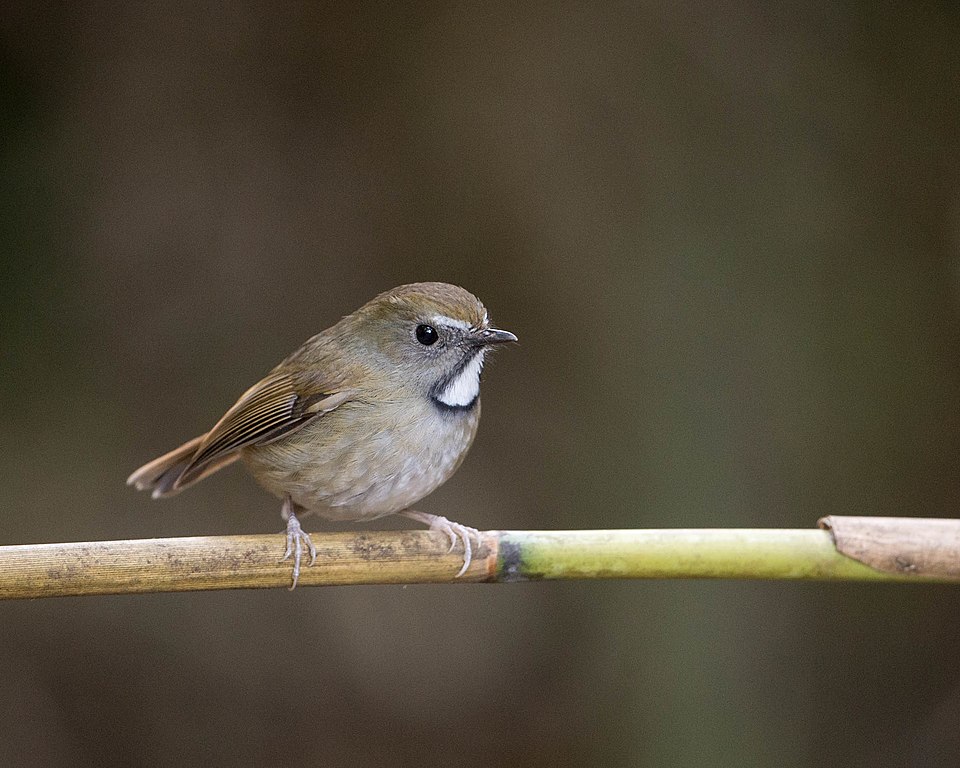
Adult Slaty-backed Flycatchers exhibit a distinctive bluish-gray plumage on their upperparts, which contrasts with their pale underparts. Males are particularly striking, with a deep slate-blue back and a subtle white patch on the lower face, making them easier to identify. Females, though less vibrant, share the bluish tones but have a more muted and brownish appearance. Juvenile Slaty-backed Flycatchers possess a mottled brown and gray plumage, gradually acquiring adult coloration as they mature. In flight, the Slaty-backed Flycatcher displays a characteristic flitting pattern, often interspersed with short glides. Its wings are relatively short and rounded, while the tail is slightly forked, aiding in agile maneuvering. Perched, the bird often adopts a semi-upright stance, typical of many flycatchers, as it surveys its surroundings for prey. A potential source of confusion arises when distinguishing this species from the Blue-and-white Flycatcher, which shares overlapping habitats. However, the Slaty-backed Flycatcher lacks the contrasting black and white patterning of its relative, aiding in field identification.
Having trouble telling birds apart? Upload a photo to our bird identification tool for an instant species match.
Slaty-backed Flycatcher Habitat and Range
Preferred Habitat
The Slaty-backed Flycatcher primarily inhabits subtropical and tropical moist montane forests, with a preference for dense, evergreen foliage. These birds are commonly found at elevations between 1,500 and 3,500 meters, frequenting regions such as the Eastern Himalayas and adjacent mountain ranges. They show a preference for forest edges and clearings, where insect activity is often higher. During non-breeding seasons, they may descend to lower altitudinal zones in search of food, indicating some flexibility in habitat use. While the Slaty-backed Flycatcher is not typically associated with urban environments, it can occasionally be observed in forested regions near rural areas. Seasonal shifts in habitat occur as the flycatcher follows food availability, moving vertically along the mountains.
Geographic Range
The breeding range of the Slaty-backed Flycatcher extends across the Himalayan range, from eastern Nepal through Bhutan to northeastern India, including the states of Sikkim and Arunachal Pradesh. It is also found in parts of southeastern Tibet and northern Myanmar. During winter migration, the flycatcher moves to lower altitudes, although precise wintering locations are less well-documented. It is believed to spend the non-breeding season within its breeding range, albeit at reduced elevations. Population density is notably higher in undisturbed montane forests, where habitat conditions remain optimal. However, the species can also be found in lower density in secondary forests and disturbed areas, provided there is sufficient vegetative cover.
Want to know which birds visit your area? Browse our backyard birds by location guides for region-specific species lists.
What Does the Slaty-backed Flycatcher Eat?
The Slaty-backed Flycatcher's diet consists primarily of insects and small arthropods, which it captures in mid-air with remarkable agility. Common prey items include flies, beetles, and small moths. During the breeding season, the bird's diet may expand to include caterpillars and other larval forms, providing essential protein for nestlings. The flycatcher employs a sit-and-wait foraging strategy, often perching silently before darting out to snatch moving prey. This method is particularly effective in forest edge habitats, where insect activity is concentrated. Seasonal dietary variation occurs in response to prey availability, with the bird adjusting its foraging locations accordingly. The Slaty-backed Flycatcher typically feeds during daylight hours, taking advantage of periods when insects are most active.
Slaty-backed Flycatcher Behavior and Social Structure
The Slaty-backed Flycatcher exhibits solitary behavior during most of the year, except during the breeding season when it becomes more territorial. Males engage in elaborate courtship displays, singing persistently and performing aerial acrobatics to attract females. These displays often involve rapid wing flicks and short flights punctuated by song bursts. Territorial males actively defend their chosen breeding areas, engaging in chases and vocal confrontations with intruding rivals. Outside the breeding season, the Slaty-backed Flycatcher may join mixed-species foraging flocks, although it generally maintains a degree of independence within such groups. In response to predators, the flycatcher relies on its agility, often retreating to dense foliage where it becomes difficult to spot. Daily activity patterns revolve around foraging and territory maintenance, with peak activity in the early morning and late afternoon.
Slaty-backed Flycatcher Nesting and Reproduction
The Slaty-backed Flycatcher constructs cup-shaped nests, typically located on horizontal tree branches or within dense shrubbery. Nests are crafted from a variety of materials including moss, lichen, and fine grasses, bound together with spider silk for structural integrity. The chosen nest sites provide concealment from predators and are usually positioned at moderate heights within the forest canopy. Clutch size ranges from 3 to 5 eggs, with both parents participating in incubation, which lasts approximately 12 to 14 days. After hatching, the nestlings remain in the nest for another 14 to 16 days before fledging. Parental care continues post-fledging, with the young dependent on adults for food and protection for several more weeks. The Slaty-backed Flycatcher typically produces two broods per breeding season, depending on environmental conditions.
Slaty-backed Flycatcher Sounds and Vocalizations
The primary song of the Slaty-backed Flycatcher is a melodious sequence, characterized by a series of clear, fluty notes delivered at a steady pace. This song serves both territorial and courtship functions, often beginning with a soft trill followed by a crescendo of whistles. The bird's call notes are short and sharp, often described as 'chip' or 'chick' sounds, used for communication between mates or to signal alarm. During the dawn chorus, males become particularly vocal, establishing territory boundaries through song. Compared to the more complex songs of some sympatric flycatchers, the Slaty-backed Flycatcher's vocalizations are simpler but carry over long distances in its montane habitat.
Interesting Facts About the Slaty-backed Flycatcher
- 1The Slaty-backed Flycatcher is named for its distinctive slate-colored back, a trait less common among flycatchers.
- 2Unlike many flycatchers, the Slaty-backed Flycatcher remains within a relatively restricted geographic range, limited to the Himalayas and nearby regions.
- 3During courtship, male Slaty-backed Flycatchers perform impressive aerial displays, showcasing their agility and stamina.
- 4Although primarily insectivorous, the Slaty-backed Flycatcher will occasionally consume berries, particularly during food-scarce periods.
- 5The species' preference for montane forests makes it an important bioindicator for the health of these ecosystems.
- 6Slaty-backed Flycatchers are known for their bold approach to defending territory, often engaging in vocal duels with rivals.
- 7Despite their relatively muted coloration, these birds are highly effective at evading predators thanks to their quick, darting flight.
Slaty-backed Flycatcher Conservation Status
The Slaty-backed Flycatcher currently holds a status of Least Concern on the IUCN Red List, with populations considered stable overall. However, localized declines have been noted due to habitat loss from logging and agricultural expansion in some regions. Conservation efforts focus on preserving the montane forest habitats critical to the species' survival. Protected areas across its range, such as national parks and wildlife reserves, play a significant role in mitigating habitat destruction. Monitoring population trends remains essential, as any significant shifts could necessitate reevaluation of conservation priorities. Historical population data is limited, but the species has shown resilience in adapting to secondary forests, provided they retain sufficient structural complexity.
Other Muscicapidae Species


Birds Similar to the Slaty-backed Flycatcher
These species are often confused with the Slaty-backed Flycatcher due to similar appearance or overlapping range.

