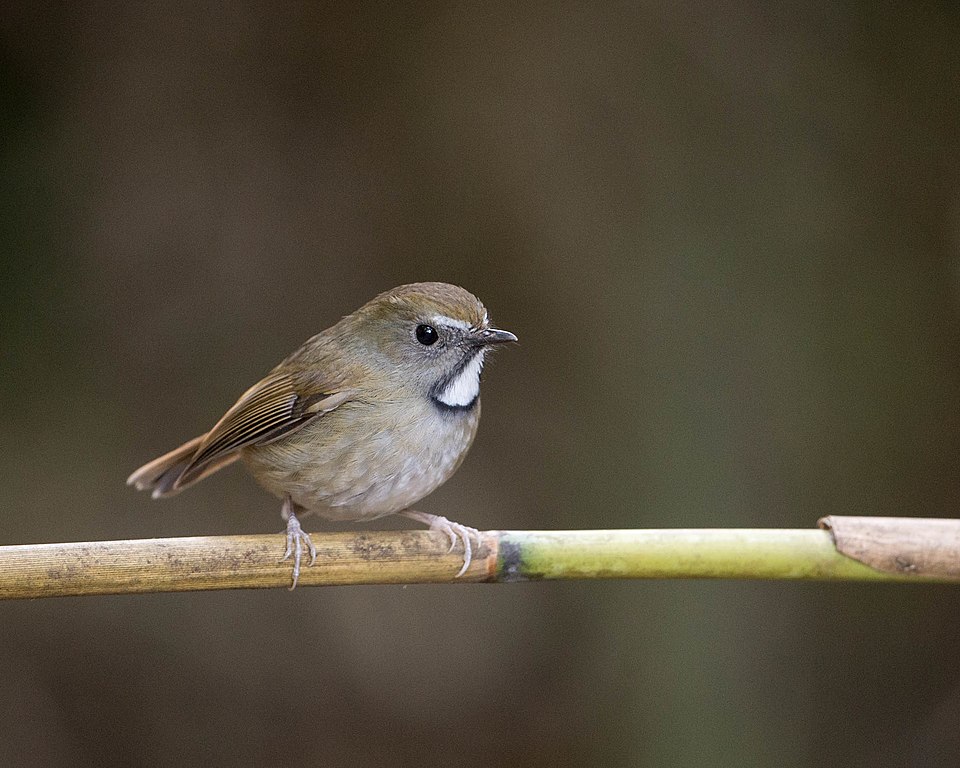
Sombre Rock Chat
Oenanthe dubia
Order: Passeriformes / Family: Muscicapidae

Wikimedia Commons
About the Sombre Rock Chat
The Sombre Rock Chat, scientifically known as Oenanthe dubia, is a member of the Muscicapidae family, notable for its affinity to rocky, arid environments. This small bird is primarily found in the arid and semi-arid regions of south-central Asia, particularly across the mountainous terrains of Afghanistan, Pakistan, and parts of northwestern India. The bird's presence is a vital indicator of the ecological health of these rugged landscapes, where its niche primarily involves the consumption of insects, thus playing a significant role in controlling local insect populations.
As a species adapted to harsh terrains, the Sombre Rock Chat thrives in rocky outcrops and boulder-strewn slopes where vegetation is sparse. This specific habitat preference reduces competition with other avian species, allowing it to exploit resources efficiently. During the breeding season, which typically occurs in spring and early summer, these birds are seen more frequently as they become more territorial and vocal. The males are known for their subtle courtship displays, which involve a series of soft calls and slight aerial maneuvers to attract females.
Ecologically, the presence of the Sombre Rock Chat contributes to the maintenance of the insect population balance in their habitat. Their foraging strategy involves quick short flights from perch to perch, scanning for insect prey. In regions where agricultural practices are expanding, these birds can occasionally be seen on the periphery of human settlements, although they generally prefer less disturbed areas. Over the years, the Sombre Rock Chat has adapted well to natural and semi-natural habitats, although continuous habitat monitoring is necessary to ensure that human activities do not encroach upon and degrade their natural environments.
The Sombre Rock Chat belongs to the family Muscicapidae, within the order Passeriformes. These birds typically live average 3-4 years with max recorded 5 years..
How to Identify a Sombre Rock Chat
The Sombre Rock Chat is a relatively small bird, measuring approximately 13-15 cm in length. The adult birds display a uniform slate-gray plumage that allows them to blend seamlessly with their rocky surroundings. This coloration is the most distinguishing feature of the species, setting it apart from other chats that may exhibit more varied or colorful plumage. The underparts are slightly paler, which helps in identification during flight or when observed against the rocky backdrop.
Juveniles resemble adults but may exhibit slightly mottled plumage until their first molt. Unlike many other bird species, there is minimal sexual dimorphism in the Sombre Rock Chat, with males and females appearing similar in the field. However, during the breeding season, the male’s plumage may appear slightly more vibrant due to the condition of the feathers, though this is subtle and requires close observation.
In terms of posture and flight, the Sombre Rock Chat perches upright on rocks, often bobbing its tail slightly. In flight, it shows a rapid wingbeat and a relatively short-tailed silhouette. This can be contrasted with the longer-tailed and more undulating flight patterns of other similar-sized birds in its range. Observers should note the chat's preference for hopping from rock to rock, which is indicative of its adaptation to its rocky habitat.
Having trouble telling birds apart? Upload a photo to our bird identification tool for an instant species match.
Sombre Rock Chat Habitat and Range
Preferred Habitat
The Sombre Rock Chat predominantly inhabits rocky, arid regions, favoring areas with abundant boulders and sparse vegetation. These areas include the rugged terrains of the Hindu Kush and Karakoram ranges. The bird is typically found at elevations ranging from 1,000 to 3,500 meters, where it exploits the crevices and ledges for foraging and nesting.
While it is primarily associated with natural rocky habitats, the Sombre Rock Chat can occasionally be found in areas where human activities have created suitable microhabitats, such as quarries or abandoned structures. Seasonal shifts in habitat are minimal, as the bird is largely sedentary, though it may move to slightly lower elevations during harsh winter conditions.
Despite its preference for remote, rocky areas, the Sombre Rock Chat sometimes ventures into semi-urban environments, particularly in regions where rocky landscapes intersect with human settlements. This adaptability to varying degrees of habitat disturbance is a testament to its resilience, though intact natural habitats remain crucial for its survival.
Geographic Range
The Sombre Rock Chat is primarily distributed across the arid and semi-arid regions of south-central Asia. Its breeding range includes parts of Afghanistan, northern Pakistan, and the northwestern regions of India, particularly in states like Jammu and Kashmir and Himachal Pradesh. The bird is known to occupy isolated pockets within these regions where suitable rocky habitats exist.
While the Sombre Rock Chat is not a migratory species, it exhibits some altitudinal movement, particularly moving to lower elevations during the colder months. This movement is not extensive, as the bird tends to remain within a relatively narrow range throughout the year.
Population density is generally higher in regions where rocky outcrops are abundant, as these provide the necessary resources for feeding and nesting. The bird's presence in specific areas can fluctuate based on local environmental conditions, such as prey availability and weather patterns. Areas like the Chitral Valley in Pakistan and Ladakh in India are known hotspots for observing this species due to the favorable combination of climate and topography.
Want to know which birds visit your area? Browse our backyard birds by location guides for region-specific species lists.
What Does the Sombre Rock Chat Eat?
The diet of the Sombre Rock Chat primarily consists of insects, which it actively hunts among the rocky terrains it inhabits. The bird’s insect diet includes beetles, ants, and other small arthropods, which it captures using a series of short flights from its perches. It employs a sit-and-wait foraging technique, observing its surroundings from a vantage point before launching into rapid flights to catch prey in mid-air or off the ground.
Seasonal changes in diet are minimal due to the relatively stable insect populations in its habitat. However, during the breeding season, the demand for protein-rich food increases, and the bird may travel slightly further to find an adequate supply of insects to support its young.
The Sombre Rock Chat typically forages during the cooler parts of the day, such as early morning and late afternoon, avoiding the extreme midday heat common in its arid habitat. Its feeding schedule and techniques are well-adapted to its environment, allowing it to thrive in areas where food resources are not abundant year-round.
Sombre Rock Chat Behavior and Social Structure
The Sombre Rock Chat exhibits a primarily solitary lifestyle, often seen alone or in pairs during the breeding season. This solitary nature is reflective of its territorial behavior, as individuals establish and defend territories to ensure access to resources such as food and nesting sites.
Courtship displays in the Sombre Rock Chat are subtle compared to more flamboyant avian species. Males perform a series of soft calls combined with modest aerial acrobatics to attract females. Once paired, the bond between mates is strong, with both partners participating in territorial defense and nest building.
While the Sombre Rock Chat is not known for forming large flocks, it may be observed in small loose groups during non-breeding seasons, particularly in areas with abundant food. In response to predators, the bird relies on its cryptic plumage and quick, erratic flight to avoid detection and escape threats.
Daily activity patterns are influenced by the temperature and light conditions of its habitat. The bird is most active during the cooler hours of the day, retreating to shaded areas or crevices during the heat of midday.
Sombre Rock Chat Nesting and Reproduction
The nesting habits of the Sombre Rock Chat are closely tied to its rocky habitat. Nests are typically constructed in crevices or cavities within rocky outcrops, providing both protection from predators and insulation from extreme weather. The nest itself is a cup-shaped structure made of grass, twigs, and feathers, which are carefully arranged to form a secure environment for the eggs.
A typical clutch consists of 3 to 5 eggs, with incubation duties primarily handled by the female. The incubation period lasts approximately 12 to 14 days, during which the male may assist by providing food. After hatching, both parents are involved in feeding and caring for the chicks.
Fledging occurs around 14 to 16 days post-hatching, though young birds often remain in the vicinity of the nest for several weeks as they gain independence. The Sombre Rock Chat typically raises one brood per year, though favorable conditions may occasionally allow for a second.
Sombre Rock Chat Sounds and Vocalizations
The vocalizations of the Sombre Rock Chat are characterized by soft, melodious calls that are often described as fluty and slightly melancholic. The primary song consists of a series of short, sweet notes delivered in rapid succession, often heard during the early morning or late afternoon when the bird is most active.
In addition to its song, the Sombre Rock Chat also produces a variety of call notes used for communication between mates or as alarm signals to warn of potential threats. These calls are typically softer and less varied than the primary song but serve an essential role in maintaining pair bonds and alerting to danger.
During the breeding season, males may engage in a dawn chorus, where their singing is more frequent and persistent. This behavior helps reinforce territorial claims and attract mates.
Interesting Facts About the Sombre Rock Chat
- 1The Sombre Rock Chat's preference for rugged habitats makes it a key indicator species for the health of rocky ecosystems in south-central Asia.
- 2Despite its solitary nature, the Sombre Rock Chat may occasionally be seen in loose groups when food is plentiful, particularly outside the breeding season.
- 3The bird's cryptic plumage allows it to blend seamlessly into its rocky surroundings, providing effective camouflage against predators.
- 4The Sombre Rock Chat is known for its adaptability, occasionally nesting in man-made structures that mimic its natural rocky habitat.
- 5While primarily an insectivore, the Sombre Rock Chat has been observed occasionally eating seeds during times of insect scarcity.
- 6Unlike many other chat species, the Sombre Rock Chat exhibits minimal sexual dimorphism, with males and females appearing very similar.
- 7The Sombre Rock Chat's song, though subtle, is a key aspect of its breeding behavior, used to attract mates and establish territory.
Sombre Rock Chat Conservation Status
The Sombre Rock Chat is currently classified as Least Concern by the IUCN, with a stable population trend across its range. Despite this status, the bird faces threats from habitat destruction due to agricultural expansion and infrastructure development in its native regions. Conservation efforts primarily focus on habitat preservation, ensuring that the rocky environments essential for the bird's survival remain intact. Monitoring of population trends and habitat conditions is ongoing, with particular attention to regions experiencing rapid human encroachment. Historically, the Sombre Rock Chat has maintained stable population levels, benefiting from its adaptability to various rocky habitats. Continued conservation efforts aim to sustain this stability, preventing future declines due to habitat loss or environmental changes.