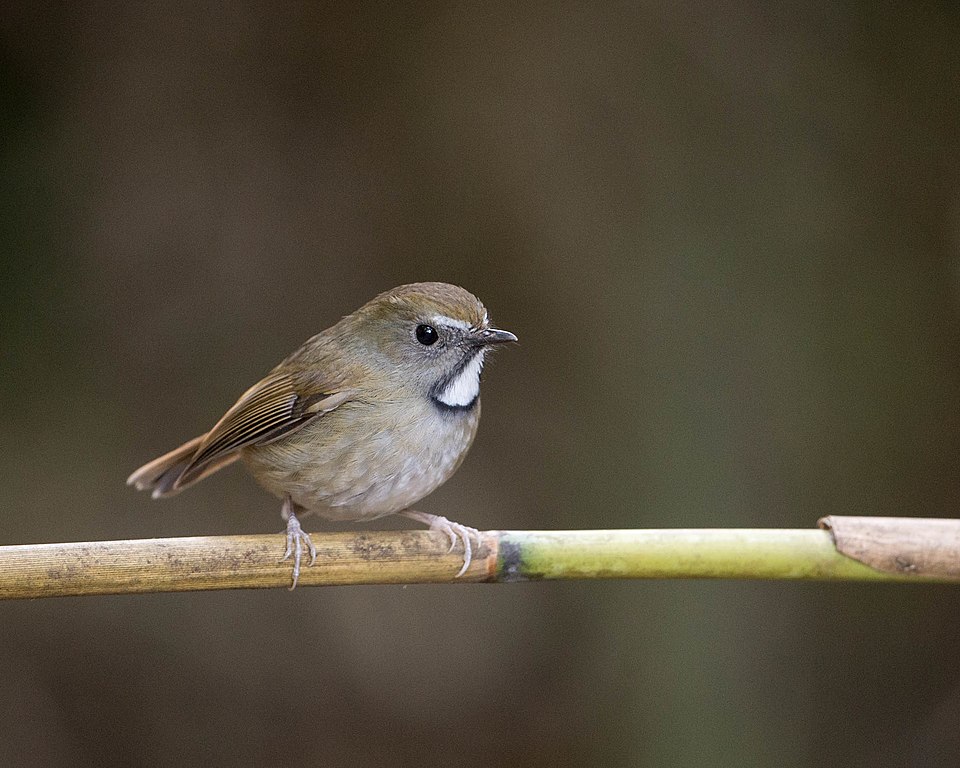
Sooty Chat
Myrmecocichla nigra
Order: Passeriformes / Family: Muscicapidae

Wikimedia Commons
About the Sooty Chat
The Sooty Chat (Myrmecocichla nigra) is a small, striking bird known for its deep black plumage and vibrant presence in the African savannas. This species, belonging to the Muscicapidae family, is an adaptable and resourceful inhabitant found primarily in eastern and southern Africa. It thrives in open grasslands and savannas, where it plays a significant ecological role as both predator and prey. The Sooty Chat contributes to the balance of its ecosystem by helping control insect populations. Its presence is a key indicator of the health of grassland habitats.
In regions such as Kenya, Tanzania, and Zimbabwe, the Sooty Chat can be seen perching prominently on shrubs or rocks, especially in areas with scattered trees. It displays a level of adaptability by even thriving in human-altered landscapes, such as agricultural fields and lightly wooded areas. During the breeding season, these birds become more territorial and vocal, showcasing their melodious songs to establish dominance and attract mates.
Ecologically, the Sooty Chat serves as both a consumer of insects and a source of prey for larger avian predators. This dual role emphasizes its importance within the food web of its native habitats. Seasonal behaviors are particularly notable in this species, with increased vocal activity during the onset of the rainy season. This period aligns with the peak availability of insects, which form the bulk of its diet. The Sooty Chat's adaptability and resilience make it an essential component of its ecosystem, providing insights into the dynamics of savanna ecosystems.
The Sooty Chat belongs to the family Muscicapidae, within the order Passeriformes. These birds typically live average 3-5 years with a maximum recorded of 7 years..
How to Identify a Sooty Chat
The Sooty Chat is easily identified by its uniform black plumage, which is complemented by distinct white wing patches visible during flight. Adult males and females are similar in appearance, though females may exhibit slightly browner tones on closer inspection. Juveniles differ markedly, featuring a duller brown coloration with some mottling, aiding in camouflage.
Field marks to look for include the bird's compact size, typically around 15 cm in length, and its upright perching posture. This posture is characteristic and helps distinguish it from other black-plumaged birds like the Fork-tailed Drongo, which has a distinct forked tail. The Sooty Chat's tail is straight and square-ended, providing another point of comparison.
In flight, the Sooty Chat's silhouette is compact with broad wings, which accentuate the striking white patches. When perched, these birds often flick their tails, a behavior that can aid in identification. While confusion with other black songbirds is possible, the combination of their habitat preference, distinctive wing markings, and unique behaviors assists in their precise identification.
Having trouble telling birds apart? Upload a photo to our bird identification tool for an instant species match.
Sooty Chat Habitat and Range
Preferred Habitat
The Sooty Chat primarily inhabits open grasslands and savannas, where it can be seen perching on exposed rocks or shrubs. It prefers areas with scattered trees and bushy vegetation, which provide suitable perches. In terms of elevation, the Sooty Chat can be found from sea level up to 2500 meters, depending on the region.
In more urbanized or agricultural landscapes, the Sooty Chat adapts by utilizing fence posts and other man-made structures as perching points. Seasonal habitat shifts are minimal for this species, as it generally remains resident within its range. However, local movements may occur in response to rainfall patterns and food availability.
This bird is less common in dense forests or completely open deserts, as it relies on a mix of open space and cover. Its adaptability to moderately disturbed habitats highlights its resilience, making it a relatively common sight across its range. Despite being primarily a grassland bird, the Sooty Chat's ability to thrive in varied environments underscores its ecological versatility.
Geographic Range
The Sooty Chat's range covers a broad swath of sub-Saharan Africa, from Kenya and Uganda in the east, through Tanzania, down to South Africa and Namibia in the south. It is a resident species throughout most of its range, with no significant long-distance migrations observed.
In regions such as Zambia and Zimbabwe, the Sooty Chat is a common fixture in suitable habitats, often found in higher densities in areas with abundant insect prey. Population density hotspots often correspond to regions with optimal grassland and savanna conditions, particularly where rainfall supports lush vegetation and robust insect life.
Despite its wide distribution, the Sooty Chat is notably absent from the driest desert areas and the dense Congo Basin rainforest. Instead, it finds its niche in the intermediate habitats that offer a balance of open space and vegetative cover. This range consistency reflects the bird's adaptability and the relatively stable environmental conditions of its preferred habitats.
Want to know which birds visit your area? Browse our backyard birds by location guides for region-specific species lists.
What Does the Sooty Chat Eat?
The Sooty Chat's diet primarily consists of insects and other small invertebrates, which it actively forages for on the ground. Common prey items include beetles, grasshoppers, and ants. This bird also supplements its diet with small amounts of seeds and berries, especially during the dry season when insects are less abundant.
A distinctive foraging technique involves the Sooty Chat perching quietly before swooping down to capture prey on the ground. It often employs a perch-and-drop method, making use of elevated vantage points to spot movement below. This opportunistic hunting style is well-suited to the grassland habitats the bird frequents.
During the rainy season, when insect populations surge, the Sooty Chat's feeding activities increase in intensity. The bird takes advantage of this abundance to build up energy reserves for the breeding season. Its feeding schedule generally peaks in the early morning and late afternoon, coinciding with cooler temperatures and higher prey activity.
Sooty Chat Behavior and Social Structure
The Sooty Chat exhibits a primarily solitary or paired lifestyle, especially during the breeding season when pairs become highly territorial. Males defend territories with a conspicuous display of song and physical posturing, often involving flights and wing-flashing to deter rivals and attract mates.
Courtship displays can be elaborate, with males showcasing their plumage and engaging in aerial chases. Outside the breeding season, Sooty Chats may form loose flocks, particularly when food is abundant, facilitating cooperative foraging.
The bird's response to predators involves a combination of alarm calls and evasive flight. It remains vigilant, often using elevated perches to scan for threats. Daily activity patterns are diurnal, with peak periods in the morning and late afternoon. The bird's adaptability allows it to adjust its behavior based on environmental conditions, ensuring survival across varied habitats.
Sooty Chat Nesting and Reproduction
The Sooty Chat typically nests in cavities, using natural hollows in trees or abandoned burrows. Nest construction involves the use of grass and other plant materials to form a cup-shaped structure within the chosen cavity. The location of nests usually provides some protection from predators and the elements.
Clutch sizes range from two to four eggs, with incubation lasting about 14 days. Both parents participate in feeding the chicks, which fledge approximately 15 to 18 days after hatching. The Sooty Chat may produce one to two broods per year, depending on environmental conditions and food availability.
Parental roles are shared, with both the male and female contributing to feeding and protection of the young. This cooperative breeding strategy enhances the survival rate of offspring, ensuring the continued success of the species in its native habitats.
Sooty Chat Sounds and Vocalizations
The Sooty Chat is known for its melodious song, characterized by a series of rich, warbling notes. These songs often include repeated phrases and can vary in pitch and rhythm. During the breeding season, males sing from prominent perches to establish territories and attract females.
In addition to its song, the Sooty Chat produces a variety of call notes, which can be sharp and metallic. Alarm calls are more abrupt and serve as warnings to other birds about potential threats. The dawn chorus often features the Sooty Chat's singing, particularly during periods of heightened territorial activity.
Comparatively, its vocalizations share some similarities with other chats and songbirds, yet its song quality and structure are distinctive enough to aid in field identification. The Sooty Chat's vocal behavior not only serves communicative functions but also enhances its presence in the diverse soundscape of its environment.
Interesting Facts About the Sooty Chat
- 1The Sooty Chat is named for its characteristic dark plumage, which blends well with the charred landscapes of its savanna habitat.
- 2This species often engages in a behavior known as 'wing-flashing,' where it displays its white wing patches to startle insects into movement.
- 3In some regions, the Sooty Chat is considered a cultural symbol of resilience due to its ability to thrive in changing environments.
- 4The Sooty Chat's diet primarily consists of insects, but it has been observed consuming small reptiles, showcasing its opportunistic feeding habits.
- 5During courtship, male Sooty Chats perform aerial displays, which include diving and swooping maneuvers to impress potential mates.
- 6Sooty Chats are often seen in pairs or small family groups, particularly outside the breeding season, indicating their social adaptability.
- 7The Sooty Chat's eggs are pale blue, providing some camouflage against the natural materials lining their nest cavities.
Sooty Chat Conservation Status
The Sooty Chat currently holds a conservation status of Least Concern according to the IUCN Red List. Its population trend appears stable, largely due to its adaptability to a range of habitats, including those modified by human activity. Primary threats to the Sooty Chat include habitat loss due to agricultural expansion and land degradation. Despite these challenges, the species' wide distribution and ecological flexibility provide a buffer against significant population declines. Conservation efforts focus on preserving grassland and savanna ecosystems, which support the Sooty Chat and numerous other species. Historical population trends have remained relatively stable, with no major declines recorded, underscoring the resilience of this adaptable bird.