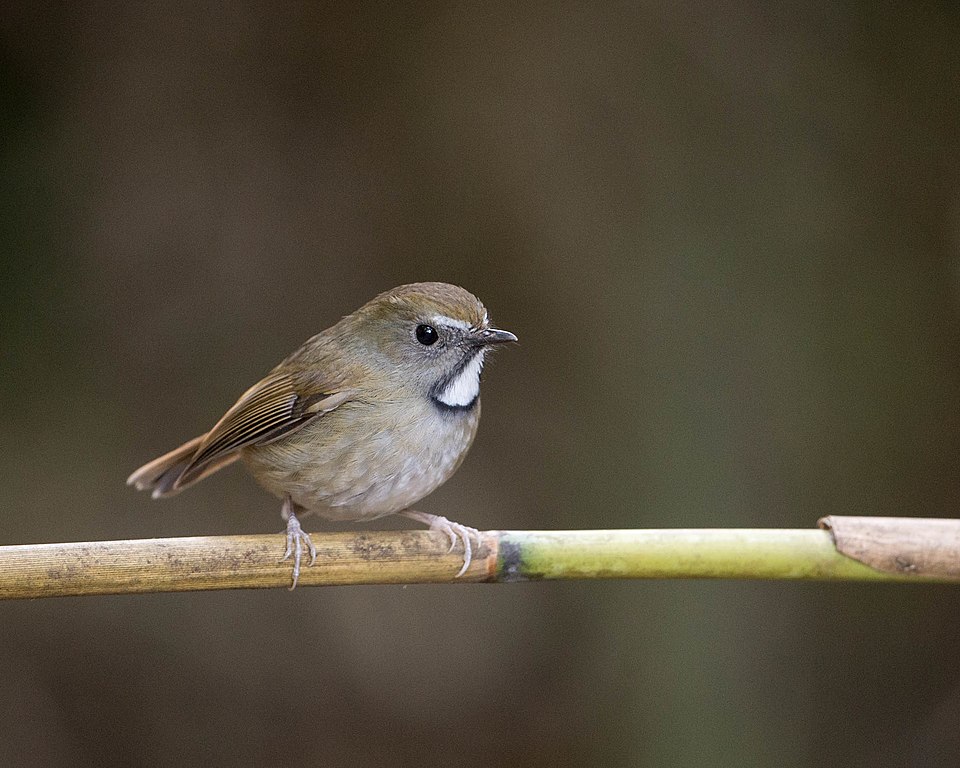
Southern Anteater-Chat
Myrmecocichla formicivora
Order: Passeriformes / Family: Muscicapidae

Wikimedia Commons
About the Southern Anteater-Chat
The Southern Anteater-Chat, Myrmecocichla formicivora, is a notable member of the Muscicapidae family, primarily found in the savannas and grasslands of southern Africa. This bird plays a significant role in the ecosystem as a proficient insectivore, controlling populations of ants and termites. Its presence is most prominent in countries such as South Africa, Namibia, Botswana, and Zimbabwe. The Southern Anteater-Chat is closely associated with specific habitats, particularly where the ground is disturbed by large herbivores or human activity, which creates ideal foraging conditions.
Ecologically, the Southern Anteater-Chat is vital for maintaining the balance of its environment by predating on large quantities of insects, thus aiding in pest control. The bird's foraging behavior is fascinating; it often follows antelope herds and other large grazers, capitalizing on the insects that are disturbed by their movement. Its black-and-white plumage provides a striking contrast against the open landscapes it inhabits, making it easier for birdwatchers to spot this chat.
Seasonally, the Southern Anteater-Chat exhibits some altitudinal movements, descending from higher elevations during colder months. This adaptation ensures access to food resources throughout the year. Despite its abundance in certain localities, changes in land use and habitat degradation pose challenges to its environment, though the species currently maintains a stable population. These chats are territorial and monogamous, with pairs often seen performing aerial displays that solidify their bonds. Observing these behaviors highlights the important social structures within their communities.
The Southern Anteater-Chat belongs to the family Muscicapidae, within the order Passeriformes. These birds typically live average 3-5 years with a maximum recorded of 7 years..
How to Identify a Southern Anteater-Chat
The Southern Anteater-Chat is a medium-sized bird, characterized by its distinctive black-and-white plumage. Adults exhibit a predominantly black body with contrasting white wing patches and a white rump, making them easily identifiable during flight. Juveniles, in contrast, have a more muted coloration with brownish hues and less distinct wing markings, which gradually develop into the adult plumage as they mature.
Males and females are similar in appearance, though subtle differences may be noted upon close examination, such as slight variations in size or the intensity of the white markings. The Southern Anteater-Chat's upright perching posture and habit of flicking its tail make it easier to identify among other species in its range.
Confusion with other chats, such as the Northern Anteater-Chat, can occur, but the Southern Anteater-Chat's range and specific habitat preferences help distinguish it. Its flight is direct and strong, with the white wing patches flashing prominently against the sky, aiding in identification even from a distance.
Having trouble telling birds apart? Upload a photo to our bird identification tool for an instant species match.
Southern Anteater-Chat Habitat and Range
Preferred Habitat
The Southern Anteater-Chat thrives in open grasslands and savannas, particularly where the ground is disturbed by grazing animals or human activity. This habitat preference allows it to easily access its primary food sources. It is commonly found at elevations ranging from sea level to approximately 2,000 meters, adapting well to both lowland and upland environments.
Despite its preference for natural grasslands, the Southern Anteater-Chat can also be observed in agricultural landscapes, where it benefits from the disturbed soil and resultant insect activity. Seasonal habitat shifts occur, with some populations moving to lower elevations during colder months to maintain access to adequate food resources.
The chat's adaptability to various open environments, coupled with its presence in both rural and semi-urban areas, underscores its resilience. However, habitat degradation due to agricultural expansion and development can pose threats to its preferred environments.
Geographic Range
The Southern Anteater-Chat is predominantly found in southern Africa, with its range encompassing countries like South Africa, Namibia, Botswana, and Zimbabwe. This bird is a resident species, meaning it does not undergo long-distance migrations. Instead, it may exhibit localized movements in response to seasonal changes in food availability and environmental conditions.
In South Africa, the chat is particularly common in the northern and central regions, often seen in game reserves and national parks. In Namibia, it inhabits both the central highlands and the arid regions of the Kalahari Desert. The bird's presence in Botswana and Zimbabwe further north indicates its adaptability to a variety of dryland habitats.
Population density varies, with higher concentrations often occurring in areas with abundant insect prey and suitable nesting sites. Despite these regional differences, the Southern Anteater-Chat remains a widespread and common species within its established range.
Want to know which birds visit your area? Browse our backyard birds by location guides for region-specific species lists.
What Does the Southern Anteater-Chat Eat?
The Southern Anteater-Chat's diet is primarily insectivorous, with ants and termites forming the bulk of its food intake. These birds exploit the abundance of these insects in their habitats, often feeding on the ground where they actively search for prey.
Foraging techniques include a methodical search through disturbed soil and leaf litter, especially in areas frequented by large ungulates. The chat uses its sharp beak to probe and pick insects from the surface, demonstrating a remarkable adaptability in its hunting approach. During the dry season, it might also consume other small invertebrates and, on rare occasions, supplement its diet with seeds if insect availability declines.
Feeding activity peaks during the cooler hours of the morning and late afternoon, aligning with the activity patterns of its prey. The Southern Anteater-Chat's reliance on a high-protein diet underscores its role as an important biological control agent in its ecosystem.
Southern Anteater-Chat Behavior and Social Structure
The Southern Anteater-Chat is known for its territorial and social behaviors. It typically maintains territories year-round, with pairs engaging in cooperative defense against intruders. During the breeding season, these territorial displays become more pronounced, with both males and females participating in aerial chases and vocalizations to assert dominance.
Courtship involves a series of displays, including wing-flicking and tail movements, which are often accompanied by vocal calls. The pair bond remains strong throughout the year, with partners frequently seen foraging together. Flocking is uncommon outside of family groups, emphasizing the chat's territorial nature.
In response to predators, the Southern Anteater-Chat employs alarm calls and may engage in distraction displays to protect its nest. Its daily activities are largely diurnal, with peak foraging occurring during the morning and late afternoon. The bird's ability to adapt its behavior to environmental conditions is a testament to its evolutionary success in diverse habitats.
Southern Anteater-Chat Nesting and Reproduction
The Southern Anteater-Chat constructs its nest in a burrow or cavity, often situated on a gentle slope or an embankment. The nest itself is made from grass, feathers, and other plant materials, providing a soft and insulated environment for the eggs.
Typically, the female lays a clutch of 2 to 4 eggs, which she incubates for about two weeks. During this period, the male plays a crucial role in providing food and protection. Once hatched, the chicks are altricial and remain in the nest for an additional two to three weeks, during which both parents are actively involved in feeding and caring for them.
After fledging, the young continue to rely on their parents for several weeks. The Southern Anteater-Chat may raise two broods per year, depending on environmental conditions and food availability. Nest site fidelity is common, with pairs often returning to the same territory in successive breeding seasons.
Southern Anteater-Chat Sounds and Vocalizations
The Southern Anteater-Chat's vocalizations are characterized by a series of clear, melodious whistles and chirps. Its primary song consists of short, repeated phrases that can be heard throughout its territory. The pitch is moderate, with a rhythmic quality that sets it apart from other bird calls in its habitat.
In addition to its song, the chat emits distinctive call notes used for communication between mates and in territorial disputes. Alarm calls are sharp and abrupt, serving as an alert to potential threats. During the dawn chorus, the Southern Anteater-Chat's song is particularly prominent, contributing to the vibrant soundscape of the savanna.
Comparatively, its vocalizations can be likened to those of other chats, though the Southern Anteater-Chat's repertoire is unique in its tonal quality and delivery.
Interesting Facts About the Southern Anteater-Chat
- 1The Southern Anteater-Chat can consume thousands of ants in a single day, highlighting its role as a pest controller.
- 2Myrmecocichla formicivora's name reflects its diet, with 'myrmeco' referring to ants and 'cichla' to thrushes.
- 3These birds have adapted to follow large herbivores, exploiting the insects disturbed by their movement.
- 4Despite its reliance on insects, the chat rarely consumes other types of food, showcasing its dietary specialization.
- 5The Southern Anteater-Chat's striking black-and-white plumage serves as a visual signal for territorial displays.
- 6This species is primarily non-migratory, though it exhibits localized movements in response to environmental conditions.
- 7Pairs of Southern Anteater-Chats are known for their lifelong monogamous partnerships, a rarity among birds.
Southern Anteater-Chat Conservation Status
The Southern Anteater-Chat is currently listed as Least Concern by the IUCN, with stable population trends across its range. Despite this status, the species faces potential threats from habitat loss due to agricultural expansion and climate change, which could impact its food resources and nesting sites. Conservation efforts focus on preserving natural grassland habitats and promoting sustainable land use practices to mitigate these threats. Historically, the Southern Anteater-Chat has shown resilience to environmental changes, maintaining healthy population numbers even as human activities alter landscapes. Ongoing monitoring and habitat management are crucial to ensuring the long-term survival of this species, particularly in regions where environmental pressures are increasing.