
Southern Beardless-Tyrannulet
Camptostoma obsoletum
Order: Passeriformes / Family: Tyrannidae
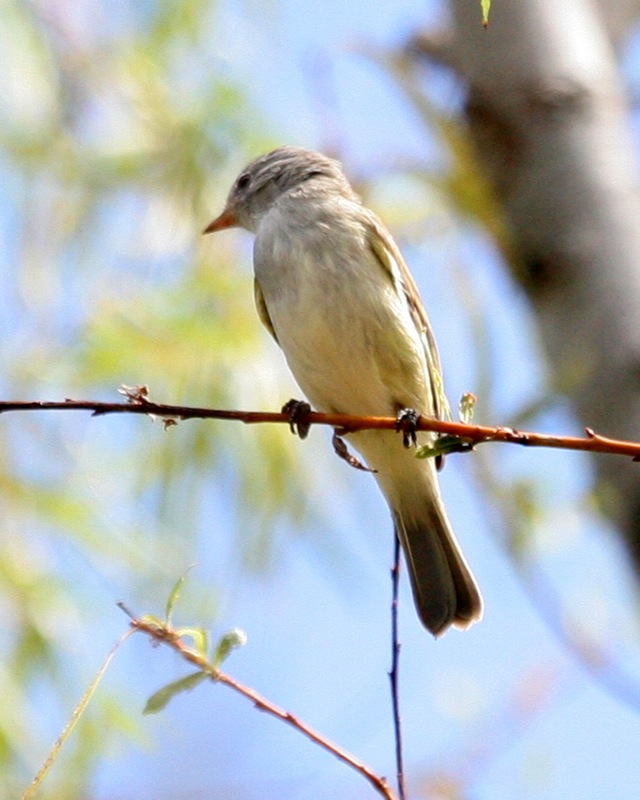
Wikimedia Commons
About the Southern Beardless-Tyrannulet
The Southern Beardless-Tyrannulet (Camptostoma obsoletum) is a small, agile member of the Tyrannidae family, renowned for its adaptability across diverse environments. This diminutive bird thrives in a variety of habitat types, from tropical forests and open woodlands to scrublands and even urban parks, making it a widespread representative of flycatchers across South America. Found from Argentina and Uruguay through Brazil, Colombia, and into Central America, the Southern Beardless-Tyrannulet adapts well to various ecological niches, showcasing its impressive versatility. The species is notable for its ability to inhabit both humid forest environments and drier savanna regions, reflecting its ecological flexibility and resilience.
Ecologically, the Southern Beardless-Tyrannulet plays a significant role as an insect predator, maintaining insect populations in check and contributing to the ecological balance within its habitat. Its presence in both pristine and disturbed environments highlights its resilience and importance in various ecosystems. The tyrannulet's foraging behavior, characterized by agile movements and short flights, enables it to capture a variety of insects, playing a vital role in controlling pest populations and maintaining the health of the ecosystems it inhabits.
Seasonally, the Southern Beardless-Tyrannulet does not undertake long migratory journeys, but instead exhibits local movements in response to food availability and environmental conditions. During the breeding season, which varies by region but generally coincides with the wet season, this species becomes more vocal, using its distinctive calls to establish and defend territories, as well as to attract mates. The Southern Beardless-Tyrannulet's adaptability to different habitats and its ecological role as a pest controller underscore its significance within the avian community.
The Southern Beardless-Tyrannulet belongs to the family Tyrannidae, within the order Passeriformes. These birds typically live average 3-5 years with a maximum of 8 years recorded..
How to Identify a Southern Beardless-Tyrannulet
The Southern Beardless-Tyrannulet is a small flycatcher, measuring approximately 10 to 11 centimeters in length and weighing around 6 to 8 grams. It is characterized by its grayish-olive upperparts and paler underparts, with subtle yellowish hues on the belly. Unlike many other flycatchers, this species lacks the prominent rictal bristles around the base of its bill, a trait that gives it the name 'beardless.' Its bill is small and slightly hooked, an adaptation for precision when capturing insects.
Adults show no significant sexual dimorphism, meaning males and females appear similar in plumage. Juveniles, however, may have slightly duller plumage compared to adults, with less distinct contrasts between the upper and underparts. This can make young birds more challenging to identify at a distance. In the field, the Southern Beardless-Tyrannulet can be confused with other small flycatchers, but its lack of rictal bristles and distinct vocalizations help differentiate it from similar species.
In flight, the Southern Beardless-Tyrannulet demonstrates a swift, agile movement, often characterized by short, direct flights interspersed with hovering as it searches for prey. When perched, it often adopts a slightly upright posture, with its tail flicking subtly as it surveys its surroundings. This behavior, combined with its distinctive call, aids in field identification.
Having trouble telling birds apart? Upload a photo to our bird identification tool for an instant species match.
Southern Beardless-Tyrannulet Habitat and Range
Preferred Habitat
The Southern Beardless-Tyrannulet exhibits a remarkable adaptability to various habitat types. It commonly inhabits tropical and subtropical forests, savannas, open woodlands, and scrublands. In these environments, it can be found at elevations ranging from sea level to approximately 2,000 meters, though it prefers lower elevations in most of its range.
While primarily a forest-edge species, the Southern Beardless-Tyrannulet also thrives in secondary growth and disturbed areas, often venturing into gardens and urban parks where trees and shrubs are present. Its presence in urban environments highlights its adaptability and ability to coexist with human development.
Seasonal habitat shifts are influenced by food availability rather than migratory behavior. During the wet season, when insect abundance increases, the tyrannulet may be more frequently encountered in moist forested areas. Conversely, in drier periods, it may move to more open habitats where insects continue to be accessible.
Geographic Range
The Southern Beardless-Tyrannulet boasts an extensive range across the Neotropics. It is found throughout much of South America, from northern Argentina and Uruguay to Brazil, Paraguay, and Bolivia. Its range extends northward into Colombia and Venezuela, and it is also present in parts of Central America, including Panama and Costa Rica.
As a resident species, the Southern Beardless-Tyrannulet does not undertake long-distance migrations. However, it may exhibit localized movements, primarily in response to changing food resources and environmental conditions. These movements are typically limited to altitudinal shifts or short-distance dispersals between habitats.
Population density tends to be higher in regions where suitable habitats overlap with abundant food sources. For example, the coastal regions of Brazil and the Amazon basin support substantial populations due to their rich biodiversity and availability of thriving insect communities.
Want to know which birds visit your area? Browse our backyard birds by location guides for region-specific species lists.
What Does the Southern Beardless-Tyrannulet Eat?
The Southern Beardless-Tyrannulet primarily feeds on insects, making it an essential player in controlling pest populations. Its diet consists of a variety of arthropods, including ants, beetles, and caterpillars. During the breeding season, when the demand for energy is higher, it may increase its intake of protein-rich insects to support its energetic needs and those of its chicks.
Seasonal diet changes are evident as the tyrannulet adjusts its foraging strategies according to the availability of prey. In wetter seasons, a greater number of insects become accessible, allowing the bird to diversify its diet. Conversely, in drier periods, when insect abundance might decrease, the tyrannulet may rely more heavily on specific, consistent prey types available in its habitat.
The Southern Beardless-Tyrannulet typically employs a sallying technique to capture its prey. It perches on branches or foliage, scanning for movement before executing short flights to snatch insects mid-air or glean them from leaves. This agile foraging behavior ensures it efficiently exploits its environment for food throughout the day.
Southern Beardless-Tyrannulet Behavior and Social Structure
The Southern Beardless-Tyrannulet exhibits a solitary or territorial behavior, often seen alone or in pairs rather than in large flocks. Territorial disputes are common during the breeding season, as males vocally assert their presence and defend their chosen areas from rivals. This territorial nature ensures optimal access to food resources and nesting sites.
Courtship involves a series of vocal displays and aerial pursuits, with males showcasing their agility and vocal prowess to attract a mate. Once paired, both male and female engage in nest-building and parental duties, highlighting a cooperative breeding strategy.
The tyrannulet is generally diurnal, with peak activity occurring during the early morning and late afternoon. During these times, it is most vocal and visible, actively foraging and engaging in social interactions. Its response to predators includes alarm calls and evasive flights, relying on its agility to evade capture. When threatened, it may also employ distraction displays to protect its nest and young.
Southern Beardless-Tyrannulet Nesting and Reproduction
The Southern Beardless-Tyrannulet constructs an open cup nest, usually situated in the fork of a tree branch or within dense foliage to provide concealment. The nest is composed of fine plant materials, such as grasses, rootlets, and moss, held together with spider silk for added strength and flexibility.
Typically, the clutch size consists of two to three eggs, which are incubated primarily by the female. The incubation period lasts approximately 15 days, during which the male remains nearby to guard the territory and assist in feeding the female.
After hatching, both parents participate in feeding the chicks, which fledge approximately 14 to 16 days post-hatching. The rapid development of the young is crucial to minimize the risk of predation. The species is known to raise multiple broods per year, especially in regions where climate conditions allow for extended breeding seasons.
Southern Beardless-Tyrannulet Sounds and Vocalizations
The vocalizations of the Southern Beardless-Tyrannulet are a key feature for identification. Its primary song consists of a series of sharp, repetitive notes, often described as 'twee-twee-twee,' delivered at a quick tempo. The pitch is relatively high, and the quality is clear and penetrating, carrying well through its habitat.
In addition to its primary song, the tyrannulet produces a variety of call notes, including short, sharp 'chip' sounds used for communication between mates or to signal alarm. During the breeding season, its vocal activity increases, contributing to the dawn chorus, where its song competes with those of other birds for auditory prominence.
Alarm calls are more rapid and insistent, intended to alert nearby conspecifics to potential threats. These sounds play a crucial role in maintaining territory boundaries and ensuring the safety of the nest and young.
Interesting Facts About the Southern Beardless-Tyrannulet
- 1The Southern Beardless-Tyrannulet lacks the rictal bristles typically found in other flycatchers, a unique adaptation for its feeding style.
- 2This species can be found from sea level up to elevations of 2,000 meters, showcasing its adaptability to different environments.
- 3Despite its small size, the Southern Beardless-Tyrannulet plays a significant role in controlling insect populations in its habitat.
- 4The species is highly adaptable, even venturing into urban areas, where it can be seen in parks and gardens.
- 5The Southern Beardless-Tyrannulet's song is a distinctive 'twee-twee-twee,' which makes it easy to identify by ear.
- 6Unlike many other birds, the tyrannulet raises multiple broods each year, optimizing its reproductive success.
- 7Its wide distribution across South and Central America reflects its resilience and ability to thrive in diverse habitats.
Southern Beardless-Tyrannulet Conservation Status
The Southern Beardless-Tyrannulet is currently listed as a species of Least Concern by the IUCN. Its population appears stable, benefiting from its wide distribution and adaptability to various habitats, including those modified by human activity. Despite this positive status, habitat destruction and fragmentation pose ongoing threats, particularly in regions where deforestation and agricultural expansion reduce available natural habitats. Conservation efforts focus on protecting critical areas and promoting sustainable land-use practices to ensure continued habitat availability. Historically, the Southern Beardless-Tyrannulet has maintained a stable population, thanks to its ability to thrive in both pristine and altered environments. Continued monitoring and habitat preservation will be vital to maintaining its status and ecological role in the coming years.
Other Tyrannidae Species


Birds Similar to the Southern Beardless-Tyrannulet
These species are often confused with the Southern Beardless-Tyrannulet due to similar appearance or overlapping range.

