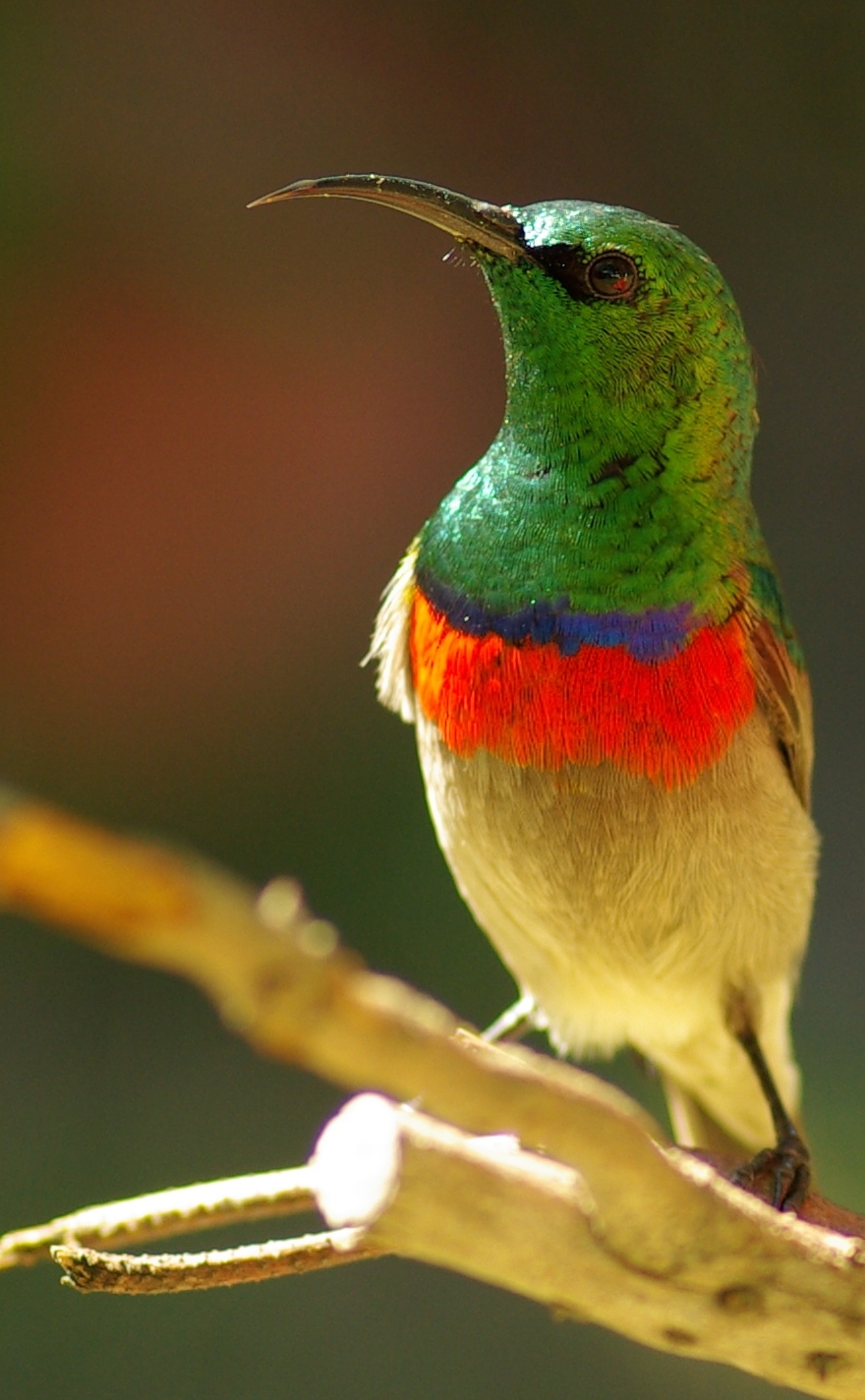
Splendid Sunbird
Cinnyris coccinigastrus
Order: Passeriformes / Family: Nectariniidae

Wikimedia Commons
About the Splendid Sunbird
The Splendid Sunbird (Cinnyris coccinigastrus) is a striking member of the family Nectariniidae, frequently noted for its dazzling appearance and energetic behavior. This species is predominantly found across tropical West Africa, from Senegal to Nigeria. Its vivid coloration plays a crucial role in attracting mates and competing with other males. The ecological significance of the Splendid Sunbird extends beyond mere aesthetics as it plays an integral role in pollination within its habitat. By feeding on nectar, these birds inadvertently transfer pollen from flower to flower, facilitating the reproductive cycles of several plant species.
In addition to its role in pollination, the Splendid Sunbird contributes to the ecosystem by controlling insect populations. During breeding seasons, when the demand for protein increases, they supplement their diet with insects, thus aiding in pest control. The bird's vibrant presence also enhances the biodiversity of the regions it inhabits, making it a key species for birdwatchers and researchers studying tropical ecosystems.
The Splendid Sunbird exhibits seasonal behaviors that align with the availability of food resources. During the dry season, when flower density is low, they may venture into human-modified landscapes such as gardens and orchards where nectar is more abundant. This adaptability underscores their resilience and ability to thrive in changing environments. As a result, the Splendid Sunbird often serves as an indicator of ecosystem health, with its presence signaling a rich, biodiverse habitat.
The Splendid Sunbird belongs to the family Nectariniidae, within the order Passeriformes. These birds typically live 5-8 years, occasionally up to 10 years.
How to Identify a Splendid Sunbird
The adult male Splendid Sunbird is unmistakable with its iridescent green head and back, contrasting with a vivid crimson chest and lower belly. This vibrant plumage makes it a standout among sunbirds. Females and juveniles, however, display more subdued coloration, featuring olive-brown upperparts and yellowish underparts, which can lead to confusion with other sunbird species.
Males exhibit an elongated tail and unique glossy appearance, which can be a useful field mark during identification. In comparison, the females' lack of iridescence and shorter tail offers a stark contrast. Observers should note that juveniles resemble females but might show faint hints of the male's iridescent colors as they mature.
In flight, the Splendid Sunbird maintains a characteristic swift, darting movement, reminiscent of hummingbirds, though they are less agile in hovering. When perched, they often hold an upright posture, accentuating their elongated shape and facilitating easy identification, especially when the sun catches their iridescent feathers, making them appear almost luminescent.
Having trouble telling birds apart? Upload a photo to our bird identification tool for an instant species match.
Splendid Sunbird Habitat and Range
Preferred Habitat
This sunbird species predominantly inhabits tropical and subtropical regions, thriving in wooded savannas, forests, and mangroves. They are frequently observed in secondary forests and plantations, often venturing into gardens and urban areas during certain seasons. The Splendid Sunbird shows a preference for areas where flowering plants are abundant, as these provide critical nectar resources.
It is found from sea level up to elevations of around 1,800 meters, though it is more commonly encountered at lower elevations where insect and flower densities are higher. During the breeding season, its presence in rural areas may increase as these regions often offer more abundant and diverse food sources. In contrast, during the dry season, the sunbird may frequent urban gardens and parks, drawn by the availability of ornamental flowering plants.
Geographic Range
The Splendid Sunbird's range is largely confined to West Africa. It extends from Senegal in the west, across the coastal regions of Guinea, Sierra Leone, and Liberia, eastward through Côte d'Ivoire and Ghana, and into Nigeria. The bird is non-migratory, generally residing within its range year-round.
Its population density is highest in areas where flowering plants are abundant. However, they are adaptable and can be found in both densely vegetated areas and more open, anthropogenic landscapes. The bird does not undertake long-distance migrations, but local movements might occur in response to seasonal variations in food availability, particularly during the dry season when they may travel short distances to find nectar-rich environments.
Want to know which birds visit your area? Browse our backyard birds by location guides for region-specific species lists.
What Does the Splendid Sunbird Eat?
The Splendid Sunbird primarily feeds on nectar, which constitutes the majority of its diet. Its specialized bill allows it to access nectar from a variety of flowering plants, playing a crucial role in pollination. During the breeding season, they increase their intake of insects and spiders to provide necessary protein for their developing young.
These sunbirds exhibit a unique foraging technique, hovering briefly like a hummingbird to extract nectar from flowers or occasionally perching on a nearby branch to feed. They are also known to exploit human-made sources of nectar, such as sugar feeders and flowering ornamental plants in gardens.
Their feeding schedule is mainly diurnal, with peak activity in the early morning and late afternoon when flowers are most abundant with nectar. The Splendid Sunbird's ability to adapt its diet based on seasonal availability highlights its resilience in various environments.
Splendid Sunbird Behavior and Social Structure
The Splendid Sunbird exhibits fascinating social and territorial behaviors, often engaging in dynamic courtship displays. Males perform elaborate aerial displays involving rapid wing beats and calls to attract females. Once paired, they remain generally monogamous throughout the breeding season.
These birds are territorial, with males defending their feeding and nesting grounds aggressively from intruders, including other sunbirds and nectarivorous competitors. They exhibit a series of vocalizations and physical displays to ward off rivals. Socially, they may form loose flocks, especially outside the breeding season, to forage more effectively.
Their daily activities are centered around feeding, with peak activity during the cooler parts of the day. In the presence of predators, such as snakes and larger birds, the Splendid Sunbird relies on rapid flight and agility to evade capture. They often emit alarm calls to alert other birds of potential threats, showcasing their role in the communal defense.
Splendid Sunbird Nesting and Reproduction
The Splendid Sunbird constructs intricate, hanging nests made from grasses, leaves, and spider silk. These nests are typically positioned in shrubs or low trees, often concealed among dense foliage to protect against predators.
A typical clutch consists of two to three eggs, with the female primarily responsible for incubation, which lasts approximately 14 to 16 days. Both parents participate in feeding and caring for the young, which fledge about three weeks post-hatching. The sunbird may raise two broods per year, depending on food availability and environmental conditions.
Their preference for nesting sites near abundant food sources ensures that both adults and fledglings have ready access to the nectar and insects required for energy and growth. This strategic nesting choice minimizes the energetic cost of feeding trips, allowing for more efficient parental care.
Splendid Sunbird Sounds and Vocalizations
The Splendid Sunbird's primary song consists of a series of rapid, high-pitched notes, often described as a tinkling or jingling sound. This song serves both as a mating call and a territorial declaration. Their call notes are generally sharp, metallic chirps, used in communication between mates and as alert signals.
Alarm calls are more urgent and staccato, designed to warn others of approaching predators. At dawn, males typically engage in a chorus of songs, establishing territory boundaries and attracting potential mates. The song's rhythm and pitch can vary slightly among individuals, providing a unique acoustic signature for each bird.
Interesting Facts About the Splendid Sunbird
- 1The Splendid Sunbird can hover like a hummingbird, an uncommon trait among sunbirds.
- 2Males display iridescent plumage that changes color depending on the angle of light.
- 3Despite their small size, Splendid Sunbirds are aggressive defenders of territories.
- 4They can consume up to 50% of their body weight in nectar daily.
- 5The species plays a key role in pollinating over 20 different plant species.
- 6Their nests, made from spider silk, can stretch and expand to accommodate growing chicks.
- 7Splendid Sunbirds are known to visit the same flowering plants at specific times each day.
Splendid Sunbird Conservation Status
The Splendid Sunbird currently holds a status of Least Concern on the IUCN Red List, with population trends considered stable. Despite habitat loss in some regions due to deforestation and agricultural expansion, its adaptability to secondary habitats and urban areas has helped maintain stable numbers. Primary threats include habitat degradation and fragmentation, but conservation efforts focused on preserving natural habitats and promoting urban green spaces have contributed positively. Historically, the sunbird population has remained relatively stable, with no significant declines reported in recent decades, attesting to its resilient nature.
Other Nectariniidae Species


Birds Similar to the Splendid Sunbird
These species are often confused with the Splendid Sunbird due to similar appearance or overlapping range.