
Spotted Shag
Phalacrocorax punctatus
Order: Suliformes / Family: Phalacrocoracidae
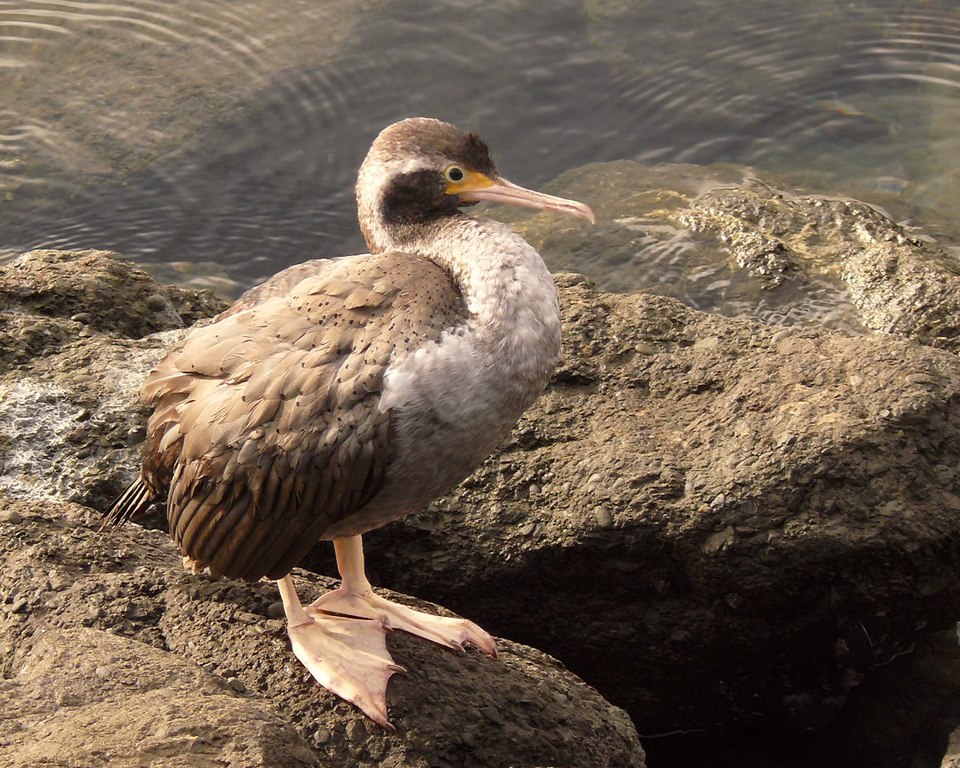
Wikimedia Commons
About the Spotted Shag
The Spotted Shag, scientifically known as Phalacrocorax punctatus, is a unique seabird endemic to New Zealand. Its distinctive appearance and behavior make it an intriguing subject for bird enthusiasts and researchers alike. This medium-sized cormorant features a striking appearance with its delicate facial spots and elongated crest, most prominent during the breeding season. The bird's plumage includes hues of green, blue, and brown, contributing to its camouflage against the rocky coastal habitats it frequents. Spotted Shags exhibit a close affinity for coastal environments, often residing in colonies on rocky outcrops along the South Island, as well as parts of the North Island. They are primarily non-migratory, but some populations may exhibit local movements in response to food availability and breeding requirements. The ecological role of the Spotted Shag is vital, as it serves as both a predator and a prey species within its marine ecosystem. As a piscivorous bird, it helps regulate fish populations, contributing to the balance of its environment. During the breeding season, which typically spans from August to March, Spotted Shags become highly territorial, establishing nests on rocky cliffs or ledges. Their nesting sites are often shared with other seabird species, such as gannets and gulls, highlighting their adaptability to crowded environments. Outside the breeding season, these birds may form larger flocks, though they retain a strong site fidelity to their breeding territories. Despite being relatively stable in population, the Spotted Shag faces ecological pressures from habitat degradation and human activities. Conservation efforts focus on preserving coastal habitats and monitoring population trends to ensure their continued presence in New Zealand's marine landscape.
The Spotted Shag belongs to the family Phalacrocoracidae, within the order Suliformes. These birds typically live average 10-12 years with a max recorded of 20 years..
How to Identify a Spotted Shag
The Spotted Shag is immediately recognizable by its elegant plumage and distinctive markings. Adult birds display a glossy greenish sheen on their upperparts, contrasted with a pale underbelly. During the breeding season, they develop a striking facial pattern, with a narrow black band running from the eyes to the back of the head, accentuated by a small tufted crest. Juveniles are generally duller, lacking the pronounced facial markings and crest of their adult counterparts. There is little sexual dimorphism in this species, with males and females appearing similar in size and coloration. When observing the Spotted Shag in flight, note its slender silhouette and rapid wingbeats, which distinguish it from the stockier form of the more common Great Cormorant. Perched, it often adopts an upright stance, with its long neck and narrow body giving it a poised and alert appearance. Confusion with other cormorants is minimized by its unique facial markings and the greenish-blue tinge to its plumage, setting it apart in mixed-species rookeries.
Having trouble telling birds apart? Upload a photo to our bird identification tool for an instant species match.
Spotted Shag Habitat and Range
Preferred Habitat
Spotted Shags are intrinsically linked to coastal environments, preferring rocky cliffs, islets, and off-shore rock stacks where they can form substantial breeding colonies. These birds are typically found at elevations ranging from sea level to a few hundred meters. They show a marked preference for marine environments with abundant fish stocks, avoiding heavily urbanized coastlines. Seasonal habitat shifts are minimal, although some movement to nearby sheltered bays may occur outside the breeding season. While primarily coastal, Spotted Shags occasionally venture into adjacent estuarine areas during foraging expeditions.
Geographic Range
The Spotted Shag's range is largely restricted to New Zealand, where it inhabits both the North and South Islands. It is most densely populated along the eastern coast of the South Island, from Marlborough to Otago, with significant colonies also present on the southern and western coasts. In the North Island, smaller populations can be found, though they are less widespread. The species does not undertake long-distance migrations, but local dispersal is common as birds move between foraging and breeding sites. Key population density hotspots include the rugged coastlines of Otago Peninsula and the Banks Peninsula, where colonies can number in the thousands.
Want to know which birds visit your area? Browse our backyard birds by location guides for region-specific species lists.
What Does the Spotted Shag Eat?
The diet of the Spotted Shag primarily consists of small fish and marine invertebrates, which it captures through expert diving. Foraging typically occurs in the early morning and late afternoon, with birds diving to depths of up to 30 meters. The Spotted Shag employs a pursuit-diving technique, using its wings to propel itself underwater with remarkable agility. Seasonal changes in diet are minimal, but prey availability can influence foraging locations and intensity. The bird's diet may also include crustaceans and occasionally cephalopods, depending on the regional abundance of these resources.
Spotted Shag Behavior and Social Structure
Spotted Shags exhibit highly social behavior, forming large colonies during the breeding season. These colonies are often bustling with activity, as birds engage in courtship displays, nest building, and chick rearing. Courtship involves a series of intricate displays, including head-bobbing and synchronized preening, which strengthen pair bonds. Outside the breeding season, Spotted Shags may form smaller flocks, but they generally maintain a strong attachment to breeding sites. Territorial behavior is pronounced during nest establishment, with birds aggressively defending their chosen location from intruders. In response to predators, Spotted Shags rely on a combination of vigilance and group defense, with colony members banding together to deter potential threats. Daily activity patterns revolve around foraging, preening, and resting, with peak activity occurring in the early morning and late afternoon.
Spotted Shag Nesting and Reproduction
The nesting habits of the Spotted Shag are characterized by their preference for cliffside and rocky ledge locations. Nests are constructed using a variety of materials, including seaweed, twigs, and grasses, and are cemented together with guano. Clutch sizes typically range from two to four eggs, with an incubation period of about 30 days. Both parents share incubation duties, taking turns to ensure the eggs remain warm. Once hatched, chicks are fed regurgitated food by both parents and fledge approximately 50 days after hatching. The Spotted Shag generally produces one brood per year, although favorable conditions may occasionally allow for a second.
Spotted Shag Sounds and Vocalizations
The vocalizations of the Spotted Shag are characterized by low, guttural croaks and grunts, often heard during breeding season interactions. These calls, although not melodious, serve as essential communication tools within dense colonies. Alarm calls are more urgent and rapid, alerting colony members to potential threats. During the dawn chorus, a mix of vocalizations can be heard, contributing to the cacophony of a bustling rookery. Compared to other seabirds, the Spotted Shag's calls are relatively subdued, blending into the ambient sounds of coastal environments.
Interesting Facts About the Spotted Shag
- 1During breeding season, the Spotted Shag develops a distinctively elegant crest and facial pattern, enhancing its striking appearance.
- 2Spotted Shags are capable divers, reaching depths of up to 30 meters to capture their prey, showcasing remarkable underwater agility.
- 3The bird's scientific name, Phalacrocorax punctatus, references its spotted appearance, a unique trait among cormorants.
- 4The Spotted Shag's nesting colonies can include thousands of individuals, often sharing space with other seabird species.
- 5Unlike many migratory seabirds, the Spotted Shag remains largely sedentary, with only local movements to optimize food access.
Spotted Shag Conservation Status
Currently, the Spotted Shag is classified as Least Concern by the IUCN, with stable population trends across its range. However, localized threats such as habitat degradation, pollution, and human disturbance could impact specific colonies. Conservation efforts focus on protecting key breeding sites and mitigating human impacts on coastal environments. Historically, the population has remained relatively stable, though monitoring continues to ensure that emerging threats do not precipitate a decline.
Other Phalacrocoracidae Species


Birds Similar to the Spotted Shag
These species are often confused with the Spotted Shag due to similar appearance or overlapping range.

