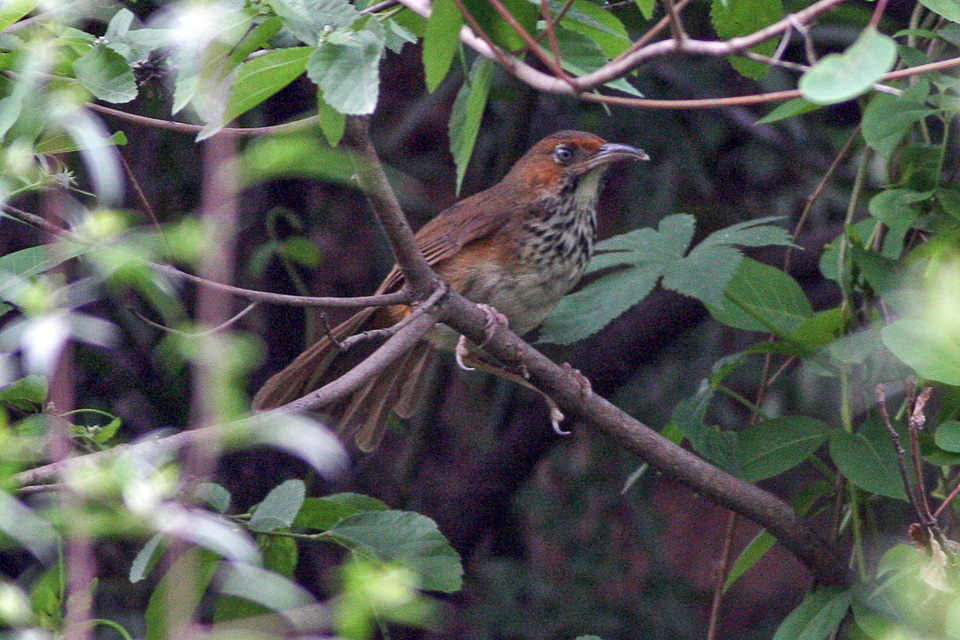
Sri Lanka Scimitar-Babbler
Pomatorhinus melanurus
Order: Passeriformes / Family: Timaliidae

Wikimedia Commons
About the Sri Lanka Scimitar-Babbler
The Sri Lanka Scimitar-Babbler (Pomatorhinus melanurus), an intriguing member of the Timaliidae family, is endemic to the lush landscapes of Sri Lanka. Found predominantly in the island's wet zone, this bird is a quintessential forest dweller, thriving in lowland rainforests and montane forests. Its presence is a testament to the rich biodiversity of these regions, contributing to the ecological balance through its insectivorous diet. The Sri Lanka Scimitar-Babbler plays an essential role in controlling insect populations, an ecological service crucial for maintaining the health of the forest ecosystems.
As a year-round resident, this species exhibits remarkable adaptability to various forest habitats. During the wetter months, the babbler can be found in the dense undergrowth, where it forages actively for insects and small invertebrates. Its behavior shifts subtly with the seasons; for instance, during the dry season, the bird may venture closer to human habitations in search of water and food, a behavior that highlights its adaptability in an ever-changing environment.
The Sri Lanka Scimitar-Babbler is not just a vital player in its ecosystem but also a species of considerable interest to ornithologists and bird watchers. Its presence in the Horton Plains and Sinharaja Forest Reserve, both UNESCO World Heritage Sites, underscores its importance in Sri Lankan biodiversity. By participating in these complex ecological webs, the Sri Lanka Scimitar-Babbler helps ensure the proliferation of numerous plant species by managing pest populations, thereby facilitating seed dispersal and forest regeneration.
The Sri Lanka Scimitar-Babbler belongs to the family Timaliidae, within the order Passeriformes. These birds typically live average 5-8 years with a max recorded of 9 years..
How to Identify a Sri Lanka Scimitar-Babbler
The Sri Lanka Scimitar-Babbler is easily identifiable by its long, down-curved bill, which it uses to probe for insects in the leaf litter. The adult plumage is predominantly brown, with a distinctive white throat and black streaking on the crown and nape. This coloration provides excellent camouflage against the forest floor and foliage. Juveniles resemble adults but have a slightly duller appearance, lacking the full intensity of the white throat markings seen in mature birds. There is little sexual dimorphism, with males and females appearing similar in the field.
This species is occasionally confused with other members of the Scimitar-Babbler genus, but the combination of its unique bill shape and the specific patterning of its plumage assists in accurate identification. When perched, the Sri Lanka Scimitar-Babbler often maintains a slightly hunched posture, which can aid birders in distinguishing it from other songbirds with a more upright stance.
In flight, the Sri Lanka Scimitar-Babbler displays a rather weak and low trajectory, rarely travelling long distances in the air. It relies heavily on its ability to navigate through dense undergrowth on foot, using its strong legs to move swiftly along the forest floor. This ground-dwelling nature often makes sighting these birds a rewarding challenge for avid bird watchers.
Having trouble telling birds apart? Upload a photo to our bird identification tool for an instant species match.
Sri Lanka Scimitar-Babbler Habitat and Range
Preferred Habitat
The Sri Lanka Scimitar-Babbler inhabits the dense, humid forests of Sri Lanka, predominantly in the island's wet zone. It is commonly found in lowland rainforests and montane forests, such as those in the Sinharaja Forest Reserve and Horton Plains. These areas provide the dense undergrowth and thick canopy that this species prefers. The bird is typically encountered at elevations ranging from sea level to about 2,000 meters, adapting well to the varying altitudes within its range.
Seasonal habitat shifts are minimal, as this species is a permanent resident of these forests. However, during drier periods, the Sri Lanka Scimitar-Babbler may be observed near water sources or even in the outskirts of rural villages, although it remains primarily a forest-dwelling bird.
In terms of urban presence, the Sri Lanka Scimitar-Babbler is less frequently found in heavily developed areas, preferring the seclusion of forested regions. Nevertheless, its adaptability allows it to occasionally venture into less disturbed suburban gardens that border forested areas, especially in search of food or water.
Geographic Range
The Sri Lanka Scimitar-Babbler is an endemic species, restricted solely to the island of Sri Lanka. It occupies a wide range within the island's wet zone, from the lowland rainforests to the montane forests. Its presence is particularly noted in protected areas such as the Sinharaja Forest Reserve, Horton Plains National Park, and Knuckles Mountain Range, where dense forests provide ideal habitats.
Unlike many other bird species, the Sri Lanka Scimitar-Babbler does not engage in long-distance migrations. Instead, it remains a resident bird throughout its range, with minimal seasonal movement. This sedentary lifestyle ensures that the species maintains stable populations in its native habitats, although local movements may occur in response to food availability and climatic conditions.
Population densities tend to be higher in undisturbed forested areas, where the bird benefits from a rich supply of food and suitable nesting sites. The areas surrounding the central highlands are particularly important for the conservation of this species, as they offer the diverse ecosystems necessary for its survival.
Want to know which birds visit your area? Browse our backyard birds by location guides for region-specific species lists.
What Does the Sri Lanka Scimitar-Babbler Eat?
The diet of the Sri Lanka Scimitar-Babbler predominantly consists of insects and other small invertebrates. It employs its long, curved bill to probe into leaf litter, bark crevices, and undergrowth, effectively uncovering hidden prey. This bird's foraging technique is both meticulous and energetic, as it turns over leaves and disturbs the soil to locate its meals.
During wetter months, when insect activity peaks, the Sri Lanka Scimitar-Babbler's diet becomes richer in terms of variety and abundance. The bird may also consume small fruits and seeds, particularly when insect availability diminishes. This dietary flexibility is crucial for its survival in the diverse and sometimes challenging environments it inhabits.
The bird's feeding schedule aligns with its diurnal activity pattern, with foraging taking place primarily during the daylight hours. It is most active in the early morning and late afternoon, times when insect prey is similarly active. The Sri Lanka Scimitar-Babbler's diet, while primarily insectivorous, showcases its adaptability to seasonal changes, a trait that ensures its continued success in the dynamic forest ecosystems of Sri Lanka.
Sri Lanka Scimitar-Babbler Behavior and Social Structure
The Sri Lanka Scimitar-Babbler is a socially complex bird, often observed in small family groups rather than large flocks. These groups exhibit strong territorial behaviors, particularly during the breeding season, when they aggressively defend their chosen nesting areas from intruders.
Courtship displays are subtle compared to more flamboyant species, involving mutual preening and synchronized movements among mates. Vocal communication plays a vital role in these displays, as well as in maintaining group cohesion and territory defense. The bird's calls are often heard echoing through the forest, a testament to its territorial nature.
In response to predators, the Sri Lanka Scimitar-Babbler employs a combination of vocal alarms and evasive maneuvers. When threatened, it may freeze, relying on its camouflaged plumage to blend into the undergrowth, or it may issue sharp, repetitive alarm calls to alert its group members.
Daily activity patterns revolve around foraging and social interactions, with peak activity occurring during the cooler parts of the day. The bird's behavior reflects its adaptability, as it can adjust its foraging strategies and social structures to optimize survival and reproductive success in its forested habitat.
Sri Lanka Scimitar-Babbler Nesting and Reproduction
The nesting habits of the Sri Lanka Scimitar-Babbler reveal much about its adaptability and resourcefulness. This species typically constructs its nest in dense undergrowth or low shrubs, where it is well camouflaged from potential predators. The nest itself is a dome-shaped structure, crafted from leaves, grass, and other plant materials, providing a safe and concealed environment for its eggs.
A typical clutch consists of 2 to 3 eggs, with both parents sharing responsibilities for incubation and feeding of the young. The incubation period lasts approximately 14 to 16 days, during which the parents take turns keeping the eggs warm and protected. After hatching, the chicks remain in the nest for around two weeks before fledging.
Parental roles are well defined, with both the male and female contributing equally to feeding and protecting the chicks. This cooperative breeding strategy ensures high survival rates for the offspring. The species typically raises one or two broods per year, depending on environmental conditions and food availability.
Sri Lanka Scimitar-Babbler Sounds and Vocalizations
The Sri Lanka Scimitar-Babbler is known for its distinctive and melodious song, characterized by a series of clear, whistling notes that often end in a gentle trill. This song, typically delivered from a concealed perch within dense foliage, serves both as a territorial marker and a means of communication between group members.
Call notes are sharp and repetitive, often used in the context of alarm calls or when coordinating movements within its group. When alarmed, this bird emits a series of quick, harsh notes that alert others to potential danger in the vicinity.
During the early morning hours, the Sri Lanka Scimitar-Babbler participates in the dawn chorus, its voice blending with the myriad of forest sounds. The quality and rhythm of its song can be compared to a flute-like melody, distinct yet harmonious, adding to the symphony of the forest.
Interesting Facts About the Sri Lanka Scimitar-Babbler
- 1The Sri Lanka Scimitar-Babbler's long, curved bill is perfectly adapted for probing dense undergrowth for insects.
- 2This species is endemic to Sri Lanka, meaning it is found nowhere else in the world, highlighting its unique ecological niche.
- 3Despite its reclusive nature, the Sri Lanka Scimitar-Babbler contributes significantly to the control of insect populations in its habitat.
- 4The bird's melodious whistling song is a key feature of the dawn chorus in Sri Lankan forests, often heard before sunrise.
- 5Unlike many birds, both male and female Sri Lanka Scimitar-Babblers participate equally in nest building and chick rearing.
- 6The Sri Lanka Scimitar-Babbler's name reflects its distinctive scimitar-shaped bill, a unique feature among forest birds.
- 7This species thrives in the dense forests of Sri Lanka, particularly in UNESCO World Heritage Sites like Sinharaja Forest Reserve.
Sri Lanka Scimitar-Babbler Conservation Status
The Sri Lanka Scimitar-Babbler is currently listed as Least Concern by the IUCN, with populations considered stable. However, habitat destruction poses a significant threat to this forest-dependent species. Deforestation for agriculture, urban expansion, and logging has led to the fragmentation of critical habitats, which could impact long-term population stability. Conservation efforts within Sri Lanka focus on preserving and restoring forest habitats, particularly within protected areas such as Sinharaja and Horton Plains. These efforts are crucial for maintaining the ecological balance and ensuring the survival of not only the Sri Lanka Scimitar-Babbler but also the myriad of species that share its habitat. Historically, the bird has shown resilience in the face of environmental changes, but ongoing conservation measures are necessary to mitigate the impacts of human activities. Continued monitoring and research are essential to understanding population dynamics and threats, ensuring effective conservation strategies.
Other Timaliidae Species


Birds Similar to the Sri Lanka Scimitar-Babbler
These species are often confused with the Sri Lanka Scimitar-Babbler due to similar appearance or overlapping range.