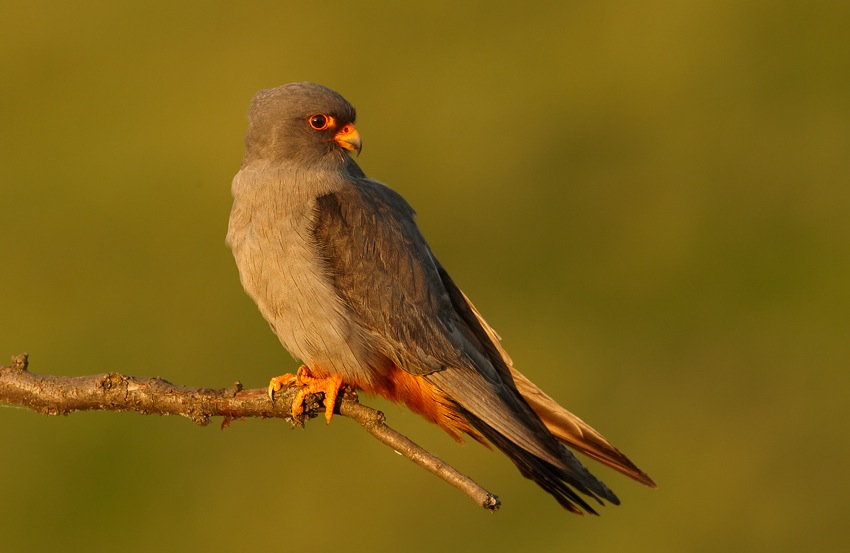
Taita Falcon
Falco fasciinucha
Order: Falconiformes / Family: Falconidae

Wikimedia Commons
About the Taita Falcon
The Taita Falcon (Falco fasciinucha) is a small, elusive raptor with a reputation for agility and speed. It inhabits the highlands and escarpments of eastern Africa, with its presence primarily noted in regions such as the Taita Hills in Kenya, from which it derives its name, as well as parts of Zimbabwe and South Africa. This bird's significance lies in its specialized niche and rare sightings, making it a species of interest among ornithologists and birdwatchers. The Taita Falcon plays a crucial ecological role as a predator, controlling the populations of small birds and insects.
This falcon is often seen in rugged landscapes, favoring steep cliffs and rocky outcrops where it can perch and survey its territory. Its preference for these habitats is likely due to the abundance of prey and suitable nesting sites. The Taita Falcon is known for its remarkable hunting skills, often engaging in swift aerial pursuits to capture prey mid-flight. Seasonal behaviors include slight shifts in altitude depending on prey availability, but the species generally remains within its established range year-round.
As a rare and elusive bird, the Taita Falcon's conservation status is a topic of concern. Habitat destruction and human encroachment pose significant threats to its survival. Efforts to study and protect this species are ongoing, with dedicated research groups monitoring its populations and promoting habitat conservation. The Taita Falcon's presence indicates a healthy ecosystem, and its conservation is tied to the preservation of the unique highland environments it inhabits.
The Taita Falcon belongs to the family Falconidae, within the order Falconiformes. These birds typically live average lifespan is around 12 years, with some living up to 15 years..
How to Identify a Taita Falcon
Adult Taita Falcons are characterized by their small size, roughly 25 to 28 centimeters in length, with a wingspan of about 55 to 60 centimeters. The adults display a striking plumage with a barred rufous nape and a slate-gray back, providing excellent camouflage against rocky terrains. The underparts are pale with fine dark streaks, and their tail is relatively short compared to other falcons. Juvenile Taita Falcons exhibit a more brownish coloration with less pronounced barring, helping them blend into their environment until maturity.
Males and females of this species are similar in appearance, though females are slightly larger, a common trait among raptors. The Taita Falcon can be confused with the Peregrine Falcon due to similar habitat preferences; however, it is smaller and lacks the Peregrine's distinct facial markings. In flight, the Taita Falcon exhibits rapid wingbeats and agile maneuvers, often hugging cliffsides and making sharp turns.
Perching behavior is also distinctive, as the Taita Falcon tends to choose elevated and exposed perches where it can spot prey effectively. Its posture is upright with a keen alertness, the sharp talons and beak poised for hunting. This silhouette, coupled with its unique plumage, aids in its identification in the field.
Having trouble telling birds apart? Upload a photo to our bird identification tool for an instant species match.
Taita Falcon Habitat and Range
Preferred Habitat
The Taita Falcon favors rugged, mountainous terrains, typically found in regions with steep cliffs and escarpments. These environments provide the necessary vantage points for hunting and nesting. It is commonly found at elevations ranging from 1,200 to 3,000 meters, favoring areas where open landscapes meet forested regions. In countries like Kenya, Zimbabwe, and South Africa, the falcon's presence is often noted in protected areas where human disturbance is minimal.
There is no significant seasonal shift in habitat preferences for the Taita Falcon, although minor altitudinal movements may occur in response to prey availability. Unlike some raptors, this species does not adapt well to urban environments, preferring the isolation of less disturbed landscapes where it can maintain its hunting territories with minimal competition.
Geographic Range
The Taita Falcon's range is quite limited compared to other raptors, primarily concentrated in the eastern and southern parts of Africa. It is chiefly found in the Taita Hills of Kenya, the highlands of Zimbabwe, and parts of northeastern South Africa. These areas represent the breeding range where the falcon is most commonly observed.
There is little evidence to suggest long-distance migrations, with the species considered largely sedentary, although some altitudinal movements might occur within its range to follow prey. Population densities are low, with sightings often isolated and sporadic, leading to the Taita Falcon being considered a rare sight even within its preferred habitats. Conservation areas within these regions serve as crucial strongholds for maintaining stable populations.
Want to know which birds visit your area? Browse our backyard birds by location guides for region-specific species lists.
What Does the Taita Falcon Eat?
The Taita Falcon's diet primarily consists of small birds and large insects, which it hunts with remarkable speed and precision. Its hunting technique often involves high-speed chases, capturing prey mid-air with its sharp talons. The falcon's prey choices vary seasonally, with a higher reliance on insects during warmer months when they are more plentiful.
In addition to avian prey, the Taita Falcon may also consume small mammals, although this is less common. Its size dictates the prey it can capture, often targeting birds similar in size to sparrows or finches. The falcon typically hunts during daylight hours, with peak activity occurring in the early morning and late afternoon when prey is most active.
Taita Falcon Behavior and Social Structure
The Taita Falcon exhibits solitary behavior, often seen alone or in pairs during the breeding season. It is fiercely territorial, defending its chosen cliffside territory from other raptors and potential threats. Courtship displays involve aerial acrobatics, with the male performing swooping dives and presenting prey to the female as part of the bonding ritual.
This falcon does not form large flocks, instead maintaining a solitary existence except during mating. When threatened, it may emit alarm calls and engage in aggressive aerial maneuvers to deter predators. It is primarily diurnal, with peak activity during the cooler parts of the day, avoiding the midday heat. The Taita Falcon's daily routine includes periods of perching and scanning for prey interspersed with active hunting flights.
Taita Falcon Nesting and Reproduction
Taita Falcons prefer to nest on cliff ledges or rocky outcrops where they are safe from ground predators. They do not build traditional nests but instead use scrapes on bare rock surfaces, sometimes using abandoned nests of other birds such as crows or even old raptor nests.
The clutch size typically consists of 2 to 4 eggs, which the female incubates for approximately 28 to 30 days. Both parents participate in feeding the chicks after hatching, with fledging occurring at about 35 to 40 days post-hatch. The Taita Falcon usually raises one brood per year, although environmental conditions may influence this.
Parental roles are well-defined, with the male primarily responsible for hunting and providing food, while the female focuses on incubation and nurturing the chicks. This division ensures that the young receive constant care and protection during the critical early stages of development.
Taita Falcon Sounds and Vocalizations
The Taita Falcon's vocalizations include a high-pitched, rapid "kik-kik-kik" call, often heard during flight or when alarmed. These calls serve as territory markers and warnings to intruders. The falcon's call is sharp and piercing, similar in urgency to the call of a kestrel but distinctly higher in pitch.
During courtship, softer, more melodic calls may be exchanged between pairs, signaling bonding and cooperation. These sounds, while not as harsh as the alarm calls, maintain a rhythmic quality that facilitates pair communication. The Taita Falcon does not participate in a dawn chorus like many songbirds, but remains vocally active throughout the day, especially during periods of increased territorial activity.
Interesting Facts About the Taita Falcon
- 1The Taita Falcon is among the smallest falcons in Africa, making it a master of agile flight in pursuit of prey.
- 2Unlike many raptors, the Taita Falcon often nests on bare rock surfaces, avoiding traditional nest building.
- 3Its name is derived from the Taita Hills in Kenya, one of its known strongholds and a critical habitat area.
- 4The Taita Falcon's diet flexibility, shifting between birds and insects, allows it to adapt to seasonal prey availability.
- 5With a wingspan of just 55 to 60 centimeters, the Taita Falcon is adept at navigating the narrow spaces of cliffside habitats.
Taita Falcon Conservation Status
The Taita Falcon is currently classified as Near Threatened by the IUCN due to its limited range and declining numbers. Habitat loss from agriculture and urban development poses significant threats, reducing available nesting sites and hunting grounds. Conservation efforts focus on habitat preservation and monitoring population trends. Historical data indicate stable populations in protected areas, but outside these regions, the falcon faces ongoing challenges. Conservation strategies include establishing more protected areas and conducting research to better understand its ecology and needs. Public awareness campaigns aim to mitigate human impacts and promote the importance of preserving natural habitats.
Other Falconidae Species


Birds Similar to the Taita Falcon
These species are often confused with the Taita Falcon due to similar appearance or overlapping range.