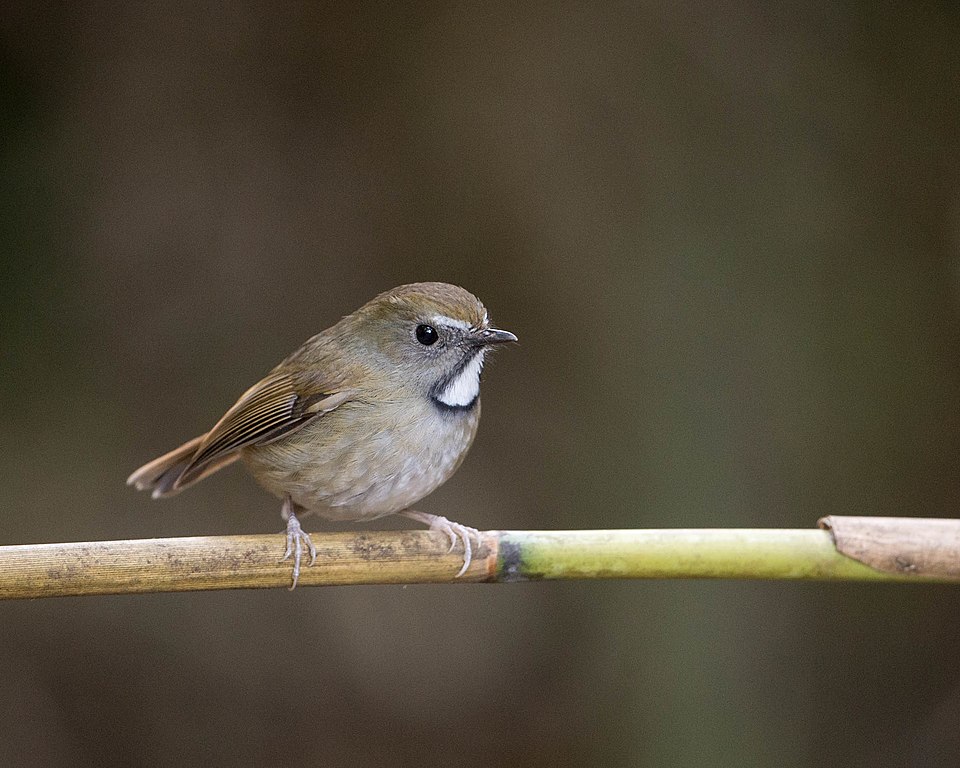
Taiwan Shortwing
Brachypteryx goodfellowi
Order: Passeriformes / Family: Muscicapidae

Wikimedia Commons
About the Taiwan Shortwing
The Taiwan Shortwing, Brachypteryx goodfellowi, is a captivating bird species endemic to the montane forests of Taiwan. As a member of the Muscicapidae family, this small passerine bird thrives in the cool, dense undergrowth of its native habitat, often shrouded in mist and mystery. Its presence is a vital indicator of the health of Taiwan's montane ecosystems, where it plays a role in the intricate web of life by aiding in seed dispersal and insect population control. The Taiwan Shortwing is particularly significant because it is restricted to Taiwan, highlighting the island's unique biodiversity and the importance of conserving its natural habitats.
This bird prefers the secluded understory of subtropical and temperate forests, where it can be seen hopping vigorously through the leaf litter in search of food. Seasonal variations in its behavior include altitudinal migrations during the breeding season, as it moves to higher elevations for nesting. In contrast, during the non-breeding season, the Taiwan Shortwing descends to lower elevations, taking advantage of the warmer temperatures and abundant food supply.
The ecological role of the Taiwan Shortwing extends beyond its immediate environment. Its diet consists largely of insects, which it gleans from the forest floor. This foraging behavior helps control insect populations, maintaining a balanced ecosystem. Additionally, as it consumes various fruits, the bird aids in seed dispersal, promoting forest regeneration. This dual role underscores the shortwing's importance in maintaining the health and diversity of Taiwan's forests. As forests face threats from deforestation and climate change, the Taiwan Shortwing stands as a symbol of the delicate balance between species and their habitats.
The Taiwan Shortwing belongs to the family Muscicapidae, within the order Passeriformes. These birds typically live typically lives around 4-6 years in the wild..
How to Identify a Taiwan Shortwing
The Taiwan Shortwing is a visually striking bird, primarily recognized by its deep blue plumage, which is most vivid in adult males. The male displays a bright cobalt blue coloration across its head, back, and wings, while its underparts are a paler blue. In contrast, females and juveniles have a more subdued appearance. Females exhibit a brownish coloration with hints of blue on the wings and tail, while juveniles are usually duller, showing a mottled pattern that provides effective camouflage in the forest understory.
A distinguishing feature of the Taiwan Shortwing is its compact and robust body, measuring about 13-14 cm in length. It has a relatively short tail and wings, which contribute to its name. This wing structure aids in maneuvering through dense underbrush rather than long-distance flying. The shortwing's perching posture is upright, often with a cocked tail, which can be a helpful clue for identification in the field.
While confusion with other species is limited due to its restricted range, the Taiwan Shortwing can occasionally be mistaken for other blue birds in mixed forest flocks. However, its habitat preference and unique combination of colors help distinguish it from similar species. The bird's flight silhouette is compact, maintaining a low profile as it flits between low branches and the forest floor.
Having trouble telling birds apart? Upload a photo to our bird identification tool for an instant species match.
Taiwan Shortwing Habitat and Range
Preferred Habitat
The Taiwan Shortwing is intimately associated with the lush montane forests of Taiwan, typically found at elevations ranging from 1,500 to 3,000 meters. These forests, often blanketed in mist, provide the cool, damp conditions the bird requires. The habitat consists mainly of subtropical and temperate broadleaf forests, which offer a rich understory for foraging and nesting.
During the breeding season, the Taiwan Shortwing ascends to higher elevations, seeking out dense thickets and forest edges. As the seasons change and temperatures drop, it descends to lower elevations, where food sources remain abundant and the climate is milder. This altitudinal migration reflects the bird's adaptability to seasonal changes within its habitat.
While the Taiwan Shortwing is a forest specialist, it does not typically venture into urban areas. Its preference for undisturbed forest environments means that it is more often found in remote, less accessible regions, far from human settlements. Conservation of these forest habitats is crucial to the survival of the species and the myriad other organisms that share its ecosystem.
Geographic Range
The Taiwan Shortwing, as its name implies, is endemic to the island of Taiwan. Its distribution is confined to the montane regions of the island, where it occupies a specific ecological niche. Unlike many other bird species, the Taiwan Shortwing does not migrate long distances. Instead, it exhibits altitudinal migration within its restricted range, moving between different elevations depending on the season.
During the breeding season, the bird occupies higher elevations where cooler temperatures and dense vegetation create suitable conditions for nesting. In contrast, the non-breeding season sees the Taiwan Shortwing descending to lower altitudes, where it can continue to forage effectively despite the colder climate.
The population density of the Taiwan Shortwing is highest in the central and northern mountain ranges of Taiwan. These areas, characterized by their dense forest cover and relatively undisturbed nature, offer the optimal environment for the species. As a result, conservation efforts are focused in these regions to ensure the preservation of the bird's habitat and the maintenance of healthy population levels.
Want to know which birds visit your area? Browse our backyard birds by location guides for region-specific species lists.
What Does the Taiwan Shortwing Eat?
The diet of the Taiwan Shortwing primarily consists of insects, which it meticulously gleans from the forest floor. This insectivorous diet includes a variety of arthropods such as beetles, ants, and spiders. The bird actively forages among the leaf litter and low vegetation, using its sharp eyesight to detect and capture prey.
Seasonal changes in food availability prompt shifts in the diet of the Taiwan Shortwing. During the warmer months, when insect populations are abundant, the bird relies heavily on this food source. However, as temperatures drop and insects become less accessible, the shortwing supplements its diet with small fruits and seeds. This dietary flexibility allows it to survive in the fluctuating conditions of its montane habitat.
The Taiwan Shortwing employs a foraging technique characterized by short, deliberate hops and pauses, during which it scans for movement among the leaves. This methodical approach maximizes its efficiency in capturing prey and is a testament to its adaptation to the dense forest environment. The bird typically feeds during daylight hours, with peak activity observed in the early morning and late afternoon.
Taiwan Shortwing Behavior and Social Structure
The Taiwan Shortwing is a solitary bird, often observed alone or in pairs rather than in large flocks. This behavior is typical of many forest-dwelling birds that rely on camouflage and stealth to avoid predators. The shortwing maintains a territory, which it defends by vocalizing and displaying its plumage, although outright aggression is rare.
Courtship displays are subtle but involve the male showcasing his vibrant blue plumage and performing a series of short flights and hops to attract a mate. Once paired, the Taiwan Shortwing exhibits strong monogamous tendencies, with both parents participating in the care of their young.
The bird's response to predators is primarily to rely on its cryptic plumage and the dense forest cover. It remains motionless or retreats into the undergrowth when threatened. Daily activity patterns include foraging primarily in the early morning and late afternoon, while midday is often spent resting in the shade. This pattern helps the bird conserve energy during the hottest part of the day.
Taiwan Shortwing Nesting and Reproduction
The nesting habits of the Taiwan Shortwing reflect its adaptation to the montane forest environment. Nests are typically constructed close to the ground, hidden within dense vegetation or among rocks, providing protection from predators and the elements. The female primarily constructs the nest using a variety of materials, including moss, leaves, and small twigs, creating a cup-shaped structure that offers a secure environment for raising young.
Clutch size generally ranges from two to four eggs, which are pale with brown speckles, blending well with the nest surroundings. Both parents share incubation duties, though the female spends more time on the nest. The incubation period lasts approximately two weeks, after which the altricial chicks hatch.
Parental care is a joint effort, with both the male and female involved in feeding and protecting the chicks. The fledging period occurs around two weeks after hatching, although the young remain dependent on their parents for several more weeks as they learn to forage independently. The Taiwan Shortwing typically raises one brood per year, although favorable conditions may occasionally lead to a second brood.
Taiwan Shortwing Sounds and Vocalizations
The song of the Taiwan Shortwing is a series of melodious, flute-like notes delivered in a slow, deliberate sequence. This primary song serves to establish territory and attract a mate, resonating through the dense forest with a clear and mellow tone. The song's rhythm is steady, with each note distinctly separated from the next, creating a soothing and pleasant soundscape.
In addition to its song, the Taiwan Shortwing has a variety of call notes used for communication between mates or alerting to danger. These calls are typically shorter and more abrupt than the song, often consisting of sharp chips or whistles. Alarm calls are more urgent, designed to warn others of potential threats and encourage swift retreat.
During the dawn chorus, the Taiwan Shortwing's song can be heard echoing through its montane habitat, often as one of the more prominent sounds in the early morning hours. This vocal activity underscores its role as a key contributor to the auditory landscape of Taiwan's forests.
Interesting Facts About the Taiwan Shortwing
- 1The Taiwan Shortwing is one of only two shortwing species found in Taiwan, the other being the White-browed Shortwing.
- 2Despite its vibrant plumage, the Taiwan Shortwing is notoriously difficult to spot due to its secretive nature and preference for dense undergrowth.
- 3The scientific name Brachypteryx goodfellowi honors British ornithologist Walter Goodfellow, who collected the type specimen.
- 4The Taiwan Shortwing is a member of the Muscicapidae family, which includes Old World flycatchers and chats.
- 5Taiwan's unique geography, with its high mountain ranges, provides the specific habitat necessary for the Taiwan Shortwing's survival.
- 6The bird's short wings are an adaptation that allows it to maneuver easily through dense forest vegetation.
- 7The Taiwan Shortwing's song is often compared to the clear, melodic notes of a flute, distinguishing it from other forest birds.
Taiwan Shortwing Conservation Status
The Taiwan Shortwing is currently listed as Near Threatened on the IUCN Red List, reflecting concerns about habitat loss and fragmentation. While the population is considered stable in some areas, ongoing deforestation and development pose significant threats to its montane forest environment. These activities can reduce the availability of suitable nesting and foraging sites, leading to declines in local populations. Conservation efforts focus on preserving the integrity of Taiwan's mountain forests, with protected areas and national parks playing a crucial role in safeguarding the species' habitat. Research and monitoring programs aim to better understand the bird's ecological needs and inform conservation strategies. Historically, the Taiwan Shortwing has faced challenges as human activity expanded into previously remote areas. However, increased awareness and conservation initiatives offer hope for maintaining healthy populations in the future. Continued protection of its forest habitat remains essential to ensuring the long-term survival of this unique and beautiful bird.