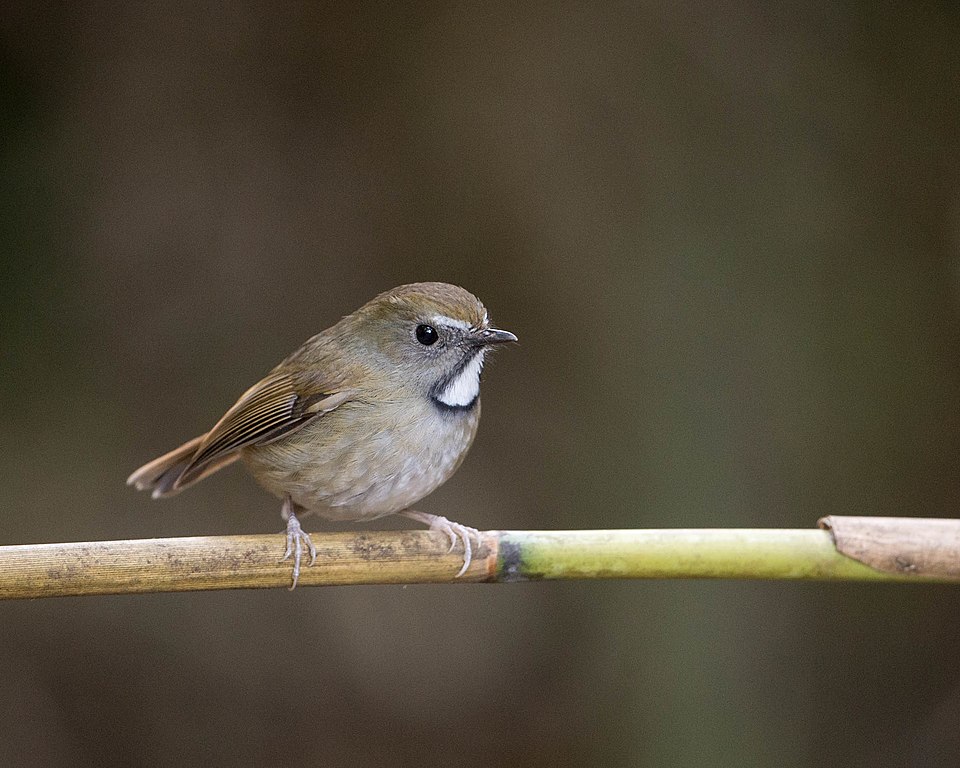
Taiwan Whistling-Thrush
Myophonus insularis
Order: Passeriformes / Family: Muscicapidae

Wikimedia Commons
About the Taiwan Whistling-Thrush
The Taiwan Whistling-Thrush, Myophonus insularis, is a captivating songbird endemic to the mountainous regions of Taiwan. Its brilliant metallic blue plumage and rich, melodious whistle distinguish it among the avian residents of East Asia. This bird's ecological role is significant in the forest ecosystems of Taiwan, where it is commonly found along mountain streams and shaded forest paths. The lush forests of Alishan, Yushan, and Taroko National Park serve as prime habitats for this species, where it often engages in its vocal performances, adding a musical backdrop to the verdant landscape.
The Taiwan Whistling-Thrush plays a crucial role in seed dispersal and insect population control. By feeding on a mix of fruits and insects, it aids in maintaining the balance of forest ecosystems. Its presence indicates a healthy environment, as it thrives in undisturbed habitats with abundant food resources. The bird's preference for pristine habitats underscores the importance of conserving Taiwan's natural forests.
Seasonal behaviors of the Taiwan Whistling-Thrush are particularly notable during the breeding season, which typically spans from March to July. During this time, males become more vocal, using their songs to establish territories and attract mates. The thrush's song, described as a series of clear, fluting notes, can be heard echoing through the forests, especially at dawn and dusk. This bird’s adaptability to different forest types, from subtropical lowlands to montane forests, highlights its resilience, though it remains dependent on Taiwan's forested areas for survival.
The Taiwan Whistling-Thrush belongs to the family Muscicapidae, within the order Passeriformes. These birds typically live typically around 5-7 years, with some individuals reaching 10 years in the wild..
How to Identify a Taiwan Whistling-Thrush
The Taiwan Whistling-Thrush is a medium-sized bird, measuring around 30 cm in length. Its most striking feature is its iridescent blue plumage, which covers the head, back, and wings, lending it a distinctive and eye-catching appearance. The underparts tend to be slightly duller, merging into a darker blue, almost black on the lower belly and vent. A notable field mark is the bird's pale blue patch on the shoulder, which is particularly visible when it spreads its wings.
Juvenile birds differ from adults by having a more subdued coloration, with a mix of brown and blue feathers. Males and females are similar in appearance, although males may display slightly brighter plumage during the breeding season. When perched, the Taiwan Whistling-Thrush adopts an upright posture, often flicking its tail and wings, which can help in identification.
In flight, the Taiwan Whistling-Thrush exhibits strong, direct flight with rapid wingbeats. It can be distinguished from similar species such as the Blue Whistling-Thrush by its smaller size and the lack of a pronounced crest. Its song and calls also differ, offering another method for differentiating it from other thrushes.
Having trouble telling birds apart? Upload a photo to our bird identification tool for an instant species match.
Taiwan Whistling-Thrush Habitat and Range
Preferred Habitat
The Taiwan Whistling-Thrush predominantly inhabits the forested regions of Taiwan. It is commonly found in subtropical and montane forests, thriving in areas with dense canopy cover and proximity to streams and rivers. This species prefers elevations ranging from 300 meters to 2500 meters, which provides a wide range of forest types, from subtropical woodlands to temperate montane forests.
In addition to natural forests, the Taiwan Whistling-Thrush can sometimes be found in more disturbed habitats, such as secondary forests and forest edges, as long as there is sufficient tree cover and water sources. Unlike some other thrushes, it rarely ventures into urban areas, preferring the tranquility and resources offered by natural environments.
Seasonal shifts in habitat usage are minimal, as the bird remains largely within its established territories throughout the year. However, it may move to slightly lower elevations during harsh weather conditions in the winter months.
Geographic Range
The Taiwan Whistling-Thrush is endemic to Taiwan, making it a species of particular interest to ornithologists studying the fauna of this island. Its range encompasses the entire island, though it is more densely populated in the central and northern mountain ranges, where suitable habitat is abundant. The Alishan Range and Yushan National Park are notable hotspots where populations of this species are particularly robust.
Due to its residency on the island, the Taiwan Whistling-Thrush does not engage in long-distance migrations. It remains within its established territories year-round, though minor altitudinal movements may occur in response to seasonal changes in temperature and food availability.
The bird's distribution is largely confined to areas with rich forest cover, making conservation of these habitats crucial for its continued survival. Given the species' limited geographic range and specific habitat requirements, any environmental changes pose potential risks to its population stability.
Want to know which birds visit your area? Browse our backyard birds by location guides for region-specific species lists.
What Does the Taiwan Whistling-Thrush Eat?
The diet of the Taiwan Whistling-Thrush is diverse, primarily consisting of insects, small invertebrates, and fruits. Its diet shifts with the seasons, taking advantage of the most readily available food sources. In the spring and summer, insects such as beetles, caterpillars, and grasshoppers form a significant portion of its diet. The bird employs an active foraging technique, often seen hopping along stream banks and forest floors, flipping over leaves and small stones in search of prey.
During the autumn and winter months, as insect availability decreases, the Taiwan Whistling-Thrush turns to a more fruit-based diet. Berries and small fruits from native trees and shrubs become crucial food sources. This dietary flexibility helps the bird maintain its energy needs throughout the year, despite seasonal changes in food availability.
The Taiwan Whistling-Thrush typically forages alone or in pairs, rarely joining mixed-species flocks. Its feeding schedule aligns with the cooler parts of the day, with peak activity occurring during the early morning and late afternoon.
Taiwan Whistling-Thrush Behavior and Social Structure
The Taiwan Whistling-Thrush exhibits a range of intriguing behaviors, particularly during the breeding season. It is generally solitary or found in pairs, with a strong territorial instinct. Males are especially vocal, using their melodious songs to defend their territories and attract mates. These songs consist of a series of clear, whistling notes that can be heard resonating through the forests at dawn and dusk.
Courtship displays involve the male performing a series of aerial acrobatics and singing to demonstrate fitness and attract a female. Once paired, the birds remain monogamous, working together to defend their territory from intruders. Aggressive displays and vocalizations are common when other birds encroach upon established boundaries.
The Taiwan Whistling-Thrush is diurnal, with peak activity occurring during the cooler morning and late afternoon hours. It responds to predators, such as snakes and raptors, with alarm calls and evasive flights. Despite its tendency to remain in well-forested areas, it occasionally ventures into more open spaces in search of food, displaying remarkable adaptability in its foraging behavior.
Taiwan Whistling-Thrush Nesting and Reproduction
The nesting habits of the Taiwan Whistling-Thrush reflect its adaptability and resourcefulness. This species prefers to build its nests in sheltered locations, often using crevices in rocks or banks near streams. Such sites offer protection from predators and harsh weather conditions. The nest itself is a bulky structure, crafted from a combination of twigs, moss, and leaves, lined with softer materials like feathers and fine grasses.
A typical clutch consists of 2 to 4 eggs, with both parents sharing incubation duties, which last approximately 14 to 16 days. The eggs are pale blue, with occasional speckling. Once hatched, the chicks are altricial, requiring substantial parental care. Both parents participate actively in feeding the young, bringing insects and small fruits to the nest.
The fledging period for the Taiwan Whistling-Thrush lasts about 14 to 18 days, after which the young birds remain under parental care for an additional few weeks as they develop their foraging skills. The species typically raises one to two broods per year, depending on environmental conditions and food availability.
Taiwan Whistling-Thrush Sounds and Vocalizations
The primary song of the Taiwan Whistling-Thrush is a series of clear, flute-like notes that resonate through its forest habitat. This melodious song is often described as a whistled sequence with a slightly rising and falling rhythm, lending an enchanting quality to its vocalizations. It serves both to establish territory and attract mates, primarily heard at dawn and dusk.
In addition to its song, the Taiwan Whistling-Thrush produces a variety of call notes, including sharp, short whistles used in communication between mates or to alert others to potential threats. Alarm calls are more abrupt and can be quite loud, serving to warn of nearby predators.
The bird's vocal repertoire adds a vibrant auditory layer to Taiwan's forest soundscape, particularly during the breeding season when males are most vocal. This species' calls and songs are a distinctive feature of its environment, contributing to its role as a key avian performer in the island's natural orchestra.
Interesting Facts About the Taiwan Whistling-Thrush
- 1The Taiwan Whistling-Thrush is one of only two species in its genus, Myophonus, found exclusively on islands.
- 2Despite its vibrant blue plumage, the Taiwan Whistling-Thrush can be surprisingly difficult to spot in dense forest undergrowth.
- 3The bird's scientific name, Myophonus insularis, reflects its insular, or island-specific, distribution.
- 4During courtship, males may engage in mid-air acrobatics, a spectacle rarely seen among other thrush species.
- 5The Taiwan Whistling-Thrush's song can carry over long distances, aiding in territory establishment in vast forest areas.
- 6This species plays a critical role in seed dispersal, helping to maintain the health of Taiwan's forest ecosystems.
- 7The Taiwan Whistling-Thrush's preference for pristine habitats makes it an excellent indicator of environmental health.
Taiwan Whistling-Thrush Conservation Status
The Taiwan Whistling-Thrush is currently listed as Least Concern on the IUCN Red List, with populations considered stable. However, habitat degradation and loss due to deforestation and urban expansion pose significant threats to this species. Conservation efforts focus on preserving the natural forests of Taiwan, particularly in protected areas like national parks and nature reserves. Historical data suggest that the population of the Taiwan Whistling-Thrush has remained relatively stable, attributed to its adaptability and the existence of stable, protected habitats. Nonetheless, ongoing monitoring is essential to ensure that habitat destruction does not lead to future declines. Conservationists emphasize the importance of maintaining Taiwan’s forest ecosystems, not only for the Taiwan Whistling-Thrush but also for the broader biodiversity that depends on these habitats. Efforts include habitat restoration projects and public awareness campaigns to highlight the ecological significance of forest conservation.