
Striped Cuckoo
Tapera naevia
Order: Cuculiformes / Family: Cuculidae
Wikimedia Commons
About the Striped Cuckoo
The Striped Cuckoo, scientifically known as Tapera naevia, is a fascinating member of the Cuculidae family, renowned for its striking appearance and unique vocalizations. This bird inhabits a wide geographical range, extending from southern Mexico through Central America and into South America as far south as Argentina. The Striped Cuckoo thrives in a variety of habitats, including tropical and subtropical forests, savannas, and agricultural lands. Adaptable in its habitat preference, it is often found in open woodlands, edge habitats, and even gardens and plantations. The bird's role in the ecosystem is significant, as it helps control insect populations by feeding on a variety of invertebrates, including caterpillars and beetles. The Striped Cuckoo's presence indicates a healthy ecosystem, as it requires a diverse habitat for feeding and nesting. During the breeding season, which typically occurs from March to July in the northern parts of its range and from September to February in the southern regions, the Striped Cuckoo engages in brood parasitism. It lays its eggs in the nests of other bird species, relying on them to incubate its eggs and rear its young. This behavior allows the Striped Cuckoo to conserve energy and resources, as it does not need to build its own nest or care for its chicks. The Striped Cuckoo's ability to adapt to various environments has enabled it to maintain a stable population, despite the challenges posed by habitat destruction and climate change. Its distinctive calls, often heard during the early morning and late afternoon, contribute to the soundscape of the regions it inhabits, making it an integral part of the local avian community.
The Striped Cuckoo belongs to the family Cuculidae, within the order Cuculiformes. These birds typically live average 5 years with a maximum recorded of 7 years..
How to Identify a Striped Cuckoo
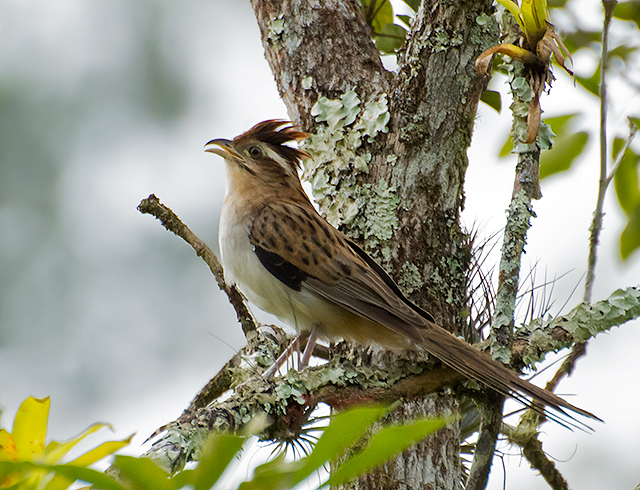
The Striped Cuckoo is a medium-sized bird, measuring approximately 25 to 28 centimeters in length. Adults exhibit a striking plumage characterized by a prominent black cap and bold, white stripes running down their back and wings. The underparts are a contrasting buffy white with fine streaks. In terms of sexual dimorphism, both males and females appear similar, making it challenging to distinguish between the sexes in the field. Juvenile Striped Cuckoos differ slightly; they possess a duller cap and less defined striping compared to adults, which become more pronounced as they mature. Their large, expressive eyes are surrounded by a pale ring, adding to their distinctive appearance. In flight, the Striped Cuckoo displays a graceful, undulating pattern, with its long tail often fanning outwards. The bird's perching posture is upright, and it frequently raises its crest, adding to its striking appearance. While it may be confused with other cuckoo species, its combination of size, plumage, and distinctive vocalizations aids in correct identification.
Having trouble telling birds apart? Upload a photo to our bird identification tool for an instant species match.
Striped Cuckoo Habitat and Range
Preferred Habitat
The Striped Cuckoo occupies a variety of habitats ranging from tropical forests to open agricultural areas. It thrives in lowland regions, often found at elevations from sea level to about 1,500 meters. Preferring edge habitats, it is commonly seen in secondary growth forests, forest edges, and scattered trees within savannas. In urban settings, the Striped Cuckoo adapts well to gardens and plantations, where it can find an abundance of food. Seasonal habitat shifts are minimal, as it tends to remain within its preferred environment year-round, exploiting areas with dense undergrowth for foraging and nesting.
Geographic Range
The Striped Cuckoo's range spans a vast area from southern Mexico through the entirety of Central America, extending into South America as far south as Argentina and Bolivia. In Brazil, it is a common sight in the Amazon Basin and the Atlantic Forest. It occupies both coastal and inland regions, adapting well to different environments. While it is a year-round resident in many parts of its range, some populations may undertake short-distance migrations in response to changing food availability, thus ensuring they remain within optimal habitats throughout the year.
Want to know which birds visit your area? Browse our backyard birds by location guides for region-specific species lists.
What Does the Striped Cuckoo Eat?
The Striped Cuckoo primarily feeds on a diet of insects, with a particular preference for caterpillars, including hairy and spiny varieties that many other birds avoid. It also consumes beetles, grasshoppers, and occasionally small vertebrates such as lizards. During the dry season, when insect availability decreases, the Striped Cuckoo may expand its diet to include fruits and seeds. Its foraging technique involves moving through dense foliage, searching for prey among leaves and branches, and it is known to be most active during the early morning and late afternoon when it spends hours tirelessly hunting.
Striped Cuckoo Behavior and Social Structure
The Striped Cuckoo exhibits solitary behavior outside of the breeding season, preferring to remain elusive and often heard before seen. During the breeding season, it engages in brood parasitism, targeting the nests of other bird species such as flycatchers and thrushes. Territorial behavior is minimal, yet it defends its chosen area vigorously during courtship. Courtship involves an elaborate display of crest raising and tail fanning, often accompanied by its melodious whistling song. The cuckoo is diurnal, being most active during daylight hours, and responds to predators with a sudden retreat into dense cover.
Striped Cuckoo Nesting and Reproduction
The Striped Cuckoo does not build its own nest, relying on its brood parasitism strategy to reproduce. It often selects the nests of small passerines, laying one egg per host nest. The incubation period, managed by the unsuspecting host bird, lasts approximately 12 to 14 days. Once hatched, the cuckoo chick may eject host eggs or chicks from the nest, thereby monopolizing resources. The fledging period varies but generally ranges from 16 to 20 days, during which the young cuckoo grows rapidly, outpacing its foster siblings in size and demands for food.
Striped Cuckoo Sounds and Vocalizations
The Striped Cuckoo's primary song is a series of clear, ascending whistles, often described as a repetitive 'pee pee pee' sound that resonates through its habitat. Its calls serve as both territorial declarations and mating signals. Alarm calls consist of a sharp, rapid series of notes alerting others to potential threats. During the dawn chorus, its song blends into the symphony of the forest, yet remains distinctive due to its pattern and clarity.
Interesting Facts About the Striped Cuckoo
- 1The Striped Cuckoo's melodious song often leads birdwatchers to it before they even catch a glimpse of its striking plumage.
- 2Unlike many birds that avoid hairy caterpillars, the Striped Cuckoo relishes them, thanks to its specialized digestive system.
- 3The Striped Cuckoo's brood parasitism strategy allows it to lay eggs in multiple nests, increasing its reproductive success.
- 4Early explorers in the New World often mistook the Striped Cuckoo for a type of hawk due to its bold markings and size.
- 5The Striped Cuckoo has inspired numerous indigenous myths and folklore stories due to its distinctive call and elusive nature.
- 6Some populations of the Striped Cuckoo have shown a remarkable ability to adapt to urban environments and thrive in city parks.
- 7The Striped Cuckoo's preference for edge habitats makes it a valuable indicator species for assessing the health of ecosystems.
Striped Cuckoo Conservation Status
The Striped Cuckoo currently holds a status of Least Concern according to the IUCN Red List, with populations considered stable across much of its range. Despite facing threats from habitat destruction and pesticide use, its adaptability to various environments aids in its survival. Conservation efforts focus on habitat preservation and sustainable agricultural practices to ensure the cuckoo's continued presence in its native regions. Historical data suggests a relatively stable population trend, although localized declines have been noted in areas of intense deforestation.
Other Cuculidae Species


Birds Similar to the Striped Cuckoo
These species are often confused with the Striped Cuckoo due to similar appearance or overlapping range.
