
Tawny-rumped Tyrannulet
Phyllomyias uropygialis
Order: Passeriformes / Family: Tyrannidae
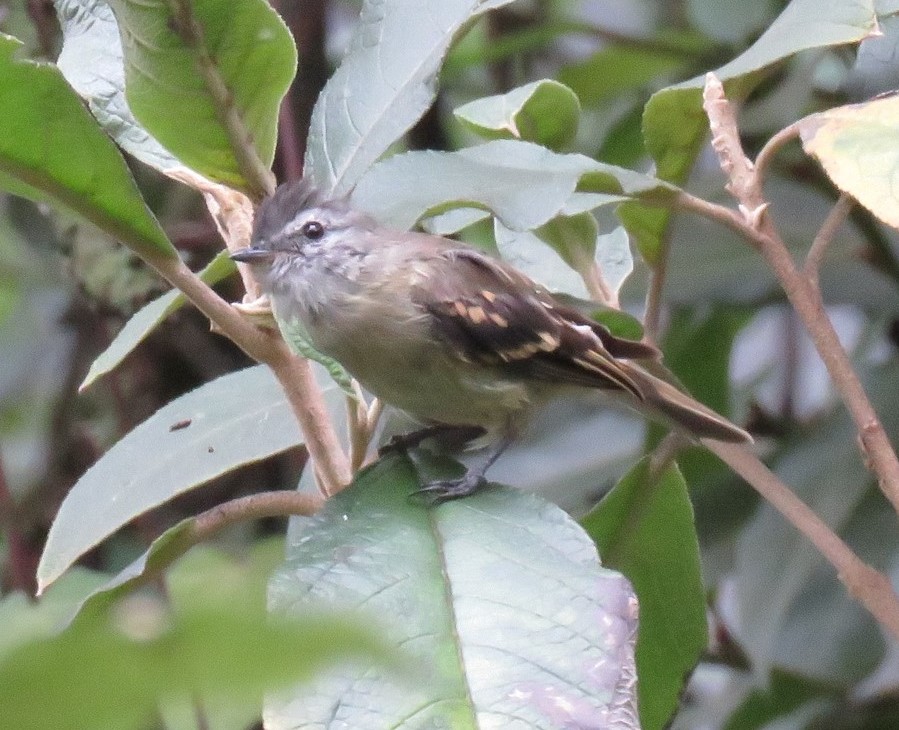
Wikimedia Commons
About the Tawny-rumped Tyrannulet
The Tawny-rumped Tyrannulet (Phyllomyias uropygialis) is a small passerine bird belonging to the family Tyrannidae. This bird is most often found in the montane cloud forests of the Andes, where it plays a vital role in the ecosystem as an insectivorous species. With a range spanning from Venezuela and Colombia through Ecuador, Peru, and Bolivia, the Tawny-rumped Tyrannulet is a staple of Andean avifauna. This tyrannulet thrives in the lush, humid environments provided by these high-altitude forests, typically found between 1,500 to 3,000 meters above sea level. The Tawny-rumped Tyrannulet is particularly significant due to its role in controlling insect populations, which in turn supports the health of the forest canopy. As a territorial bird, it maintains its presence through vocalizations and displays, often heard before seen. Its adaptable foraging behavior allows it to exploit a variety of insect prey, thus contributing to the ecological balance in these biodiverse regions. During the breeding season, which generally spans the wetter months of the year, the Tawny-rumped Tyrannulet displays heightened territoriality and increased vocal activity. Seasonal variations in insect availability influence its foraging patterns and, subsequently, its reproductive success. As an indicator species, the health of Tawny-rumped Tyrannulet populations can reflect broader environmental conditions in the Andes.
The Tawny-rumped Tyrannulet belongs to the family Tyrannidae, within the order Passeriformes. These birds typically live average 3-5 years, with a max recorded of 6 years..
How to Identify a Tawny-rumped Tyrannulet
The Tawny-rumped Tyrannulet is a small bird, measuring about 10-11 cm in length. It is characterized by its olive-green upperparts contrasted with a distinctive tawny rump, which is most visible when the bird is in flight. The underparts are pale yellow, and it has a faint eyering and a short, stubby bill typical of the Tyrannidae family. Juveniles resemble adults but may have duller plumage, lacking the distinctiveness of mature individuals. There is little sexual dimorphism, so males and females appear similar in the field. This tyrannulet can be confused with other small flycatchers, such as the Yellow-bellied Elaenia, but the tawny rump and specific vocalizations aid in differentiation. When perched, the Tawny-rumped Tyrannulet often assumes an upright posture, enabling better scanning of its surroundings for prey. In flight, its small size and rapid wingbeats are distinctive, and the tawny rump serves as a key field mark, ensuring correct identification.
Having trouble telling birds apart? Upload a photo to our bird identification tool for an instant species match.
Tawny-rumped Tyrannulet Habitat and Range
Preferred Habitat
The Tawny-rumped Tyrannulet inhabits montane cloud forests, which provide the cool, humid conditions ideal for its survival. These forests are rich in epiphytes and dense foliage, offering ample foraging opportunities and cover from predators. The bird is typically found at elevations ranging from 1,500 to 3,000 meters. It prefers areas with abundant insect life and is less commonly observed in degraded habitats or open areas. Although primarily a forest species, the Tawny-rumped Tyrannulet can occasionally be found at the fringes of cleared lands where forest meets farmland. There is little evidence of significant seasonal habitat shifts, as the bird generally remains within its montane environment year-round. The presence of this species in urban areas is rare, reflecting its reliance on undisturbed, mature forest ecosystems.
Geographic Range
The Tawny-rumped Tyrannulet has a range that extends along the Andes from Venezuela in the north through Colombia, Ecuador, and Peru, reaching as far south as Bolivia. Within this range, it occupies specific elevational bands in the cloud forests, where it is most frequently observed. It does not undertake long-distance migrations, instead exhibiting altitudinal movements in response to seasonal variations in insect abundance. Some populations may descend slightly in elevation during colder months, but these movements are relatively limited. Population density hotspots include the montane forests of eastern Ecuador and northern Peru, regions known for high biodiversity and endemism. Despite its restricted range, the Tawny-rumped Tyrannulet is considered locally common within suitable habitats.
Want to know which birds visit your area? Browse our backyard birds by location guides for region-specific species lists.
What Does the Tawny-rumped Tyrannulet Eat?
The diet of the Tawny-rumped Tyrannulet primarily consists of insects and other arthropods, which it gleans from the foliage of trees and shrubs. It employs a variety of foraging techniques, including hover-gleaning and sallying from a perch to capture prey mid-air. The size of its prey ranges from small flies to larger caterpillars and beetles, reflecting the bird's adaptability in its feeding habits. Seasonal changes in diet occur with the availability of different insect groups, with a tendency to exploit softer-bodied insects during wetter periods. The Tawny-rumped Tyrannulet typically forages alone or in pairs, although it may join mixed-species flocks, especially outside the breeding season. Its feeding activity peaks in the early morning and late afternoon, corresponding with the increased activity of its prey.
Tawny-rumped Tyrannulet Behavior and Social Structure
Socially, the Tawny-rumped Tyrannulet is primarily solitary or found in pairs, especially during the breeding season. It exhibits strong territorial behavior, defending its chosen patch of forest with vocalizations and displays. Courtship involves a series of aerial displays and calls, with males showcasing their agility and plumage to attract females. Outside of breeding, this tyrannulet may join mixed-species flocks, benefiting from the increased vigilance against predators these associations offer. When faced with threats, the Tawny-rumped Tyrannulet employs evasive flight and emits sharp alarm calls to warn nearby birds. Its daily activity patterns are diurnal, with peaks in vocalization and foraging occurring during the cooler morning and late afternoon hours.
Tawny-rumped Tyrannulet Nesting and Reproduction
The Tawny-rumped Tyrannulet constructs a cup-shaped nest made from grasses, mosses, and other plant fibers, often lined with softer materials such as feathers. Nests are typically located in the fork of a tree branch, well-concealed by surrounding foliage. The clutch size usually ranges from two to three eggs, which are incubated primarily by the female. The incubation period lasts approximately 14 days, with both parents participating in feeding the chicks once they hatch. Fledging occurs about 16-18 days after hatching, during which time the young are fed a diet rich in protein to support their rapid growth. The Tawny-rumped Tyrannulet typically raises one brood per year, but favorable conditions may allow for a second brood if resources are abundant.
Tawny-rumped Tyrannulet Sounds and Vocalizations
The primary song of the Tawny-rumped Tyrannulet is a series of clear, high-pitched notes delivered in rapid succession, resembling the sound of a distant, tinkling bell. Call notes are typically short and sharp, serving various purposes from maintaining contact with a mate to signaling alarm in the presence of predators. The bird participates in the dawn chorus, adding its distinctive song to the symphony of forest sounds. These vocalizations are crucial for territory establishment and mate attraction, providing an auditory signature that is recognizable to both rivals and potential partners.
Interesting Facts About the Tawny-rumped Tyrannulet
- 1The Tawny-rumped Tyrannulet's call is often mistaken for an insect's, making it a challenge for birders to locate.
- 2Despite its small size, this bird plays a critical role in controlling insect populations in the Andean cloud forests.
- 3The tawny rump is a key field mark that helps differentiate it from other similar-sized flycatchers.
- 4During the breeding season, males perform elaborate aerial displays to attract females and establish territory.
- 5The Tawny-rumped Tyrannulet often joins mixed-species flocks, gaining protection from predators.
- 6Its nests are skillfully hidden among dense foliage, making them difficult for predators to find.
- 7This species is a year-round resident in its range, demonstrating little migratory behavior.
Tawny-rumped Tyrannulet Conservation Status
Currently, the Tawny-rumped Tyrannulet is listed as a species of Least Concern by the IUCN, with its population considered stable. However, it faces ongoing threats from habitat destruction due to deforestation and land conversion for agriculture. Conservation efforts focus on preserving the montane cloud forests it inhabits, with several protected areas established within its range. The historical population trend has remained relatively stable, but continued habitat degradation could pose future risks. Monitoring and habitat protection remain essential to ensure the species' long-term survival.


