
Thambetochen chauliodous
Thambetochen chauliodous
Order: Anseriformes / Family: Anatidae
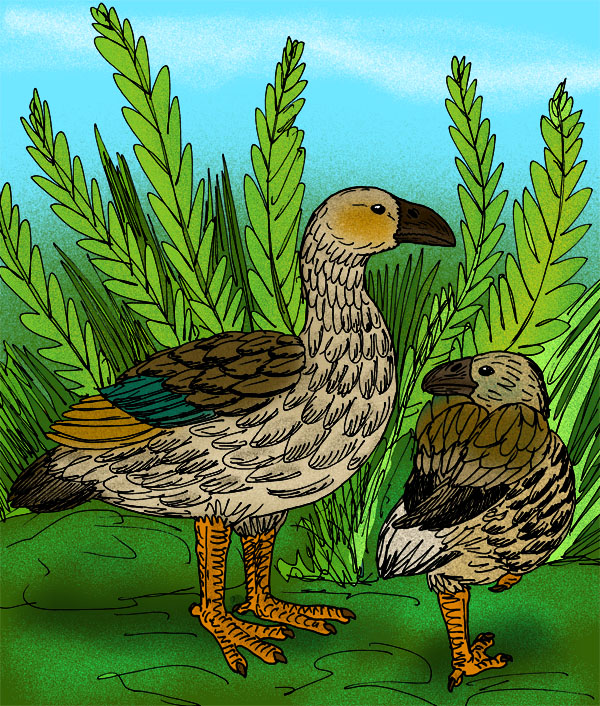
Wikimedia Commons
About the Thambetochen chauliodous
The Thambetochen chauliodous, commonly referred to as the Maui Nui duck, was a fascinating member of the Anatidae family. Known for its distinctively heavy beak, this species was endemic to the Hawaiian Islands, specifically the archipelago's larger islands like Maui and Molokai. Unlike many of its Anatidae relatives, the Thambetochen chauliodous was predominantly terrestrial, adapting to the lush, forested uplands and lowland areas of these islands. Its presence was an integral aspect of the native ecosystems, playing a unique ecological role by feeding on various terrestrial and aquatic vegetation. The Maui Nui duck was an herbivore, primarily consuming ferns, seeds, and other plant matter found in its environment. This dietary habit contributed to seed dispersal and vegetation management, maintaining a balance in the local flora. Seasonal behaviors of the Thambetochen chauliodous likely included shifts in feeding patterns and habitat use, although detailed records of these changes remain elusive due to the species' extinction. The bird's significance in Hawaiian ecosystems extended beyond its ecological roles; it was a part of the cultural landscape, featuring in local folklore and possibly hunted by early human settlers. The arrival of humans and introduced predators, coupled with habitat destruction, led to the decline and eventual extinction of the Maui Nui duck. Despite its absence today, the Thambetochen chauliodous provides valuable insights into island ecology and the impacts of human activity on isolated ecosystems. Its story underscores the importance of conservation efforts for island species facing similar threats in the present day. Although the Thambetochen chauliodous is no longer observed in its natural habitat, its history is vital for understanding the dynamics of island biodiversity and the fragility of such ecosystems when confronted with external pressures.
The Thambetochen chauliodous belongs to the family Anatidae, within the order Anseriformes. These birds typically live Unknown due to extinction..
How to Identify a Thambetochen chauliodous
The Thambetochen chauliodous, or Maui Nui duck, was a medium-sized waterfowl with a unique set of physical characteristics that distinguished it from its contemporaries. Adult birds possessed a robust and broad beak, a trait that aided their primarily herbivorous diet. The plumage of the Maui Nui duck likely consisted of earth tones, such as browns and grays, providing camouflage in the forested environments of the Hawaiian Islands. While specific details on sexual dimorphism in plumage are not well-documented, it is presumed that male and female ducks shared similar appearances, a common trait among island birds that lack predators. Juveniles would have exhibited a more subdued coloration, aiding in their protection from potential predators. The Thambetochen chauliodous' silhouette in flight was less frequently observed, given its primarily terrestrial lifestyle, but it would have resembled that of other dabbling ducks with relatively broad wings and a short tail. On the ground, this duck displayed a sturdy build and an upright posture, well-suited for navigating the uneven terrain of its forest home. While no living species closely resemble the Maui Nui duck due to its extinction, its broad beak and terrestrial habits set it apart from other Hawaiian waterfowl such as the Hawaiian duck or Koloa maoli.
Having trouble telling birds apart? Upload a photo to our bird identification tool for an instant species match.
Thambetochen chauliodous Habitat and Range
Preferred Habitat
The Thambetochen chauliodous was primarily associated with the forested uplands and lowland regions of the Hawaiian Islands, particularly on Maui and Molokai. These areas featured dense vegetation and a variety of plant species that supported the bird's herbivorous diet. The habitat would have included wet forests with abundant ferns and shrubs, as well as open grasslands where the ducks could forage for seeds and other plant material. Elevations where the Maui Nui duck was found ranged from lowland forests to montane regions, providing a diverse range of environments for feeding and nesting. Unlike many other waterfowl species, the Thambetochen chauliodous was not associated with coastal or wetland habitats, reflecting its adaptation to a more terrestrial lifestyle. Seasonal shifts in habitat use likely occurred, with the bird moving between higher and lower elevations depending on food availability and climatic conditions. As an island species, it was well-adapted to the unique ecological niches provided by the Hawaiian archipelago, but its presence was limited to these specific islands, emphasizing the importance of habitat conservation in these regions.
Geographic Range
The range of the Thambetochen chauliodous was restricted to the Hawaiian Islands, specifically the islands of Maui and Molokai. Unlike migratory ducks that traverse continents, the Maui Nui duck was a resident species, with its entire life cycle occurring within this isolated range. The bird's presence on these islands was a testament to the unique evolutionary paths taken by species in isolated ecosystems. The absence of natural migration corridors and the bird's adaptation to the local environment meant that its range did not extend beyond these islands. Population densities of the Thambetochen chauliodous would have been concentrated in areas with abundant vegetation, such as forested uplands and grasslands. The species' extinction has left a gap in the ecological history of the Hawaiian Islands, but its limited range highlights the susceptibility of island species to environmental changes and human impact. Current conservation efforts in similar regions focus on understanding and protecting the remaining endemic species to prevent further biodiversity loss.
Want to know which birds visit your area? Browse our backyard birds by location guides for region-specific species lists.
What Does the Thambetochen chauliodous Eat?
The Thambetochen chauliodous primarily fed on a variety of plant materials found within its forested habitat. Its robust beak was well-suited for consuming ferns, seeds, and other vegetation. This herbivorous diet played a crucial role in seed dispersal and the management of plant communities within its environment. While specific details about seasonal changes in diet are not well-documented, it is likely that the Maui Nui duck adjusted its feeding habits based on the availability of food sources throughout the year. Foraging techniques included ground feeding, where the ducks would use their beaks to sift through vegetation and soil to find seeds and other edible plant parts. The size of prey-or rather, plant material-consumed would have varied depending on the availability and type of vegetation in different areas. Feeding likely occurred throughout the day, with peaks during early morning and late afternoon when temperatures were cooler and foraging conditions were optimal. Despite the extinction of the Thambetochen chauliodous, its dietary habits provide insights into the ecological dynamics of the Hawaiian Islands and the interdependence of species within these unique ecosystems.
Thambetochen chauliodous Behavior and Social Structure
The Thambetochen chauliodous exhibited behaviors typical of a terrestrial waterfowl adapted to the isolated environment of the Hawaiian Islands. Social structure likely included small family groups or pairs, as is common among other duck species. Territorial behavior would have been limited due to the absence of many natural predators and the abundant resources available in its forested habitat. During the breeding season, the Maui Nui duck may have engaged in simple courtship displays, although specific behaviors are not recorded. Flocking patterns were probably minimal, given the bird's terrestrial habits and limited range. In response to potential threats, the Thambetochen chauliodous might have relied on camouflage and the dense vegetation of its environment for protection. Daily activity patterns included foraging during cooler parts of the day, with periods of rest and preening interspersed throughout. The species' extinction has left much of its behavioral ecology undocumented, but its adaptation to island life provides important context for understanding how isolated bird species can evolve unique behaviors tailored to their environments.
Thambetochen chauliodous Nesting and Reproduction
The nesting habits of the Thambetochen chauliodous, while not extensively documented, can be inferred from the nesting patterns of similar island waterfowl. Nests were likely constructed on the ground, hidden among dense vegetation to provide protection from the elements and potential predators. The materials used for nest-building would have included local plant matter such as leaves, grasses, and twigs, offering insulation and camouflage. Location preferences included sheltered spots within forested areas, offering security and easy access to food sources. Clutch sizes for the Maui Nui duck probably ranged from 4 to 8 eggs, similar to other members of the Anatidae family. The incubation period would have been approximately 28 days, with both parents possibly participating in the care of the eggs and young. Once hatched, ducklings would have remained with their parents for several weeks, learning to forage and navigate their environment. The number of broods per year was likely limited to one, given the stable climate and abundant resources on the Hawaiian Islands. Despite the lack of direct observations, the nesting habits of the Thambetochen chauliodous reflect its adaptation to a unique ecological niche with limited competition and predation.
Thambetochen chauliodous Sounds and Vocalizations
The vocalizations of the Thambetochen chauliodous are not well-documented due to its extinction, but it likely produced sounds similar to those of other dabbling ducks. These would have included a primary call, possibly a low-pitched quack or croak with a rhythmic pattern, used for communication between mates and within family groups. Call notes may have varied in pitch and quality, serving different purposes such as signaling alarm or maintaining contact in dense vegetation. Alarm calls would have been sharper and more urgent, intended to alert others to potential threats. The dawn chorus in the Maui Nui duck, if present, might have involved a combination of calls to establish territory or reinforce social bonds at the start of the day. Although no recordings of the species exist, understanding the vocal behaviors of related waterfowl can offer insights into the acoustic ecology of this extinct species.
Interesting Facts About the Thambetochen chauliodous
- 1The Thambetochen chauliodous, also known as the Maui Nui duck, was once endemic to the Hawaiian Islands, specifically Maui and Molokai.
- 2Unlike many ducks, the Maui Nui duck was primarily terrestrial, adapting to life in the dense forests rather than wetlands.
- 3The species had a robust beak, which was well-suited for its herbivorous diet, primarily consisting of ferns and seeds.
- 4Thambetochen chauliodous played a significant ecological role in seed dispersal, contributing to the maintenance of local plant communities.
- 5The extinction of the Maui Nui duck underscores the impact of human colonization and introduced predators on island species.
- 6Despite its extinction, the Thambetochen chauliodous remains a subject of interest for understanding island biogeography and evolution.
- 7Fossils of the Maui Nui duck provide valuable insights into the prehistoric fauna of the Hawaiian archipelago.
Thambetochen chauliodous Conservation Status
The Thambetochen chauliodous is classified as extinct, with its disappearance resulting from a combination of factors including habitat destruction, hunting by early human settlers, and the introduction of non-native predators such as rats and mongooses. The bird's extinction highlights the vulnerability of island species to environmental changes and human impact. Conservation efforts for similar species now focus on habitat preservation, predator control, and the prevention of further extinctions in the Hawaiian Islands. Historical population changes for the Maui Nui duck are difficult to quantify, but its decline likely followed the arrival of humans and the subsequent ecological disruptions. Protecting the remaining biodiversity in these islands remains a priority for conservationists, ensuring that the lessons learned from the loss of the Thambetochen chauliodous inform future efforts to maintain the ecological integrity of island ecosystems.
Other Anatidae Species


Birds Similar to the Thambetochen chauliodous
These species are often confused with the Thambetochen chauliodous due to similar appearance or overlapping range.
