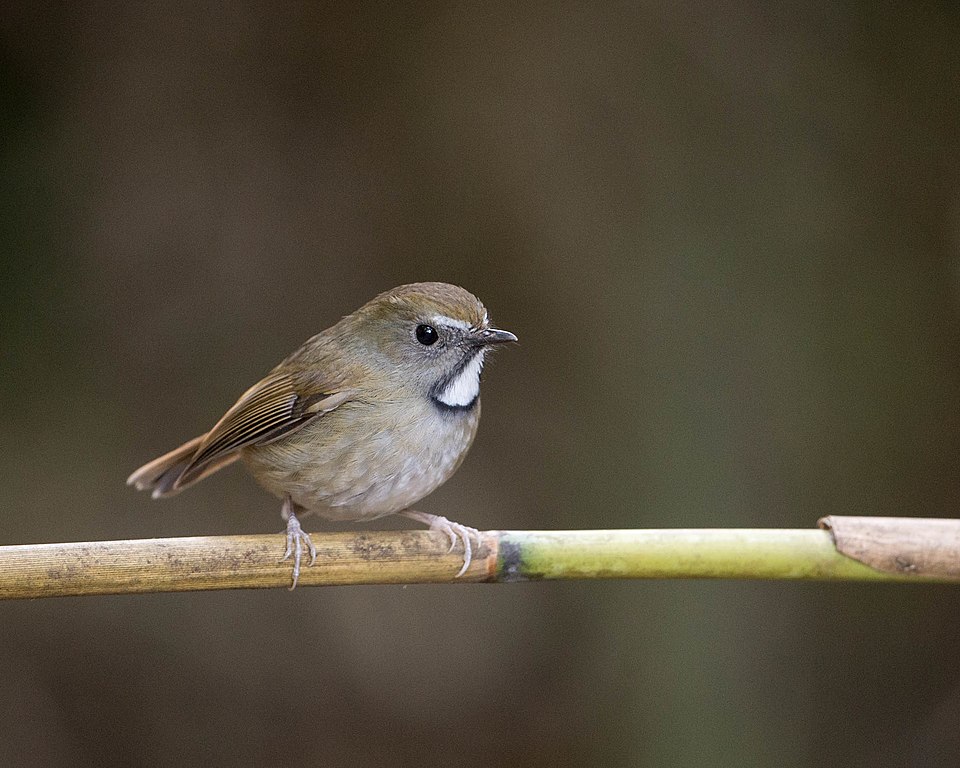
Thrush Nightingale
Luscinia luscinia
Order: Passeriformes / Family: Muscicapidae

Wikimedia Commons
About the Thrush Nightingale
The Thrush Nightingale, Luscinia luscinia, is a small passerine bird within the Muscicapidae family, notable for its rich and complex vocalizations. Native to Europe and western Asia, the Thrush Nightingale plays a vital role in its ecosystem by controlling insect populations and dispersing seeds. This bird breeds in dense, moist, deciduous forests and scrubby areas, often near water bodies such as rivers, lakes, and marshes. It prefers lowland habitats but can be found up to 1,000 meters in elevation. During the breeding season, primarily from May to July, the male Thrush Nightingale's song, characterized by a wide array of whistles and trills, serves both to attract females and to establish territory boundaries. The Thrush Nightingale's migratory pattern takes it from its breeding grounds in northern and eastern Europe, including countries like Sweden, Finland, and Russia, to its wintering areas in eastern Africa, spanning from Sudan to Tanzania. This long-distance migration, covering thousands of kilometers, reflects the bird's adaptability and resilience. It navigates using a combination of environmental cues and an innate sense of direction, honed over generations. In its ecological role, the Thrush Nightingale contributes to pest control by preying on various insects, thus maintaining a balanced ecosystem. Its presence indicates a healthy, undisturbed habitat, underscoring the importance of preserving such environments. Additionally, the bird's nocturnal singing, especially during moonlit nights, has made it a cultural icon in literature and folklore across its range. Human activities, such as agriculture and urban development, pose threats to its natural habitats, but conservation efforts, including habitat restoration and legal protection, aim to mitigate these impacts.
The Thrush Nightingale belongs to the family Muscicapidae, within the order Passeriformes. These birds typically live average 5-6 years, with a maximum recorded of 10 years..
How to Identify a Thrush Nightingale
The Thrush Nightingale is a medium-sized songbird, measuring around 15-17 cm in length with a wingspan of 23-26 cm. Its plumage is predominantly brown, with a slightly darker tail and lighter underparts. The bird's throat and upper breast are subtly streaked, while the lower belly and vent are pale. Unlike some other nightingales, the Thrush Nightingale lacks any significant reddish or orange tones, making it less colorful but no less distinctive. Juveniles resemble adults but exhibit more pronounced streaking on their breast and flanks. Males and females are similar in appearance, making visual differentiation challenging in the field. In flight, the Thrush Nightingale displays a swift, direct flight pattern with rapid wingbeats. When perched, it often adopts a slightly upright posture, flicking its tail periodically. Confusion may arise with the Common Nightingale, but the Thrush Nightingale's larger size and more robust build, combined with its song, aid in identification.
Having trouble telling birds apart? Upload a photo to our bird identification tool for an instant species match.
Thrush Nightingale Habitat and Range
Preferred Habitat
The Thrush Nightingale thrives in dense, moist woodlands and thickets, often near water sources like rivers and lakes. In Europe, it favors deciduous forests with ample undergrowth, providing both food and nesting sites. The bird is adaptable, occasionally found in urban parks and gardens with sufficient vegetation. During migration, it utilizes a range of habitats, including hedgerows and agricultural fields. In wintering grounds in eastern Africa, it inhabits savannas and open woodlands. Its preference for lowland areas does not preclude it from elevations up to 1,000 meters, depending on habitat availability.
Geographic Range
The Thrush Nightingale's breeding range extends across northern and eastern Europe, from southern Sweden and Finland through the Baltic States and into Russia. It also breeds in parts of Poland, Belarus, and Ukraine. The wintering range spans eastern Africa, primarily in countries like Ethiopia, Kenya, Uganda, and Tanzania. During migration, the bird travels through central and eastern Europe, the Middle East, and northeastern Africa. Population densities are typically higher in the northern parts of its breeding range, where suitable habitats are more prevalent.
Want to know which birds visit your area? Browse our backyard birds by location guides for region-specific species lists.
What Does the Thrush Nightingale Eat?
The Thrush Nightingale primarily feeds on insects and other invertebrates, including beetles, caterpillars, and spiders. Its diet varies seasonally, with fruit becoming a significant component in late summer and autumn. The bird forages mostly on the ground, using a series of hops and short flights to catch prey. It employs a methodical approach, often turning over leaves and probing the soil with its bill. The size of prey ranges from small insects to larger arthropods, depending on availability. Its feeding schedule is largely diurnal, with peak activity during the cooler parts of the day.
Thrush Nightingale Behavior and Social Structure
The Thrush Nightingale is a solitary bird outside the breeding season, exhibiting strong territorial behavior during the breeding period. Males engage in elaborate song displays to establish territories and attract mates, often singing continuously from dusk till dawn. The bird's song serves as both a mate attractor and a deterrent to rival males. In response to predators, the Thrush Nightingale employs a range of alarm calls and evasive maneuvers. Its daily activities revolve around feeding, singing, and maintaining territory. The bird is most active during dawn and dusk, capitalizing on the reduced predation risk.
Thrush Nightingale Nesting and Reproduction
Thrush Nightingales construct cup-shaped nests, using materials like grass, leaves, and twigs, typically situated low in dense vegetation. Preferred nesting sites include bushes, shrubs, and low trees, often near water. A typical clutch consists of 4-6 eggs, with an incubation period of about 13-14 days. Both parents participate in feeding the chicks, which fledge approximately 11-12 days after hatching. The species generally raises one brood per season, though in optimal conditions, a second brood may occur. Parental roles are shared, with the female primarily responsible for incubation.
Thrush Nightingale Sounds and Vocalizations
The Thrush Nightingale's song is an intricate mix of whistles, trills, and gurgling sounds, delivered with a powerful and melodious quality. This song, often performed at night, distinguishes it from other songbirds. Call notes include sharp 'tuck' and 'pit' sounds, used to communicate with conspecifics and signal alarm. During the dawn chorus, its song can dominate the soundscape, reflecting its territorial nature. The complexity and variety of its song have inspired comparisons to musical compositions, underscoring the bird's role as a natural virtuoso.
Interesting Facts About the Thrush Nightingale
- 1The Thrush Nightingale can sing for hours on end, particularly at night, showcasing one of the most diverse song repertoires among songbirds.
- 2Despite its name, the Thrush Nightingale is more closely related to Old World flycatchers than true thrushes.
- 3During migration, some Thrush Nightingales cover distances exceeding 5,000 kilometers between breeding and wintering grounds.
- 4The species' song features over 150 different phrases, making it a subject of interest in avian vocalization studies.
- 5In Swedish folklore, the Thrush Nightingale's song is said to foretell a good harvest and pleasant weather.
- 6In dense foliage, the Thrush Nightingale often goes unnoticed despite its loud song, earning it the nickname 'invisible singer'.
- 7The Thrush Nightingale's ability to mimic other species' calls adds to its already complex vocal repertoire.
Thrush Nightingale Conservation Status
Currently, the Thrush Nightingale holds a status of Least Concern on the IUCN Red List. However, its population is experiencing a gradual decline due to habitat loss and fragmentation. Agricultural expansion, deforestation, and urban development pose significant threats. Conservation actions focus on habitat protection and restoration, along with legal safeguards. Historical records suggest that the bird's range has contracted in some areas, necessitating continued monitoring and proactive measures to ensure its long-term survival.