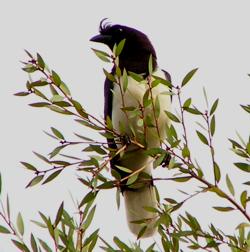
Tufted Jay
Cyanocorax dickeyi
Order: Passeriformes / Family: Corvidae

Wikimedia Commons
About the Tufted Jay
The Tufted Jay (Cyanocorax dickeyi) captivates bird enthusiasts with its brilliant blue plumage and prominent black crest. This stunning member of the Corvidae family is endemic to Mexico, specifically confined to the Sierra Madre Occidental mountain range in western Mexico. These birds inhabit montane forests, favoring the lush and humid mixed pine-oak environments typically found between altitudes of 1,200 and 3,000 meters. The Tufted Jay plays a significant ecological role as a seed disperser, contributing to the regeneration of its forest habitat. Seasonal behaviors of the Tufted Jay are influenced by food availability and breeding requirements. During the breeding season, which spans from March to May, these birds become more territorial and vocal, establishing breeding sites and defending their chosen territories. Outside the breeding season, they exhibit more social behavior, often forming small flocks that forage together. The ecological significance of the Tufted Jay extends beyond its role as a seed disperser. As an integral part of the forest ecosystem, it participates in predator-prey dynamics and interacts with other avian species. The presence of the Tufted Jay in a given area often indicates a healthy forest ecosystem, as these birds require dense, mature forests for nesting and foraging. Conservation of their habitat is crucial, as deforestation and habitat fragmentation pose significant threats to their populations. The Tufted Jay's vibrant appearance and engaging behavior make it a favorite among birdwatchers who venture into its remote and limited range. Its restricted habitat in western Mexico makes sightings particularly rewarding for those who manage to observe this elusive bird. Despite its limited range, the Tufted Jay remains a symbol of the rich biodiversity found within Mexico's montane forests.
The Tufted Jay belongs to the family Corvidae, within the order Passeriformes. These birds typically live average 9 years; max recorded 13 years.
How to Identify a Tufted Jay
The Tufted Jay is a medium-sized bird with striking features that make it relatively easy to identify. The adult plumage showcases a vivid blue body contrasted by a black head and a distinctive black crest, which sets it apart from other Corvids. The underparts are white, providing a sharp contrast with the darker upper body. Juveniles resemble adults but may have a less pronounced crest and a slightly duller coloration. There are no significant differences between males and females, both of which exhibit similar coloration and plumage. However, the males may appear slightly larger, a common trait among many bird species. Similar species, like the Black-throated Magpie-Jay, can be confused with the Tufted Jay due to their overlapping range and similar size. However, the Tufted Jay's distinctive white underparts and prominent crest help distinguish it from other jays. In flight, the Tufted Jay displays a broad, rounded wing silhouette with slow, deliberate wingbeats, typical of many Corvids. When perched, its long tail and upright posture are notable features, often accompanied by its inquisitive head movements.
Having trouble telling birds apart? Upload a photo to our bird identification tool for an instant species match.
Tufted Jay Habitat and Range
Preferred Habitat
The Tufted Jay inhabits the montane forests of the Sierra Madre Occidental, specifically favoring mixed pine-oak forests. These environments provide the dense canopy and rich undergrowth essential for their survival. Typically found at elevations between 1,200 and 3,000 meters, the Tufted Jay prefers areas with abundant food sources and suitable nesting sites. Seasonal habitat shifts are minimal, as these birds do not migrate long distances. Instead, they may move to slightly lower elevations during the colder months in search of food. The Tufted Jay shows a preference for rural, undisturbed forests over urban or heavily populated areas. Its reliance on mature forest habitats makes it vulnerable to deforestation and habitat fragmentation, which threaten its limited range.
Geographic Range
The Tufted Jay's range is confined to the Sierra Madre Occidental in western Mexico, specifically within the states of Sinaloa, Durango, and Nayarit. This bird's range is limited to this specific region, where it resides year-round. The montane forests of this area provide the necessary resources and conditions for their survival, eliminating the need for long-distance migration. Although the Tufted Jay's range is restricted, they are relatively common within their preferred habitats. Population density hotspots exist within areas where the forest is dense and mature, providing optimal conditions for foraging and nesting. Despite their limited geographic range, the Tufted Jay remains a resident breeder, with no significant migration corridors outside their core habitat.
Want to know which birds visit your area? Browse our backyard birds by location guides for region-specific species lists.
What Does the Tufted Jay Eat?
The Tufted Jay primarily feeds on a diet consisting of insects, seeds, and fruits. During the breeding season, the diet shifts slightly to include more protein-rich insects, which provide essential nutrients for growing chicks. They forage by hopping through foliage and occasionally descending to the ground to catch insects or gather fallen fruit. Their strong, versatile beak allows them to crack open seeds and nuts, which forms a significant part of their diet. Foraging often occurs in small, cooperative groups, allowing them to cover more ground and locate food efficiently. This social foraging behavior aids in locating and exploiting food sources, especially during periods of scarcity. While the Tufted Jay is an opportunistic feeder, its diet primarily remains consistent throughout the year, adapting only slightly based on seasonal availability of specific fruits and insects.
Tufted Jay Behavior and Social Structure
Tufted Jays are highly social birds, often observed in small family groups or flocks, especially outside the breeding season. Their social structure revolves around these groups, which engage in cooperative foraging and communication. During the breeding season, pairs become territorial, exhibiting vocal and physical displays to defend their chosen nesting sites. Courtship displays involve mutual preening and vocalizations, strengthening pair bonds. Flocking behavior is prominent outside the breeding season, with groups of up to 20 individuals foraging together. Their response to predators includes loud alarm calls and mobbing behavior, common among Corvids. Daily activity patterns show peak activity during the early morning and late afternoon, when they forage and interact socially. The Tufted Jay's behavior reflects its need for social interaction and adaptability within its forest habitat.
Tufted Jay Nesting and Reproduction
The Tufted Jay constructs large cup-shaped nests using twigs, leaves, and other plant materials. Nests are typically situated high in the canopy of tall trees, providing protection from ground predators. The preferred location is often near the trunk or in a sturdy fork of a large tree. Clutch size ranges from 3 to 5 eggs, which are pale blue with brown speckles. The female primarily undertakes incubation, lasting about 18 days, while the male provides food and protection. Once hatched, the chicks remain in the nest for approximately 20 to 25 days before fledging. Both parents participate in feeding and caring for the young, ensuring their survival. The Tufted Jay typically raises one brood per year, although favorable conditions may occasionally allow for a second.
Tufted Jay Sounds and Vocalizations
The Tufted Jay's vocal repertoire includes a series of harsh, rasping calls and melodious whistles. Their primary song consists of a rhythmic series of notes, often described as a 'jay-jay-jay' followed by a trilling sound. Alarm calls are sharp and loud, serving as warnings to other birds about potential threats. During the dawn chorus, their calls contribute to the symphony of forest sounds, often echoing through the trees. Their vocalizations can be compared to other jays but are unique in their combination of harshness and melody. These sounds are an integral aspect of their social interactions and territorial defense.
Interesting Facts About the Tufted Jay
- 1The Tufted Jay is one of the few bird species endemic to the Sierra Madre Occidental of Mexico.
- 2Despite its striking appearance, the Tufted Jay remains elusive, often hidden within dense forest canopies.
- 3Tufted Jays form complex social groups, engaging in cooperative behaviors uncommon among other birds.
- 4Their diet adapts seasonally, with a greater emphasis on insects during the breeding season.
- 5The Tufted Jay's distinctive crest and vocalizations are crucial for communication and recognition within flocks.
- 6They play a vital role in seed dispersal, contributing to the health and regeneration of forest ecosystems.
- 7Tufted Jays exhibit mobbing behavior, collectively defending against predators through loud calls and aggressive displays.
Tufted Jay Conservation Status
The IUCN classifies the Tufted Jay as Near Threatened, with population trends showing a decline due to habitat loss. Primary threats include deforestation and habitat fragmentation, driven by logging and agricultural expansion. Conservation efforts focus on protecting montane forest habitats and promoting sustainable land use practices. Historical population changes reflect the ongoing impact of human activities on their limited range. Conservation organizations work to raise awareness and implement protective measures to ensure the survival of the Tufted Jay's habitat and overall population.
Other Corvidae Species


Birds Similar to the Tufted Jay
These species are often confused with the Tufted Jay due to similar appearance or overlapping range.