
Brown-headed Thrush
Turdus ginginianus
Order: Passeriformes / Family: Turdidae
Wikimedia Commons
About the Brown-headed Thrush
The Brown-headed Thrush (Turdus ginginianus) is a member of the Turdidae family, renowned for its melodious song and distinctive appearance. This medium-sized thrush inhabits a wide range of environments, from dense forests to urban parks, throughout parts of Asia. In particular, it is commonly found in countries such as India and Nepal, where it plays a significant role in the ecosystem. As a passerine bird, it is part of the largest order of birds, Passeriformes, which includes more than half of all bird species worldwide.
The Brown-headed Thrush is significant not only for its ecological role but also for its adaptability in various habitats. It contributes to seed dispersal, aiding in forest regeneration. During the breeding season, these thrushes exhibit territorial behaviors and are often seen foraging on the ground in search of insects and fruits. Their seasonal behaviors include migratory movements; some populations in the northern parts of their range migrate southward during winter, while others remain resident year-round.
Ecologically, the Brown-headed Thrush serves as both a predator and prey, maintaining the balance within its ecosystem. Its diet consists primarily of insects, which helps control pest populations, while its eggs and young provide food for avian and mammalian predators. This thrush's presence in various habitats signifies a healthy and balanced ecosystem, making it an important indicator species for environmental changes and conservation efforts.
The Brown-headed Thrush belongs to the family Turdidae, within the order Passeriformes. These birds typically live average lifespan is around 7 years, with some individuals recorded living up to 10 years..
How to Identify a Brown-headed Thrush
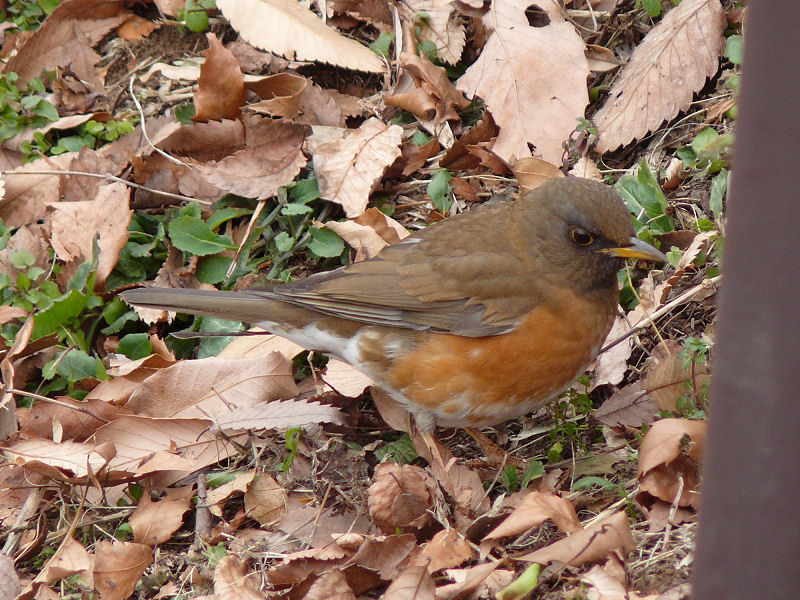
The Brown-headed Thrush is easily recognizable by its rich brown head, which contrasts with its grayish-brown body. Adult males and females appear similar, though females can be slightly duller in coloration. Juveniles also resemble adults but feature more mottled and streaked plumage, particularly on the breast, which serves as a form of camouflage.
In flight, the Brown-headed Thrush shows a characteristic silhouette with broad wings and a moderately long tail. Its flight pattern is typically direct and purposeful, with rapid wingbeats alternating with short glides. When perched, it often adopts an upright posture, allowing it to stay vigilant and scan for predators or food sources.
While the Brown-headed Thrush may be confused with similar species such as the Black-throated Thrush or the Gray-sided Thrush, its distinctive brown head and overall coloration help differentiate it from these relatives. Observers should note the bird's consistent habits of foraging on the ground and its melodious song, which often betrays its presence before it is seen.
Having trouble telling birds apart? Upload a photo to our bird identification tool for an instant species match.
Brown-headed Thrush Habitat and Range
Preferred Habitat
The Brown-headed Thrush thrives in a variety of habitats, including deciduous and mixed forests, woodland edges, and urban parks. It is also found in shrublands and gardens, particularly during migration periods. The species prefers habitats with dense undergrowth, which provides both food and cover from predators.
Typically found at elevations ranging from sea level to 3,000 meters, the Brown-headed Thrush exhibits some seasonal habitat shifts. During the breeding season, it often occupies forested areas with ample foliage and ground cover. In the non-breeding season, it may move to lower elevations or more open habitats where food is more readily available.
The adaptability of the Brown-headed Thrush allows it to inhabit both rural and urban environments. In cities, it benefits from the abundance of ornamental fruiting trees and insects, making it a familiar sight in urban parks and gardens.
Geographic Range
The Brown-headed Thrush has a broad breeding range that extends across much of the Indian subcontinent, including northern India, Nepal, and Bhutan. It is a partial migrant, with some populations moving southward during the winter months to regions such as southern India and Sri Lanka.
In terms of migration corridors, the thrush travels along the Himalayan foothills and through lowland forests, taking advantage of the diverse habitats these regions offer. During migration, the species can be observed in a variety of environments, including wetlands and agricultural lands, where it finds ample food resources.
Population density hotspots for the Brown-headed Thrush are often located in forested regions of the Himalayas and the Western Ghats. Here, the bird is relatively common, though localized. In contrast, it is less frequently observed in arid and heavily urbanized areas, where suitable habitat may be limited.
Want to know which birds visit your area? Browse our backyard birds by location guides for region-specific species lists.
What Does the Brown-headed Thrush Eat?
The diet of the Brown-headed Thrush primarily consists of insects and small invertebrates, which it forages for on the forest floor. During the warmer months, it feeds on a variety of beetles, caterpillars, and ants, which are abundant and provide high protein content.
Fruits and berries make up an important part of the thrush's diet, particularly in the autumn and winter when insect prey becomes scarce. The bird is known to consume fruits from trees such as Ficus and various berry-producing shrubs, which also aids in seed dispersal.
The Brown-headed Thrush employs a foraging technique that involves hopping along the ground, often flipping leaves or debris with its bill to uncover hidden prey. This methodical approach allows it to exploit a range of food sources across different habitats. Feeding occurs primarily during the early morning and late afternoon, although it may continue throughout the day in areas with high food availability.
Brown-headed Thrush Behavior and Social Structure
The Brown-headed Thrush displays a range of behaviors that reflect its adaptability and social nature. It is generally a solitary bird outside of the breeding season, though it may form loose flocks during migration or in areas with abundant food resources.
Territorial behavior is prominent during the breeding season, with males defending their chosen nesting sites through song and displays. Courtship involves a series of complex rituals, including singing and offering food to the female. Once paired, both sexes participate in nest building and rearing young.
In response to predators, the Brown-headed Thrush employs a combination of alarm calls and evasive flight. It is particularly wary of avian predators such as hawks and owls, which it detects with keen eyesight. Daily activity patterns are centered around feeding and maintenance behaviors, with periods of rest during the hottest parts of the day.
Brown-headed Thrush Nesting and Reproduction
The nesting habits of the Brown-headed Thrush involve the construction of a cup-shaped nest, typically located in a bush or low tree branch. The nest is built using a variety of materials, including twigs, grasses, and mud, which provide structural integrity and insulation.
A typical clutch consists of three to five eggs, which are incubated primarily by the female for about 12 to 14 days. The male may assist by providing food and guarding the nest during this period. Once hatched, the altricial chicks remain in the nest for approximately 12 to 15 days, during which both parents feed them a diet rich in insects and fruits.
The Brown-headed Thrush often raises two broods per year, capitalizing on the abundance of food during the breeding season. Parental roles are shared, with both parents taking turns feeding and protecting the young until they fledge.
Brown-headed Thrush Sounds and Vocalizations
The song of the Brown-headed Thrush is a melodious series of fluted notes, often delivered from a high perch. Its rhythm is varied and includes trills and whistles, making it a delightful addition to the dawn chorus. Compared to other thrushes, its song has a distinctive clarity and purity of tone.
Call notes are sharp and penetrating, used primarily as contact calls or to signal alarm. When threatened, the thrush emits a harsh, chattering alarm call that alerts other birds to potential danger. This vocal repertoire aids in maintaining social bonds and avoiding predators.
Interesting Facts About the Brown-headed Thrush
- 1The Brown-headed Thrush is known to mimic the songs of other bird species, showcasing its vocal versatility.
- 2Despite its name, not all individuals have uniformly brown heads; some may show variable shading.
- 3The Brown-headed Thrush can consume up to 20% of its body weight in food each day during the breeding season.
- 4This thrush is one of the few bird species that can thrive in both dense forests and urban environments.
- 5During migration, the Brown-headed Thrush can travel over 1,000 kilometers to reach its wintering grounds.
Brown-headed Thrush Conservation Status
According to the IUCN, the Brown-headed Thrush is currently listed as Least Concern, with a stable population trend. However, habitat loss due to deforestation and urban expansion poses ongoing threats to its natural habitats. Conservation efforts focus on preserving key habitats and promoting sustainable land-use practices. Historically, the population of the Brown-headed Thrush has remained relatively stable, thanks to its adaptability and wide distribution. Continued monitoring and habitat protection are essential to ensure the species does not face more significant challenges in the future.


