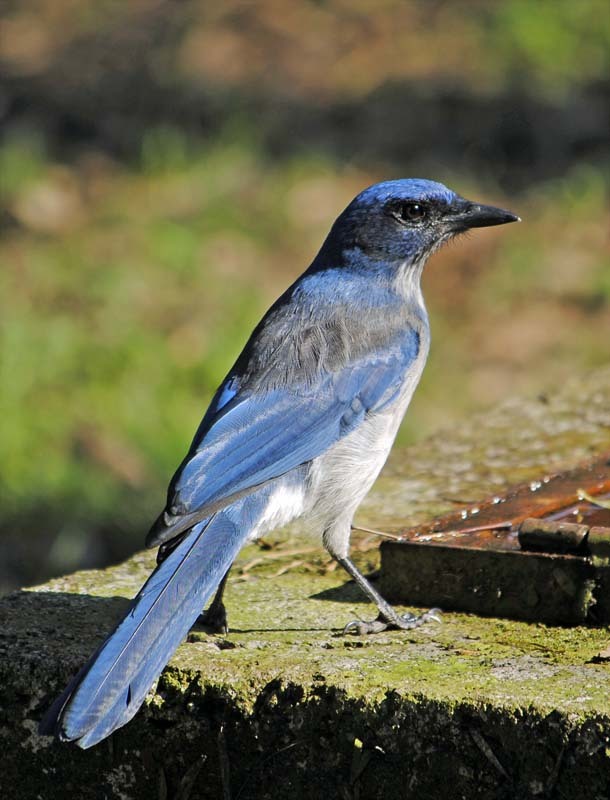
Unicolored Jay
Aphelocoma unicolor
Order: Passeriformes / Family: Corvidae

Wikimedia Commons
About the Unicolored Jay
The Unicolored Jay (Aphelocoma unicolor) is a captivating bird species belonging to the Corvidae family, renowned for their intelligence and complex social structures. Found primarily in the highland forests of Central America, particularly in countries like Mexico, Guatemala, and Honduras, this jay is an emblematic figure of the montane cloud forests and pine-oak woodlands. Its deep blue plumage, which gives the bird its name, sets it apart from other jays, while its behavior offers insights into avian social dynamics. These jays play a crucial ecological role as seed dispersers, aiding in forest regeneration and biodiversity maintenance. Their preferred habitats are often characterized by dense foliage and rich biodiversity, making them an integral part of the forest ecosystem. Seasonal behaviors of the Unicolored Jay include forming large, cooperative groups during the breeding season, which enhances their ability to defend territories and nurture their young. Outside the breeding season, these jays are often observed foraging in mixed-species flocks, a behavior that increases foraging efficiency and protection from predators. As they navigate through the forest canopies, their vibrant calls and acrobatic movements enliven the forest soundscape, marking their presence in an otherwise quiet environment. These birds are not just a visual delight but also a keystone species in their native ecosystems. Their presence indicates a healthy forest, as they often thrive in well-preserved habitats. The conservation of their habitats not only supports the Unicolored Jay populations but also ensures the survival of numerous other species that share their environment. The Unicolored Jay’s role extends beyond mere seed dispersal; they are vital in controlling insect populations, thus contributing to the ecological balance. Their interactions with various plant species, particularly those bearing fleshy fruits, highlight their importance in the mutualistic relationships that sustain forest ecosystems. The Unicolored Jay's adaptability to different forest types, including secondary growth areas, demonstrates their resilience, yet it also underscores the need to protect primary forests where they naturally flourish.
The Unicolored Jay belongs to the family Corvidae, within the order Passeriformes. These birds typically live average 6-9 years with a maximum recorded of 14 years..
How to Identify a Unicolored Jay
Adult Unicolored Jays exhibit a uniform blue plumage with a slightly lighter shade on the underparts, setting them apart from other jays with more varied or patterned coloring. Their sturdy, medium-sized body, measuring about 30 to 34 cm in length, is complemented by strong legs and a robust bill, features common to the Corvidae family. Juveniles resemble adults but can be distinguished by their somewhat duller plumage and a more brownish tinge on the wings and back. Both males and females appear similar, making gender identification in the field challenging without observing behavior or breeding roles. The Unicolored Jay may be confused with the Western Scrub-Jay; however, the latter has a distinct white throat and chest, unlike the uniform coloration of the Unicolored Jay. In flight, the Unicolored Jay’s wings appear broad and rounded, and its tail is of moderate length, providing agility and maneuverability as it navigates through dense forest canopies. When perched, they exhibit an upright posture, often with their tail slightly cocked. Observers can note their inquisitive nature and frequent head movements as they scan their surroundings.
Having trouble telling birds apart? Upload a photo to our bird identification tool for an instant species match.
Unicolored Jay Habitat and Range
Preferred Habitat
The Unicolored Jay inhabits montane cloud forests and pine-oak woodlands, thriving at elevations ranging from 1,500 to 3,000 meters. These areas, characterized by high humidity and dense vegetation, provide ideal conditions for their breeding and foraging activities. They can also be found in mixed evergreen and deciduous forests, often where human disturbance is minimal, which supports their preference for remote and undisturbed habitats. During the breeding season, they concentrate in areas with ample food supply and nesting sites, while outside this period, they may venture into secondary forests as they form foraging flocks. Although primarily a forest dweller, the Unicolored Jay occasionally visits adjacent agricultural areas, particularly where forest edges meet open fields, demonstrating some adaptability to human-altered landscapes. However, they are less commonly found in urban areas, preferring the cover and resources of more natural environments.
Geographic Range
The Unicolored Jay's range is confined to Central America, with a distribution that includes highland areas of Mexico, extending south through Guatemala, Honduras, and into parts of Nicaragua. They primarily occupy the Sierra Madre mountain ranges, where their preferred habitats of cloud forests and pine-oak woodlands are prevalent. These regions provide the necessary resources and climatic conditions for their survival. Unlike some migratory jays, the Unicolored Jay maintains a relatively stable range throughout the year, showing little seasonal movement. However, altitudinal shifts may occur in response to food availability or climatic changes, particularly during the non-breeding season. Population density is highest in areas with extensive forest cover and minimal human disturbance, such as national parks and protected reserves like the Laguna de Hule and El Triunfo Biosphere Reserve.
Want to know which birds visit your area? Browse our backyard birds by location guides for region-specific species lists.
What Does the Unicolored Jay Eat?
The Unicolored Jay's diet is varied, reflecting its opportunistic feeding habits. Primarily, they consume a mix of insects and other invertebrates, fruits, seeds, and occasionally small vertebrates. This diet shifts seasonally, with a greater emphasis on fruits and seeds during the wet season when these resources are abundant. Insects and larvae become more prominent in their diet during the drier months. Unicolored Jays employ a variety of foraging techniques, including gleaning from foliage, probing bark crevices, and occasionally catching insects in flight. Their robust bill allows them to crack open hard seeds and fruits, supporting their role as seed dispersers. They often forage in groups, which enhances their ability to locate food and reduces the risk of predation. Their feeding schedule is typically diurnal, with peak activity occurring in the early morning and late afternoon when temperatures are cooler and prey more active.
Unicolored Jay Behavior and Social Structure
Unicolored Jays exhibit highly social behavior, often forming large communal groups that cooperate in various activities such as foraging and territory defense. This social structure is particularly evident during the breeding season when groups may consist of several family units working together to raise young. Such cooperation includes sentinels watching for predators while others feed, showcasing their advanced communication and coordination skills. Territorial behavior is marked by vocal displays and sometimes physical confrontations with rival groups. Courtship displays involve elaborate vocalizations and mutual preening between prospective mates. These jays are generally monogamous, with pairs forming strong bonds that can last for multiple breeding seasons. Outside the breeding season, they often join mixed-species flocks, which provide increased foraging success and protection against predators. Their response to threats includes mobbing behavior and loud alarm calls, effectively deterring potential predators and alerting other birds to danger. Daily activities are primarily diurnal, with peak periods of activity in the early morning and late afternoon, coinciding with optimal foraging conditions.
Unicolored Jay Nesting and Reproduction
Unicolored Jays build cup-shaped nests, typically constructed from twigs, leaves, and other plant materials, lined with softer substances like moss or feathers for insulation. These nests are usually situated in the forks of trees, often at considerable heights to protect against ground predators. The typical clutch size ranges from three to five eggs, with both parents sharing incubation duties, which last approximately 16 to 18 days. The fledging period extends for about 21 to 24 days post-hatching, during which time the young are fed and cared for by both parents and occasionally assisted by other group members. This cooperative breeding strategy enhances the survival rate of the offspring. Unicolored Jays generally raise one to two broods per year, depending on environmental conditions and resource availability. The communal nature of their nesting behavior underscores the importance of social structures in their life cycle, providing increased security and resource efficiency.
Unicolored Jay Sounds and Vocalizations
The vocal repertoire of the Unicolored Jay is extensive, with a primary song that consists of a series of melodious whistles and harsh caws, varying in pitch and intensity. These vocalizations serve multiple purposes, including maintaining group cohesion, territorial defense, and mate attraction. Call notes are typically shorter, consisting of sharp 'kaw' sounds used in alarm situations or to communicate with nearby flock members. During the dawn chorus, these jays contribute a rhythmic and lively component to the avian symphony, their calls resonating through the forest canopy. Compared to other jays, their vocalizations are more musical but can still include the rougher, harsher calls characteristic of the Corvidae family.
Interesting Facts About the Unicolored Jay
- 1The Unicolored Jay can live for over 20 years in the wild, showcasing the longevity typical of corvids.
- 2These jays often participate in cooperative breeding, a trait observed in only about 9% of bird species worldwide.
- 3Unicolored Jays play a significant role in seed dispersal, positively impacting forest regeneration.
- 4Their complex social structures and communication skills are subjects of ongoing scientific research.
- 5They are among the few jay species without significant sexual dimorphism, making them fascinating for studies on avian gender roles.
- 6Unicolored Jays have been observed using tools to access food, highlighting their remarkable intelligence.
- 7These birds are known to form lifelong pair bonds, contributing to stable family groups over multiple generations.
Unicolored Jay Conservation Status
The Unicolored Jay is currently listed as Least Concern by the IUCN, with stable population trends observed across its range. However, ongoing habitat destruction, particularly due to deforestation for agriculture and urban development, poses a significant threat. Conservation efforts focus on habitat preservation, with several populations residing in protected areas, which helps mitigate these threats. Historical population levels have remained relatively stable, but continuous monitoring is necessary to ensure this trend continues. Conservationists emphasize the importance of maintaining montane forest ecosystems, not only for the Unicolored Jay but also for the myriad species that share these habitats.
Other Corvidae Species


Birds Similar to the Unicolored Jay
These species are often confused with the Unicolored Jay due to similar appearance or overlapping range.