
Unspotted Saw-whet Owl
Aegolius ridgwayi
Order: Strigiformes / Family: Strigidae
Wikimedia Commons
About the Unspotted Saw-whet Owl
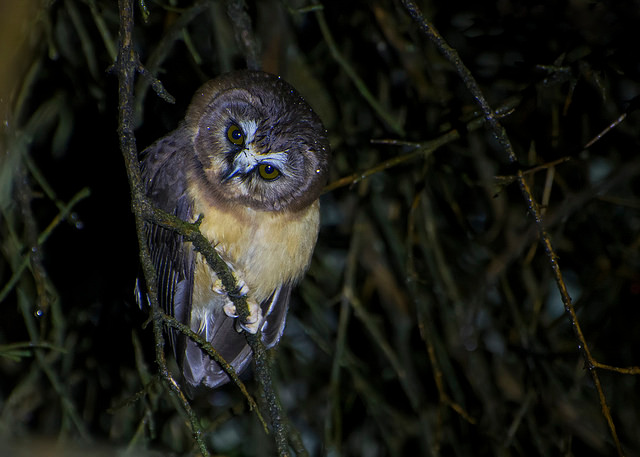
The Unspotted Saw-whet Owl, scientifically known as Aegolius ridgwayi, is a small owl species in the family Strigidae. It inhabits the dense montane forests of Central America, where it plays a crucial role as both predator and prey in its ecosystem. Unlike many other owls, the Unspotted Saw-whet Owl lacks the characteristic spotting on its plumage, which contributes to its name. This owl is primarily found in regions such as Costa Rica, Honduras, and Panama, where it occupies the cloud forests and subtropical montane regions. Its elusive nature makes it a fascinating subject for ornithologists and bird enthusiasts alike. During the breeding season, which generally occurs from March to June, the Unspotted Saw-whet Owl becomes more active and vocal, engaging in distinctive calls that facilitate mate attraction and territory establishment. Outside the breeding season, it continues to play a vital role in controlling the populations of small mammals and insects, thus maintaining the ecological balance in its habitat. The owl's ability to adapt to its surroundings, despite its specialized habitat requirements, highlights its ecological significance in the regions it inhabits.
The Unspotted Saw-whet Owl belongs to the family Strigidae, within the order Strigiformes. These birds typically live average lifespan is approximately 5-7 years..
How to Identify a Unspotted Saw-whet Owl
The Unspotted Saw-whet Owl is a small owl with a length averaging around 18-20 cm and a wingspan of approximately 45 cm. Its plumage is predominantly brown, lacking the white spots commonly seen in related species. Instead, it has a uniform appearance with faint streaks on its underparts. The facial disc is rounded, with a light brown color that helps in distinguishing it from similar species. Juveniles resemble adults but may have a slightly softer plumage texture. Both males and females exhibit similar plumage, though females tend to be slightly larger. The owl's large, yellow eyes are set in a dark facial disc, adding to its distinct look. In flight, the Unspotted Saw-whet Owl displays a rapid wingbeat pattern. When perched, it often adopts an upright posture, making it easier to spot in its dense forest habitat.
Having trouble telling birds apart? Upload a photo to our bird identification tool for an instant species match.
Unspotted Saw-whet Owl Habitat and Range
Preferred Habitat
The Unspotted Saw-whet Owl primarily resides in montane and cloud forests, thriving at elevations between 1,500 to 3,000 meters. It prefers areas with dense canopy cover where it can hunt and roost undisturbed. Seasonal habitat shifts are minimal, as this species tends to remain within its mountainous territories year-round. While it is mostly found in rural, forested areas, occasional sightings have been reported near forest edges adjacent to human habitation. However, its preference for dense, high-altitude forests makes it less common in urban settings.
Geographic Range
The Unspotted Saw-whet Owl's range is confined to Central America, with primary populations in Costa Rica, Honduras, and Panama. It is a non-migratory species, residing in its breeding areas throughout the year. Population density is higher in regions with extensive cloud forest coverage, such as the Monteverde Cloud Forest Reserve in Costa Rica. While the owl does not undertake long migrations, it may exhibit local movements within its mountainous range in response to food availability and environmental conditions.
Want to know which birds visit your area? Browse our backyard birds by location guides for region-specific species lists.
What Does the Unspotted Saw-whet Owl Eat?
The diet of the Unspotted Saw-whet Owl consists mainly of small mammals such as mice and voles, supplemented by a variety of insects and other invertebrates. It employs a sit-and-wait hunting strategy, utilizing its acute hearing and vision to detect prey in the dense underbrush. Seasonal variations in prey abundance can lead to shifts in diet, with insects comprising a larger portion during warmer months. The owl typically hunts at night, relying on its silent flight to surprise prey. It captures its food with swift, precise strikes, using its talons to secure and kill its prey.
Unspotted Saw-whet Owl Behavior and Social Structure
The Unspotted Saw-whet Owl is largely solitary except during the breeding season. Territorial behavior is pronounced, with males establishing and defending territories through vocalizations and displays. Courtship involves a series of vocal duets, with the male often presenting food to the female as part of the bonding process. The owl is primarily nocturnal, being most active during the early hours of the night. It responds to predators with a series of alarm calls and may mob intruders if necessary. Its daily routine includes roosting quietly during daylight hours, usually in dense foliage to avoid detection.
Unspotted Saw-whet Owl Nesting and Reproduction
The Unspotted Saw-whet Owl typically nests in natural tree cavities or abandoned woodpecker holes. It prefers sites that offer protection from the elements and predators, often selecting locations high in the canopy. The female lays a clutch of 2-4 eggs, which she incubates for about 25-28 days. During this period, the male provides food to the female and the nestlings. The young fledge approximately 30-35 days after hatching, though they remain dependent on the parents for several weeks. Usually, this species raises only one brood per year.
Unspotted Saw-whet Owl Sounds and Vocalizations
The primary song of the Unspotted Saw-whet Owl is a series of repetitive toots, similar in rhythm to a saw being sharpened. These calls are most commonly heard during the breeding season at dusk and dawn. The owl also produces a variety of call notes, including soft hoots and whines, used in communication with mates or in response to intruders. Its alarm call is a sharp, high-pitched whistle, designed to alert mates and deter potential threats.
Interesting Facts About the Unspotted Saw-whet Owl
- 1The Unspotted Saw-whet Owl was first described by the ornithologist Robert Ridgway in 1886.
- 2Despite its small size, the Unspotted Saw-whet Owl is a fierce predator, capable of taking prey nearly as large as itself.
- 3Its name 'Saw-whet' comes from the sound of its call, reminiscent of a saw being sharpened on a whetting stone.
- 4This owl species is often heard but rarely seen due to its excellent camouflage and elusive behavior.
- 5The Unspotted Saw-whet Owl has a high reproductive success rate, with most nests successfully fledging young.
- 6It is one of the few owl species that does not migrate, maintaining a year-round presence in its montane habitats.
- 7The owl's eyes are specially adapted for low-light vision, allowing it to hunt effectively at night.
Unspotted Saw-whet Owl Conservation Status
The Unspotted Saw-whet Owl is currently listed as Least Concern by the IUCN, though habitat loss poses a potential threat. Deforestation and fragmentation of cloud forests could impact future populations. Conservation efforts focus on preserving habitat through protected areas and sustainable forestry practices. Historical data indicate that population levels have remained relatively stable, though monitoring is essential to ensure long-term viability.


