
Ussher's Flycatcher
Muscicapa ussheri
Order: Passeriformes / Family: Muscicapidae

Wikimedia Commons
About the Ussher's Flycatcher
The Ussher's Flycatcher (Muscicapa ussheri) is a small passerine bird residing predominantly in the western regions of Africa. This species belongs to the family Muscicapidae, which encompasses a diverse array of flycatchers. It plays a significant role in the ecosystem as a predator of insects, helping to control pest populations in its native habitats. The Ussher's Flycatcher primarily inhabits the humid tropical forests stretching from Sierra Leone to Ghana, with occasional sightings in neighboring regions. These birds are most active during the wet season when insect availability is at its peak, engaging in acrobatic flights to snatch prey mid-air.
The ecological significance of the Ussher's Flycatcher cannot be overstated. By preying on a wide variety of insects, they contribute to maintaining a balanced ecosystem. The Ussher's Flycatcher is particularly important in forested regions where insect populations can otherwise grow unchecked. This control helps to protect both plant life and human agricultural interests from potential damage. The species is also a key indicator of forest health, as its presence often signifies a rich and stable ecosystem.
During the breeding season, the Ussher's Flycatcher becomes more vocal and territorial, with males performing elaborate displays to attract mates and defend their territories. These behaviors are most commonly observed in the early mornings and late afternoons. As a species, the Ussher's Flycatcher has adapted well to seasonal changes, moving slightly within its range to exploit different forest layers and edge habitats as availability shifts. Despite facing habitat loss due to deforestation, current conservation efforts aim to preserve the remaining forested areas crucial for its survival. Understanding the behaviors and needs of the Ussher's Flycatcher is essential for effective conservation strategies.
The Ussher's Flycatcher belongs to the family Muscicapidae, within the order Passeriformes. These birds typically live average 3-5 years with a maximum recorded of 7 years.
How to Identify a Ussher's Flycatcher
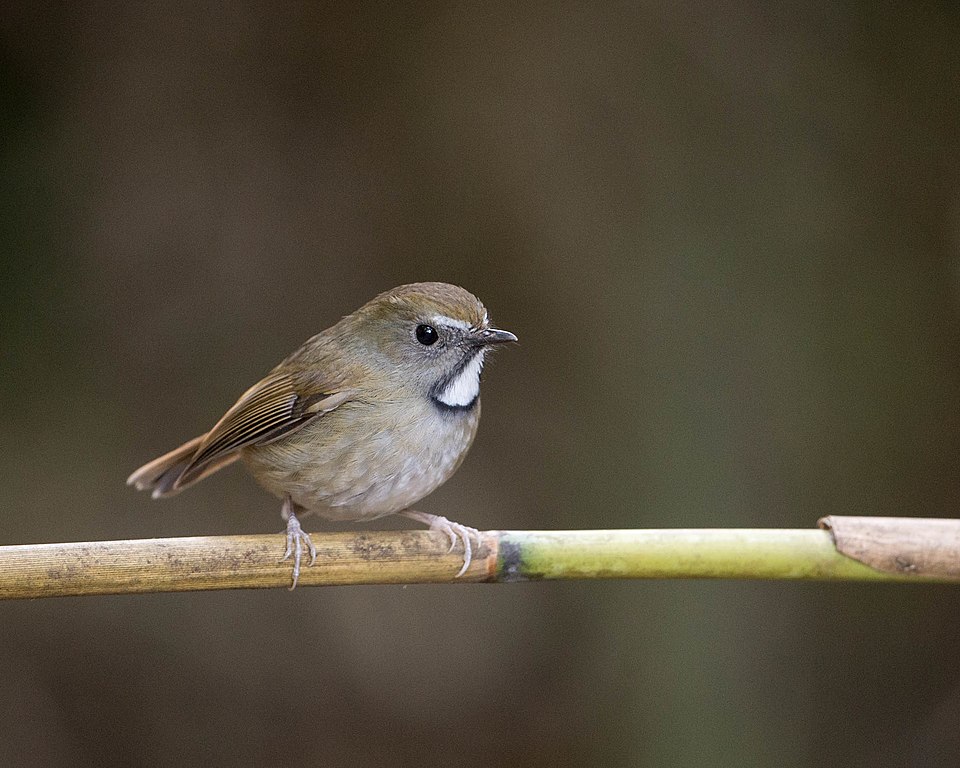
The Ussher's Flycatcher is a small bird, measuring approximately 13 centimeters in length, with a wingspan of about 20 centimeters. Its plumage is predominantly brown, providing effective camouflage against the forest backdrop. The upper parts are a rich, earthy brown, while the underparts are lighter with subtle streaking. This subtle coloration helps in identifying the bird in its natural habitat.
Juveniles resemble adults but can be distinguished by a slightly mottled appearance and a paler overall coloration. Unlike some flycatcher species, there is minimal sexual dimorphism in the Ussher's Flycatcher, with males and females appearing very similar in plumage. However, males may exhibit slightly brighter plumage during the breeding season.
In flight, the Ussher's Flycatcher displays a darting, agile silhouette, characterized by rapid wingbeats interspersed with short glides. When perched, it typically adopts an upright posture and flicks its tail frequently, a trait that aids in distinguishing it from other similar species. Though they may be confused with other small brown flycatchers, the Ussher's Flycatcher's specific combination of size, shape, and behavior sets it apart.
Having trouble telling birds apart? Upload a photo to our bird identification tool for an instant species match.
Ussher's Flycatcher Habitat and Range
Preferred Habitat
Ussher's Flycatchers are primarily found in the lowland tropical forests of West Africa. These forests provide a rich and diverse ecosystem that supports a variety of insect life, which is crucial for the bird's diet. They tend to favor dense, humid environments where they can easily find shelter and food.
The species is most commonly observed at elevations ranging from sea level up to 1,500 meters. Within these forests, they are often seen in the mid to upper canopy layers, where they can effectively hunt for flying insects. During the dry season, Ussher's Flycatchers may shift slightly to more open forest edge habitats in search of food.
While the Ussher's Flycatcher is not typically found in urban areas, it can occasionally be seen in rural settings that are adjacent to forested regions. They do not generally inhabit heavily urbanized environments, instead preferring the relative seclusion and resource abundance of forest habitats.
Geographic Range
The Ussher's Flycatcher is endemic to the tropical regions of West Africa. Its primary range includes countries such as Sierra Leone, Liberia, Côte d'Ivoire, Ghana, and occasionally extending into southern Guinea and southeastern Nigeria. These areas provide the dense forest habitats that are essential for their survival.
During the breeding season, the Ussher's Flycatcher remains within its established range, taking advantage of the rich insect populations that emerge with the rainy season. While some degree of local movement occurs, this species is largely non-migratory, choosing to stay within its preferred habitat year-round.
Population densities are generally higher in regions where forest habitats remain intact and undisturbed. Areas like the Taï National Park in Côte d'Ivoire and the Gola Rainforest in Sierra Leone are known hotspots for spotting the Ussher's Flycatcher, due to their extensive and well-preserved forest environments. Conservation efforts in these regions are crucial for maintaining the bird's stable population levels.
Want to know which birds visit your area? Browse our backyard birds by location guides for region-specific species lists.
What Does the Ussher's Flycatcher Eat?
The Ussher's Flycatcher primarily feeds on a diet of flying insects, which it captures with remarkable agility in mid-air. This diet is rich in protein and consists mainly of small to medium-sized insects, including flies, beetles, and moths. The flycatcher employs a sit-and-wait strategy, perching patiently until it spots potential prey.
During the rainy season, when insect populations flourish, the Ussher's Flycatcher can be seen performing acrobatic maneuvers to capture prey. Its foraging activities peak during the early morning and late afternoon, coinciding with periods of high insect activity.
In the dry season, the bird may also consume a variety of other arthropods, including spiders and caterpillars, to supplement its diet. This flexibility in diet allows the Ussher's Flycatcher to thrive even when conditions are less favorable. Though not a common behavior, they have been observed occasionally gleaning insects from leaves and branches, demonstrating their adaptability in foraging techniques.
Ussher's Flycatcher Behavior and Social Structure
The Ussher's Flycatcher exhibits a solitary lifestyle outside of the breeding season, focusing on foraging and territory maintenance. These birds are territorial and will aggressively defend their chosen patch of forest from intruders. During the breeding season, males become particularly vocal, using a series of calls and displays to attract females and establish dominance.
Courtship involves a variety of displays, including rapid flights and vocalizations, with males showcasing their agility and strength. The species is monogamous, with pairs forming strong bonds that often last throughout the breeding season. Nesting pairs will remain together to defend their territory and raise their young.
The Ussher's Flycatcher maintains a diurnal activity pattern, being most active during the cooler hours of the day. Its response to predators includes rapid, evasive flight and loud alarm calls to warn other birds of danger. Despite its small size, the Ussher's Flycatcher is a determined defender of its nest, often mobbing larger birds or mammals that pose a threat.
Ussher's Flycatcher Nesting and Reproduction
Ussher's Flycatchers construct cup-shaped nests, typically using materials such as twigs, grasses, and spider webs. These nests are carefully camouflaged among the foliage, often positioned on horizontal branches or in the forks of trees to provide stability and concealment.
The female lays a clutch of 2 to 4 eggs, which she incubates for approximately 12 to 14 days. During this period, the male plays a supportive role by providing food and defending the territory. Once the chicks hatch, both parents take part in feeding and caring for their young.
Fledging occurs about 14 to 16 days after hatching, although the young birds remain dependent on their parents for several weeks as they learn to forage and hone their flying skills. Ussher's Flycatchers typically raise one to two broods per year, depending on environmental conditions and food availability.
Ussher's Flycatcher Sounds and Vocalizations
The song of the Ussher's Flycatcher is a series of melodious, short notes that rise and fall in pitch, often described as cheerful and fluty. These songs are most commonly heard during the breeding season, serving to establish territory and attract a mate.
In addition to their primary song, Ussher's Flycatchers produce a range of call notes, including sharp 'chip' sounds used to communicate with their mate and alert others of potential dangers. Their alarm calls are rapid and higher-pitched, serving as a warning to nearby birds when predators are present.
During the dawn chorus, the Ussher's Flycatcher is an active participant, contributing its voice to the symphony of sounds that marks the start of a new day in the forest. Its vocalizations play a crucial role in maintaining social bonds and coordinating activities within its territory.
Interesting Facts About the Ussher's Flycatcher
- 1The Ussher's Flycatcher was first described by the British ornithologist Osbert Salvin in 1869, based on specimens from Ghana.
- 2Despite its small size, the Ussher's Flycatcher can consume up to half its body weight in insects each day during peak foraging periods.
- 3The Ussher's Flycatcher is named after Henry Ussher, an Irish astronomer and one of the founders of the Dublin Society.
- 4This species is part of a large family of flycatchers, numbering over 300 species worldwide, each exhibiting unique adaptations to catch prey.
- 5Ussher's Flycatchers are adept at catching insects on the wing, with a success rate of over 70% during their aerial hunting sorties.
- 6The bird's preferred habitat, the lush forests of West Africa, are among the most biodiverse regions on the planet.
- 7Ussher's Flycatchers participate in mixed-species foraging flocks, increasing their feeding efficiency and reducing predation risk.
Ussher's Flycatcher Conservation Status
The Ussher's Flycatcher currently holds a status of Least Concern according to the IUCN Red List, indicating a stable population trend. However, the primary threat to this species is habitat loss due to deforestation, driven by logging and agricultural expansion. Conservation efforts focus on preserving the remaining forest habitats in West Africa, which are crucial for the survival of the Ussher's Flycatcher. Protected areas such as national parks play a significant role in safeguarding these environments from encroachment. Historically, the population of the Ussher's Flycatcher has remained relatively stable, but ongoing monitoring is necessary to ensure this trend continues. Initiatives that promote sustainable land-use practices and reforestation are vital for the long-term conservation of this species and its habitat.
Other Muscicapidae Species


Birds Similar to the Ussher's Flycatcher
These species are often confused with the Ussher's Flycatcher due to similar appearance or overlapping range.

