
Verreaux's Coua
Coua verreauxi
Order: Cuculiformes / Family: Cuculidae
Wikimedia Commons
About the Verreaux's Coua
Verreaux's Coua, scientifically known as Coua verreauxi, is a remarkable member of the Cuculidae family, endemic to the island of Madagascar. This species is part of a genus known for its diverse adaptations to the island's varied habitats. The bird's significance extends beyond its striking appearance, serving as an integral component of the ecosystem by controlling insect populations and contributing to seed dispersal. The Verreaux's Coua inhabits the dry deciduous forests and thorny scrublands, primarily in the southwestern regions of Madagascar, where it forages for insects and fruit. Despite Madagascar's ecological challenges, this bird has managed to maintain a stable population due to its adaptability to the island's patchy, yet distinct, habitats. Seasonal behaviors of the Verreaux's Coua include territorial singing during the breeding season and a more solitary existence when not breeding. They are typically more active during the cooler parts of the day, avoiding the intense midday heat. The habitat preferences of the Verreaux's Coua highlight the evolutionary pressures exerted by Madagascar's unique environment. This bird favors the xerophytic vegetation of the island's southern and southwestern regions, particularly the spiny forests characterized by drought-resistant plants. These regions include the Mahafaly Plateau and the Mikea Forest, areas under threat from deforestation and habitat degradation. The ecological role of the Verreaux's Coua is vital, as it helps manage insect populations, potentially reducing the spread of pest species, and aids in the dispersal of native plant seeds. As such, the conservation of this species is closely tied to the preservation of its natural habitat. Protecting these areas not only benefits the Verreaux's Coua but also supports the rich biodiversity that Madagascar is renowned for. The bird's ability to thrive in such arid regions is a testament to its evolutionary history and adaptability, underscoring the importance of habitat conservation efforts in Madagascar.
The Verreaux's Coua belongs to the family Cuculidae, within the order Cuculiformes. These birds typically live around 8-12 years in the wild..
How to Identify a Verreaux's Coua
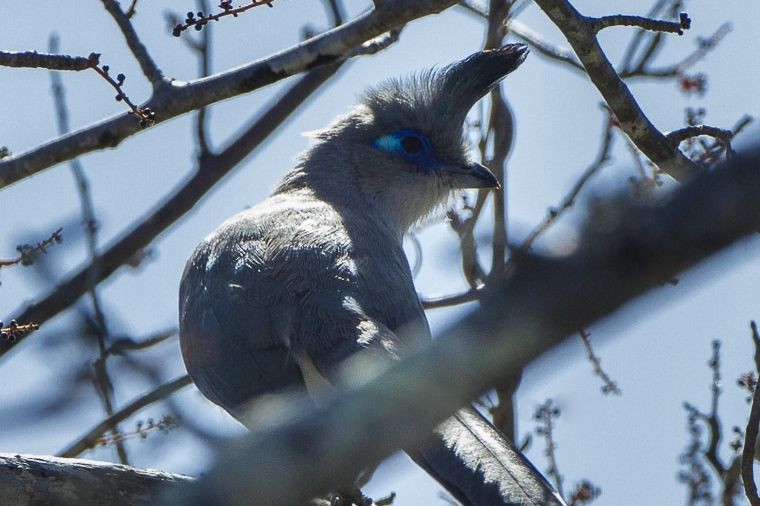
The Verreaux's Coua is a medium-sized bird, measuring around 44 centimeters in length. Its most striking feature is the vivid blue skin around its eyes and on its crown, which contrasts sharply with its otherwise muted plumage. The body is primarily a dull olive-brown, with lighter underparts that help it blend into its surroundings. Both males and females share similar plumage, making them difficult to distinguish visually. Juvenile birds, however, tend to have a duller blue crown and more buff coloration, which fades as they mature. In terms of structure, the Verreaux's Coua has a strong, slightly curved bill adapted for its omnivorous diet, along with sturdy legs for foraging on the ground. When perched, it often adopts a horizontal posture, reminiscent of other ground-dwelling cuckoos. In flight, it can be identified by its rapid wingbeats and the noticeable flash of its blue crown. The Verreaux's Coua is sometimes confused with the more widespread Crested Coua (Coua cristata), but the latter has a distinctive crest and differs in plumage details.
Having trouble telling birds apart? Upload a photo to our bird identification tool for an instant species match.
Verreaux's Coua Habitat and Range
Preferred Habitat
Verreaux's Coua primarily inhabits the dry deciduous forests and spiny scrublands of southwestern Madagascar. These habitats include regions such as the Mikea Forest and the Mahafaly Plateau, where the climate is characterized by a pronounced dry season. The vegetation in these areas consists of drought-resistant species like baobabs and thorny scrub, providing the Coua with ample opportunities for foraging and nesting. The bird is typically found at low elevations, rarely venturing into higher altitudes. During the rainy season, the Coua may expand its range slightly as food resources become more abundant, but it generally remains within its preferred dry forest habitat. Unlike some bird species that can adapt to urban environments, the Verreaux's Coua is rarely found in populated areas, sticking instead to its natural, undisturbed habitats, which are crucial for its survival.
Geographic Range
The Verreaux's Coua is endemic to Madagascar, with its range restricted to the island's southwestern regions. It occurs primarily from the coastal areas near Tulear inland to the dry forests of the Mahafaly Plateau and the Mikea Forest. This bird does not migrate, instead remaining within its established range year-round. Given its limited range, the population density of Verreaux's Coua is highest in these specific areas where suitable habitat is available. Unlike many other bird species, the Verreaux's Coua does not undertake long-distance migrations, instead relying on its ability to adapt to seasonal changes in its environment. The limited range and habitat specificity of this species make it particularly vulnerable to habitat destruction and fragmentation, underscoring the need for focused conservation efforts in these biodiverse regions of Madagascar.
Want to know which birds visit your area? Browse our backyard birds by location guides for region-specific species lists.
What Does the Verreaux's Coua Eat?
The diet of Verreaux's Coua is predominantly omnivorous, with a strong emphasis on insects and other invertebrates, such as beetles and caterpillars. This bird actively forages on the ground, using its robust bill to probe the leaf litter and soil for hidden prey. During the wet season, the availability of insects increases, allowing the Coua to consume a more protein-rich diet. In addition to insects, the Verreaux's Coua also feeds on a variety of fruits and berries, contributing to the dispersal of seeds throughout its habitat. The bird's diet can vary depending on seasonal availability, with a higher intake of fruits during periods of insect scarcity. Its foraging technique is deliberate and methodical, often involving short hops and careful scrutiny of the ground and low vegetation. The Coua typically forages alone or in pairs, maintaining an active feeding schedule throughout the morning and late afternoon.
Verreaux's Coua Behavior and Social Structure
Verreaux's Coua exhibits a primarily solitary lifestyle outside of the breeding season, although it can sometimes be observed in pairs. Its territorial behavior is most pronounced during the breeding season when males engage in vocal displays to establish and defend their territories. This vocalization serves as both a mating call and a warning to potential competitors. The courtship displays of this species involve a series of calls and plumage displays, with the male often presenting food offerings to the female as part of the bonding process. Outside of the breeding season, the Coua is more elusive, spending much of its time foraging quietly within its territory. In response to predators, such as the Madagascar Harrier-Hawk, the Verreaux's Coua often employs its cryptic coloration to remain undetected, staying motionless or retreating into dense undergrowth. Its daily activity pattern revolves around the cooler hours, with peak activity occurring in the early morning and late afternoon.
Verreaux's Coua Nesting and Reproduction
The nesting habits of Verreaux's Coua are closely tied to the available resources within its dry forest habitat. This bird constructs a shallow nest, often in the fork of a tree or hidden among dense shrubs. The nest is typically made from twigs, leaves, and grasses, providing a well-camouflaged site for egg-laying. The female lays a clutch of 2 to 3 eggs, which both parents incubate for approximately 15 to 18 days. After hatching, the chicks remain in the nest for several weeks, during which both parents share the responsibilities of feeding and protecting the young. The fledging period lasts about 20 to 25 days, after which the juveniles become more independent, although they may still rely on their parents for food for a short time. The Verreaux's Coua usually raises one brood per year, with breeding closely aligned with the availability of food resources.
Verreaux's Coua Sounds and Vocalizations
The primary song of the Verreaux's Coua is a series of soft, repetitive coos that carry well across the dry forest landscape. This song serves both as a territorial signal and a courtship call, typically delivered from a concealed perch. The rhythm of the song is steady, with a soothing quality that contrasts with the harsher calls of some other cuckoo relatives. In addition to its song, the Coua emits various call notes that include short clucks and whistles, often used in communication between pairs or as alarm signals when predators are nearby. During the dawn chorus, the Coua's song is particularly pronounced, adding to the chorus of sounds that define Madagascar's morning soundscape. Its vocalizations are an important aspect of its behavior, facilitating social interactions and territory establishment.
Interesting Facts About the Verreaux's Coua
- 1Verreaux's Coua's blue crown is a distinctive feature, helping it stand out in its dry forest habitat.
- 2Unlike many cuckoos, the Verreaux's Coua does not exhibit brood parasitism but raises its own young.
- 3The bird's name honors Jules Verreaux, a famous French naturalist who contributed to ornithology.
- 4Verreaux's Coua plays a role in seed dispersal, contributing to the regeneration of Madagascar's forests.
- 5This species is one of the few couas restricted to the arid regions of southwestern Madagascar.
- 6The Verreaux's Coua is part of a group of birds endemic to Madagascar, highlighting the island's unique avian diversity.
- 7Despite its limited range, the Verreaux's Coua has adapted well to the challenges of its environment.
Verreaux's Coua Conservation Status
The IUCN currently lists the Verreaux's Coua as Least Concern, although its population trend remains under scrutiny due to habitat pressures. The primary threats to this species include deforestation and habitat fragmentation, driven by agricultural expansion and logging in southwestern Madagascar. Conservation efforts focus on protecting remaining dry forest habitats through the establishment of protected areas and sustainable land-use practices. Historically, the population has remained relatively stable, thanks in part to the bird's adaptability and the conservation focus on Madagascar's unique biodiversity. However, ongoing environmental changes necessitate continued vigilance and conservation action to ensure the long-term survival of the Verreaux's Coua and its habitat.


