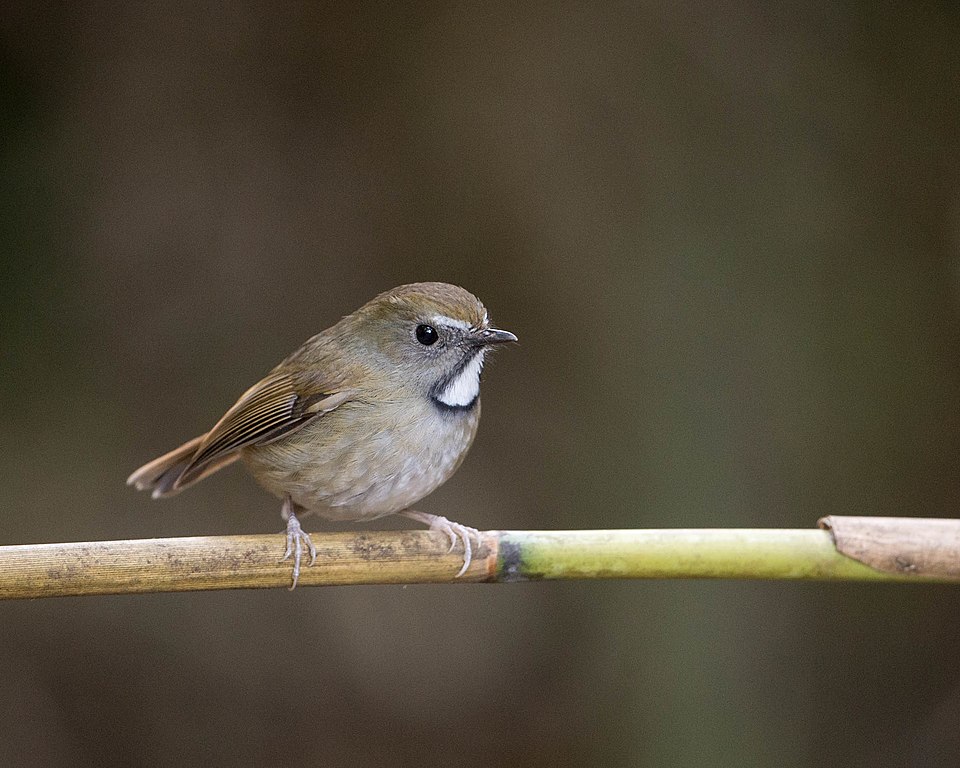
Whinchat
Saxicola rubetra
Order: Passeriformes / Family: Muscicapidae

Wikimedia Commons
About the Whinchat
The Whinchat, Saxicola rubetra, is a captivating member of the Muscicapidae family, celebrated for its vibrant plumage and distinctive eye stripe. Typically found across Europe and western Asia, this small passerine migrates to sub-Saharan Africa for the winter. Its presence in diverse habitats, ranging from open grasslands to heathlands, underscores its adaptability. In spring and summer, Whinchats are a common sight across the United Kingdom, northern France, and parts of Scandinavia, signaling the arrival of warmer weather with their cheerful song.
Whinchats play a significant role in their ecosystems by controlling insect populations. Their diet primarily consists of insects and other invertebrates, which they expertly hunt from low perches. The bird's preference for open landscapes aids in seed dispersal and the ecological balance of grassland habitats. As insectivores, Whinchats contribute to controlling pest populations, benefiting agricultural landscapes and natural ecosystems alike.
Seasonally, Whinchats exhibit fascinating behaviors. During the breeding season in Europe, males establish territories and engage in complex aerial displays to attract females. These displays not only serve as courtship rituals but also reinforce territory boundaries. As autumn approaches, the birds embark on a remarkable migration journey, covering thousands of miles to reach their wintering grounds in Africa. This migration highlights the Whinchat's resilience and navigational prowess, as they navigate across varied terrains and climate zones.
The Whinchat belongs to the family Muscicapidae, within the order Passeriformes. These birds typically live average 2-4 years with a max recorded of 6 years.
How to Identify a Whinchat
The Whinchat is a small songbird, approximately 12-14 cm in length, with a wingspan of 21-24 cm. Adult males in breeding plumage display a striking combination of bold colors and patterns. They have a conspicuous white supercilium (eye stripe) that contrasts with their dark eye and cheek. The throat and breast are warm orange-buff, blending into a paler belly. The back and wings are patterned with a mix of brown and black streaks, providing excellent camouflage among grasses and shrubs.
Females and juveniles are more subtly colored, with less pronounced orange and a generally paler appearance. The female's supercilium is still noticeable but less vivid than that of the male. Juveniles, meanwhile, exhibit a mottled appearance, aiding in their concealment from predators. Despite subtle differences, all Whinchats share the characteristic upright posture when perched, often on low shrubs or fence posts.
In flight, Whinchats reveal a distinctive wing pattern, with a white wing patch that becomes visible against their darker flight feathers. Their flight is undulating, characterized by quick wing beats followed by short glides. This, along with their habit of perching conspicuously, helps differentiate them from similar species like the Stonechat, which lacks the prominent white supercilium.
Having trouble telling birds apart? Upload a photo to our bird identification tool for an instant species match.
Whinchat Habitat and Range
Preferred Habitat
Whinchats are primarily associated with open grasslands, heathlands, and agricultural fields. They thrive in habitats with scattered bushes or low shrubs, providing both perches for hunting and cover from predators. These birds prefer elevations from sea level to about 2,000 meters, often choosing areas with a mix of tall grasses and clearings. They are less common in dense forests or urban environments, although they may occasionally appear in rural gardens or parklands during migration.
During the breeding season, Whinchats favor semi-natural habitats such as upland meadows and moorlands. These areas offer abundant insect food sources and suitable nesting sites. In winter, their habitat preference shifts to savannas and open woodlands in sub-Saharan Africa, where they exploit seasonal insect abundance. This seasonal habitat shift highlights the Whinchat's adaptability and reliance on specific ecological conditions for survival.
Geographic Range
The Whinchat has a broad breeding range across Europe and western Asia. It occupies regions from the British Isles and Scandinavia in the north, extending southward to Spain and Italy, and eastward to the Ural Mountains in Russia. The bird is particularly abundant in the UK, Germany, and Poland during the breeding season, with significant populations also in the Balkans and Eastern Europe.
As a migratory species, the Whinchat travels vast distances to reach its wintering grounds in sub-Saharan Africa. Key wintering areas include the Sahel region, parts of West Africa, and eastern Africa. During migration, Whinchats pass through the Mediterranean basin, utilizing stopover sites in southern Europe and North Africa. These migration corridors are crucial for refueling and resting, underscoring the importance of conservation efforts along these routes.
Population densities vary, with higher concentrations in regions offering optimal breeding conditions. In contrast, they are sparser in areas with intensive agriculture or urban development. This distribution reflects the Whinchat's preference for natural and semi-natural landscapes.
Want to know which birds visit your area? Browse our backyard birds by location guides for region-specific species lists.
What Does the Whinchat Eat?
The Whinchat's diet predominantly consists of insects and other invertebrates, which they actively hunt from perches. Common prey items include beetles, grasshoppers, caterpillars, and spiders, which they capture by making short flights or hopping on the ground. The bird's preference for perching low allows it to spot and seize prey with precision.
During the breeding season, the availability of insects such as ants and flies increases, supporting the Whinchat's nutritional needs and those of its chicks. In late summer and autumn, as insect populations wane, Whinchats supplement their diet with berries and seeds, including elderberries and wild oats. This dietary flexibility aids in their survival during migration when food resources may be unpredictable.
Whinchats typically feed during daylight hours, with peaks in activity during the morning and late afternoon. Their foraging technique involves a combination of sit-and-wait and active pursuit, allowing them to exploit a variety of prey types efficiently.
Whinchat Behavior and Social Structure
Whinchats are generally solitary or found in pairs during the breeding season, with males displaying strong territorial behavior. Males establish and defend territories through song and visual displays, often flying to prominent perches to signal their presence. Their courtship displays involve a series of aerial acrobatics, including fluttering flights and spirals, designed to attract females.
Outside the breeding season, Whinchats exhibit more social behavior, forming loose flocks during migration. These flocks provide safety in numbers, helping individuals avoid predators such as falcons and hawks. The birds exhibit a keen awareness of their surroundings, often giving alarm calls to warn of nearby threats.
Daily activity patterns are largely diurnal, with peak activity at dawn and dusk. During these times, Whinchats engage in foraging and territorial singing. Their adaptability and vigilance contribute to their survival during long migrations and in varying habitats.
Whinchat Nesting and Reproduction
Whinchats construct cup-shaped nests, usually hidden at the base of tussocks or within low vegetation. The nests are crafted from grasses, leaves, and moss, lined with finer materials like feathers and hair. These nests provide shelter from predators and harsh weather conditions.
Females typically lay a clutch of 4-7 eggs, which are pale blue with brown speckles. The incubation period lasts about 11-14 days, with the female primarily responsible for incubation while the male guards the territory and occasionally assists with feeding.
Once hatched, the chicks remain in the nest for approximately 12-14 days before fledging. Both parents participate in feeding the young, delivering a variety of insects to provide essential nutrients. Whinchats often raise one or two broods per season, depending on environmental conditions and food availability.
Whinchat Sounds and Vocalizations
The Whinchat's song is a distinctive, melodious series of whistles and trills, often delivered from a prominent perch. The song typically consists of a repeated 'twit-twit' sound followed by a rapid, descending trill. This melodic sequence serves both as a territorial declaration and a courtship display.
Call notes include a sharp 'chak' sound, used as an alarm call or to maintain contact with mates. During the dawn chorus, Whinchats contribute to the vibrant tapestry of sound, their song blending harmoniously with those of other grassland species. Their vocalizations are a signature feature of their presence, aiding birdwatchers in locating them within their habitat.
Interesting Facts About the Whinchat
- 1Whinchats can migrate over 5,000 kilometers from Europe to Africa, showcasing remarkable endurance.
- 2The male Whinchat's song can be heard up to 50 meters away, serving as a beacon during courtship.
- 3Whinchats have been recorded flying at altitudes exceeding 2,000 meters during migration.
- 4In optimal conditions, Whinchats can raise two broods per season, effectively doubling their offspring.
- 5Their distinctive white eye stripe aids in visual communication among individuals.
- 6Whinchats can spot insects from distances of several meters, thanks to their keen eyesight.
- 7The Whinchat's name derives from its habitat preference, often found among whins or gorse bushes.
Whinchat Conservation Status
The International Union for Conservation of Nature (IUCN) currently lists the Whinchat as a species of Least Concern, although its population trend is decreasing. Primary threats include habitat loss due to agricultural intensification and land-use changes, particularly in breeding areas. Pesticide use also poses a threat by reducing insect prey availability. Conservation efforts focus on habitat preservation and management, such as maintaining traditional grazing and mowing regimes that support grassland ecosystems. Historical population fluctuations highlight the need for continued monitoring and adaptive management to ensure the Whinchat's long-term survival.