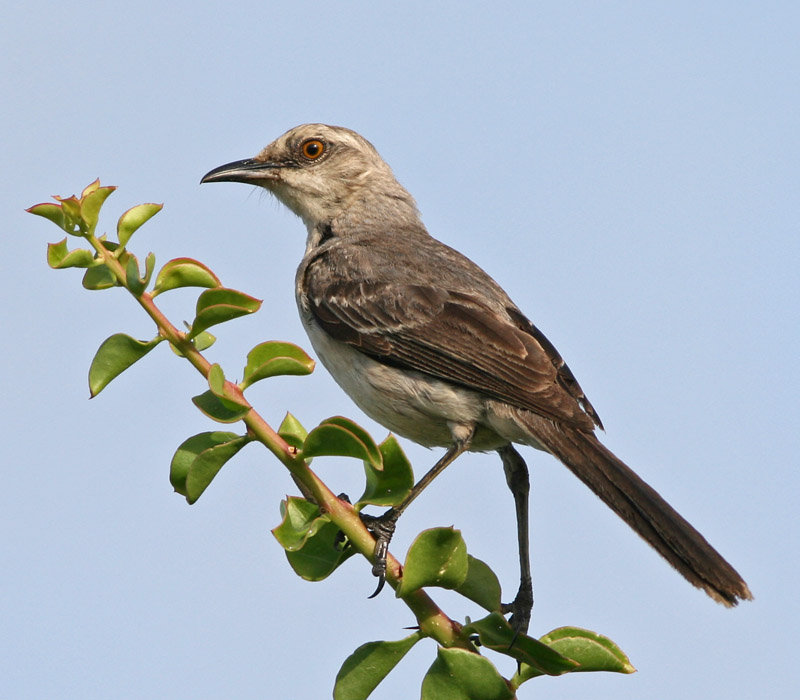
White-banded Mockingbird
Mimus triurus
Order: Passeriformes / Family: Mimidae

Wikimedia Commons
About the White-banded Mockingbird
The White-banded Mockingbird, Mimus triurus, is a captivating member of the Mimidae family known for its excellent mimicry and striking appearance. This songbird is native to South America, with a range extending from central Argentina and Uruguay to parts of Brazil and Bolivia. Preferring open habitats and edges of woodlands, this bird thrives in a variety of environments, including savannas, farmland, and urban areas. Its adaptability to different habitats underscores its ecological significance as both predator and prey within its ecosystem.
The White-banded Mockingbird plays a crucial role in controlling insect populations, as it primarily feeds on a variety of invertebrates. Beyond its utilitarian role, its diverse vocalizations add a unique auditory dimension to its habitat. The bird's ability to mimic other species, as well as environmental sounds, makes it a vibrant contributor to the soundscape of its environment. Seasonally, these birds exhibit partial migratory behavior, particularly in the southernmost parts of their range, where they move northward during the austral winter.
Ecologically, the White-banded Mockingbird provides an interesting study in avian adaptability and resilience. Its presence in both rural and urban settings demonstrates a high degree of ecological plasticity. Significantly, the bird exemplifies the dynamics of species interaction within its environment, as it competes with other birds for food and nesting sites. Its role in seed dispersion, albeit secondary to its insectivorous diet, further enhances its ecological importance. Mimus triurus, with its distinctive behavior and adaptability, remains a vital component of the South American avifauna.
The White-banded Mockingbird belongs to the family Mimidae, within the order Passeriformes. These birds typically live average 5-8 years, with a maximum recorded of 10 years..
How to Identify a White-banded Mockingbird
The White-banded Mockingbird is easily recognizable by its medium size and distinct coloration. Adults are characterized by gray upperparts and a white underbelly, with a conspicuous white band on each wing that becomes particularly noticeable in flight. This wing pattern serves as the bird's most distinguishing feature when observed from a distance. The tail is long and slender, predominantly gray with white edges, aiding in its identification.
Juvenile White-banded Mockingbirds tend to have a more muted coloration, with less prominent wing bands and a slightly browner hue overall. Despite this, their plumage still retains the key patterns that distinguish them from other similar species. Comparing males and females, there is little sexual dimorphism in plumage, though males are generally slightly larger.
In flight, the White-banded Mockingbird presents a distinctive silhouette with broad wings and the telltale white bands flashing prominently. When perched, it often holds its tail cocked upwards and exhibits a confident stance. It can be confused with the Chalk-browed Mockingbird but is distinguishable by its cleaner, more contrasting wing markings and overall paler appearance.
Having trouble telling birds apart? Upload a photo to our bird identification tool for an instant species match.
White-banded Mockingbird Habitat and Range
Preferred Habitat
The White-banded Mockingbird inhabits a variety of open and semi-open landscapes. It favors savannas, grasslands, and the edges of forests, often venturing into suburban gardens and farmland. This species is comfortable at elevations from sea level to approximately 2,000 meters, though it is more commonly found in lowland areas.
Seasonal shifts in habitat are minimal, though some populations migrate to slightly different environments during the cooler months. Urban areas have become increasingly significant for this species, as they provide plentiful foraging opportunities and nesting sites. Despite its adaptability, the White-banded Mockingbird typically avoids dense forests and heavily urbanized city centers, preferring areas where it can easily forage and spot predators.
Geographic Range
The White-banded Mockingbird's breeding range extends across central and southern Argentina, Uruguay, and parts of southern Brazil and Bolivia. During the austral winter, some populations migrate northward, reaching as far as Paraguay and the southern regions of Brazil.
In terms of migration corridors, the bird uses established routes through open landscapes and riverine areas. The population density is highest in the Pampas of Argentina, where the bird is a common sight. The species' range is generally consistent, with only minor fluctuations in response to climatic conditions and habitat alterations.
Want to know which birds visit your area? Browse our backyard birds by location guides for region-specific species lists.
What Does the White-banded Mockingbird Eat?
The White-banded Mockingbird primarily feeds on invertebrates, including beetles, spiders, and caterpillars, making it an effective insectivore. During the breeding season, its diet shifts slightly to include more protein-rich prey, which supports chick development. In addition to insects, it occasionally consumes fruit and berries, particularly in the non-breeding season when insects are less abundant.
Foraging typically occurs on the ground, where the bird uses its keen eyes and swift movements to capture prey. Its technique involves short flights or hops to pursue insects flushed from vegetation. The bird's feeding schedule is most active during the early morning and late afternoon, aligning with peak prey activity.
White-banded Mockingbird Behavior and Social Structure
The White-banded Mockingbird is known for its territorial behavior, especially during the breeding season. Males establish and defend territories vigorously, often engaging in vocal duels with rivals. Their courtship displays include a mix of song and physical posturing, with males showcasing their white wing bands to attract mates.
Socially, these birds are typically solitary or found in pairs. However, they may form small flocks during migration or in areas with abundant food resources. Flocking behavior provides safety in numbers and increased foraging efficiency. In response to predators, the White-banded Mockingbird exhibits alarm calls and mobbing behavior, rallying other birds to drive off threats.
Daily activity peaks in the morning and late afternoon, coinciding with feeding times. During the heat of the day, the bird often retreats to shaded areas to rest and preen.
White-banded Mockingbird Nesting and Reproduction
Nesting for the White-banded Mockingbird involves constructing cup-shaped nests using twigs, grasses, and rootlets, often lined with finer materials for comfort. These nests are typically located in bushes or small trees, at a height of 1 to 5 meters above the ground. The choice of nesting site is influenced by the availability of cover to protect against predators.
A typical clutch consists of 2 to 4 eggs, with an incubation period lasting about 12 to 14 days. Both parents participate in feeding the chicks, which fledge approximately 12 to 15 days after hatching. The species generally raises two broods per year, taking advantage of the extended breeding season in its habitat.
White-banded Mockingbird Sounds and Vocalizations
The White-banded Mockingbird's primary song is a complex series of melodious phrases, characterized by varied rhythm and pitch. It often includes imitations of other bird species and environmental sounds, creating a rich auditory tapestry. Its call notes are sharp and distinct, serving as communication between mates or to signal alarm.
Alarm calls are harsher and more urgent, intended to alert other birds to potential danger. During the dawn chorus, this mockingbird is particularly vocal, contributing to the morning soundscape with its diverse repertoire. Its song can be likened to a blend of a thrush and a starling, with clear, ringing tones.
Interesting Facts About the White-banded Mockingbird
- 1The White-banded Mockingbird can mimic the calls of over 30 different bird species, showcasing remarkable vocal versatility.
- 2Despite its name, the White-banded Mockingbird is more gray than white, but its wing bands are unmistakable in flight.
- 3These birds are known to exhibit mobbing behavior, banding together to drive away larger predators with surprising effectiveness.
- 4The species can adapt to urban environments, often nesting in gardens and parks, where it helps control insect populations.
- 5White-banded Mockingbirds can be territorial year-round, with males often seen and heard defending their territory vociferously.
White-banded Mockingbird Conservation Status
The IUCN lists the White-banded Mockingbird as a species of Least Concern, with stable population trends. Despite this, habitat loss due to agricultural expansion and urbanization poses localized threats. Conservation efforts focus on habitat preservation and the promotion of sustainable land-use practices. Historically, the population has maintained stability, aided by the bird’s adaptability to changing environments. Continued monitoring and conservation initiatives are essential to ensure that this species remains a thriving component of South America's avifauna.
Other Mimidae Species


Birds Similar to the White-banded Mockingbird
These species are often confused with the White-banded Mockingbird due to similar appearance or overlapping range.