White-bellied Blue Flycatcher
Cyornis pallipes
Order: Passeriformes / Family: Muscicapidae
Wikimedia Commons
About the White-bellied Blue Flycatcher
The White-bellied Blue Flycatcher (Cyornis pallipes) is a vibrant, small passerine bird endemic to the rich biodiversity of the Western Ghats in India. This flycatcher plays a crucial ecological role as an insectivore, helping control insect populations in its habitat. It thrives in the humid, montane tropical forests, which are part of one of the world's eight hottest biodiversity hotspots. These birds are non-migratory, residing year-round in their habitat, though they may exhibit slight altitudinal movements in response to seasonal changes. They prefer dense, evergreen forests at elevations ranging from 600 to 2000 meters, often found in regions such as Kerala, Karnataka, and Tamil Nadu. The flycatcher’s presence in these forests is an indicator of a healthy ecosystem, as it relies on dense forest canopies and rich insect life. Their significance extends beyond ecological roles, as they contribute to the rich avian diversity of the Western Ghats, attracting bird watchers and researchers alike. Observers often spot them during the breeding season, which coincides with the monsoon, further emphasizing their reliance on specific climatic conditions. The White-bellied Blue Flycatcher is a key species for studies on habitat preservation and the impacts of climate change on specialized forest birds.
The White-bellied Blue Flycatcher belongs to the family Muscicapidae, within the order Passeriformes. These birds typically live average 4-6 years, with a maximum recorded up to 7 years..
How to Identify a White-bellied Blue Flycatcher
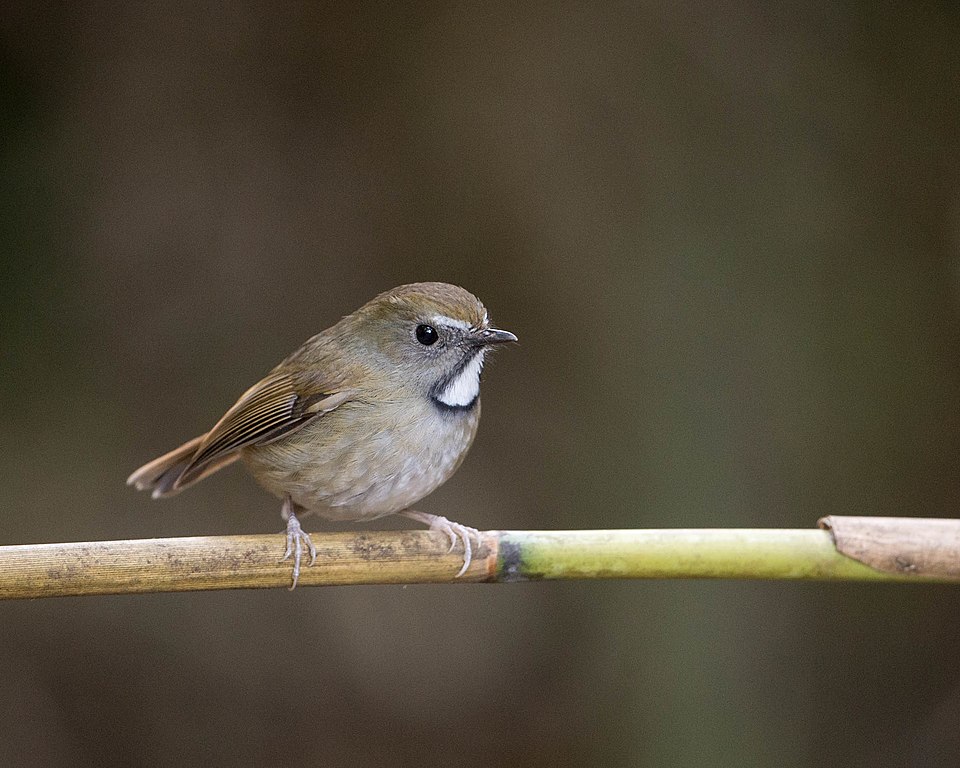
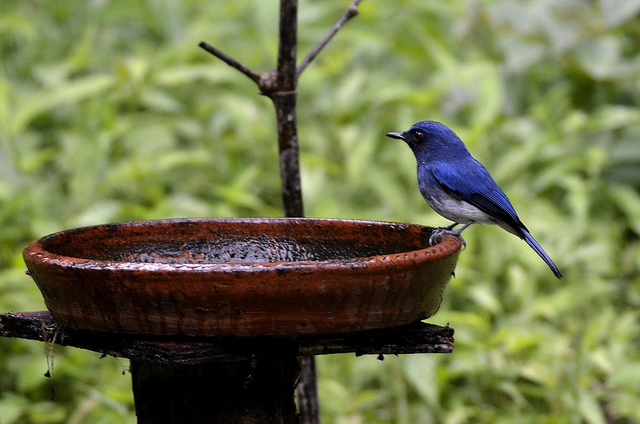
This species is easily identified by its vivid blue upperparts and contrasting white underparts, a distinctive coloration shared by few other birds in its range. Adult males display a deep cobalt blue on the head, back, and wings, while the throat and upper breast may show a lighter blue shade. Females are less colorful, with duller blue tones and a more subdued grayish-brown on the wings and back, making them less conspicuous. Juvenile flycatchers resemble females but often possess speckling on the breast and a more muted overall appearance. While perched, the White-bellied Blue Flycatcher exhibits an upright posture typical of flycatchers, and in flight, its medium-sized, slightly rounded wings are evident. When compared to similar species, the Nilgiri Flycatcher can cause confusion; however, the Nilgiri lacks the stark white belly and has a more uniform blue appearance. This flycatcher's song and call notes also aid in identification, as its melodious tune is a recognizable feature in its forest habitat.
Having trouble telling birds apart? Upload a photo to our bird identification tool for an instant species match.
White-bellied Blue Flycatcher Habitat and Range
Preferred Habitat
The White-bellied Blue Flycatcher primarily inhabits the dense, moist evergreen forests of the Western Ghats. These forests, characterized by tall trees and a closed canopy, provide the ideal environment for this insectivorous bird. Within this habitat, the flycatcher favors areas with ample undergrowth and thickets, which offer protection and abundant foraging opportunities. It is typically found at elevations from 600 to 2000 meters, thriving in the montane regions of states like Kerala, Karnataka, and Tamil Nadu. While the bird remains within forested areas year-round, there is some movement within its elevational range, possibly in response to variations in insect availability or climatic conditions. Unlike some other flycatchers, it does not frequent urban or suburban environments, preferring the undisturbed forest interiors. This reliance on specific forest types underscores the importance of habitat conservation for its continued survival.
Geographic Range
The White-bellied Blue Flycatcher's range is largely confined to the Western Ghats of southwestern India, one of the most biodiverse regions in the world. It is a resident species with no significant migratory movements, although it may exhibit local movements between different elevations depending on seasonal conditions. Its presence is most concentrated in the states of Kerala, Karnataka, and Tamil Nadu, where it is a common sight within suitable forest habitats. Unlike many other flycatchers, it does not undertake long-distance migrations, reinforcing its status as a year-round resident of this specific geographic area. Population density is highest in areas with dense forest coverage, where the intricate canopy and understory provide optimal conditions for foraging and breeding. Although its range is relatively limited geographically, within this range, the bird remains a prevalent and key component of the avian community.
Want to know which birds visit your area? Browse our backyard birds by location guides for region-specific species lists.
What Does the White-bellied Blue Flycatcher Eat?
The White-bellied Blue Flycatcher primarily feeds on insects, playing a significant role in maintaining ecological balance by controlling insect populations. Its diet consists mainly of small arthropods, including various insects like beetles, butterflies, and caterpillars. During the breeding season, when energy demands are higher, the flycatcher may increase its insect intake to support its offspring. The bird employs a typical flycatcher foraging technique known as 'sallying,' where it darts from a perch to catch insects mid-air. It also gleans insects from foliage and occasionally forages on the forest floor. Seasonal changes in insect availability may influence its diet, although the rich biodiversity of its habitat generally ensures a steady food supply. The flycatcher's precise timing and agile flight contribute to its success as a predator in the dense forest environment.
White-bellied Blue Flycatcher Behavior and Social Structure
The White-bellied Blue Flycatcher exhibits a range of behaviors that are typical of its family, Muscicapidae. It is primarily solitary or found in pairs, especially during the breeding season. Territorial during this time, males can be observed performing elaborate song displays to defend their space and attract mates. These displays often involve singing from prominent perches and occasionally engaging in aerial chases with rivals. Outside the breeding season, the flycatcher is less territorial and may join mixed-species foraging flocks, a common strategy among forest birds to increase foraging efficiency and protection from predators. Its daily activity pattern peaks in the early morning and late afternoon when it actively forages for insects. The bird remains vigilant to predators, using alarm calls to alert others of potential threats. Its agile flight and quick reflexes aid in evasion, while its preference for dense undergrowth provides additional cover.
White-bellied Blue Flycatcher Nesting and Reproduction
Nesting for the White-bellied Blue Flycatcher occurs predominantly during the monsoon season, when food resources are abundant. The female typically selects a secluded site within the dense forest understory to construct the nest, which is cup-shaped and composed of moss, leaves, and fine roots. The nest is often placed in a fork of a tree or a low shrub, providing camouflage and protection. Clutch size usually consists of 2 to 3 eggs, which the female incubates for about 12 to 15 days. During this period, the male may assist by bringing food to the nesting site. After hatching, both parents share the responsibility of feeding the chicks, which fledge approximately 14 to 17 days post-hatching. The species generally raises one brood per year, although favorable conditions may lead to a second brood. The choice of nesting site and timing are crucial for minimizing predation risks and ensuring chick survival.
White-bellied Blue Flycatcher Sounds and Vocalizations
The White-bellied Blue Flycatcher is known for its melodious song, a series of clear, rhythmic whistles that can be heard echoing through the forest. The song is often delivered from a high perch and varies slightly between individuals, adding a unique charm to its vocalizations. In addition to its song, the bird produces a variety of call notes, including sharp 'chip' sounds used for communication between mates or signaling alarm. During the dawn chorus, the flycatcher's song stands out for its clarity and persistence, often setting the tone for the morning soundscape. Its call notes are less complex but serve an essential function in maintaining contact and alerting to potential threats. These vocalizations are distinctive enough to aid in identification, even when the bird is not visible.
Interesting Facts About the White-bellied Blue Flycatcher
- 1The White-bellied Blue Flycatcher is endemic to the Western Ghats, one of the world's 36 biodiversity hotspots.
- 2Despite its small range, the flycatcher is a reliable indicator of forest health due to its reliance on dense canopies.
- 3Its striking blue plumage is more vivid in males, a common trait in sexually dimorphic species.
- 4The flycatcher’s song is not only a territorial display but also a way to attract mates during breeding season.
- 5During the monsoon, increased insect activity provides optimal conditions for raising young.
- 6Its preference for sallying to catch insects is shared with many other flycatchers, showcasing an effective foraging strategy.
- 7The White-bellied Blue Flycatcher often joins mixed-species foraging flocks, improving survival chances in the dense forest.
White-bellied Blue Flycatcher Conservation Status
Currently classified as 'Least Concern' by the IUCN, the White-bellied Blue Flycatcher benefits from a relatively stable population, although specific threats do exist. Habitat loss due to deforestation and fragmentation of the Western Ghats poses the most significant risk to its population. Conservation efforts in the region focus on preserving the dense forest environments crucial to the flycatcher's survival, such as implementing protected areas and promoting sustainable land use practices. Historically, the bird has maintained stable numbers, but ongoing habitat pressures could potentially alter this trend. Efforts to raise awareness and involve local communities in conservation may prove vital in ensuring the species' long-term persistence.