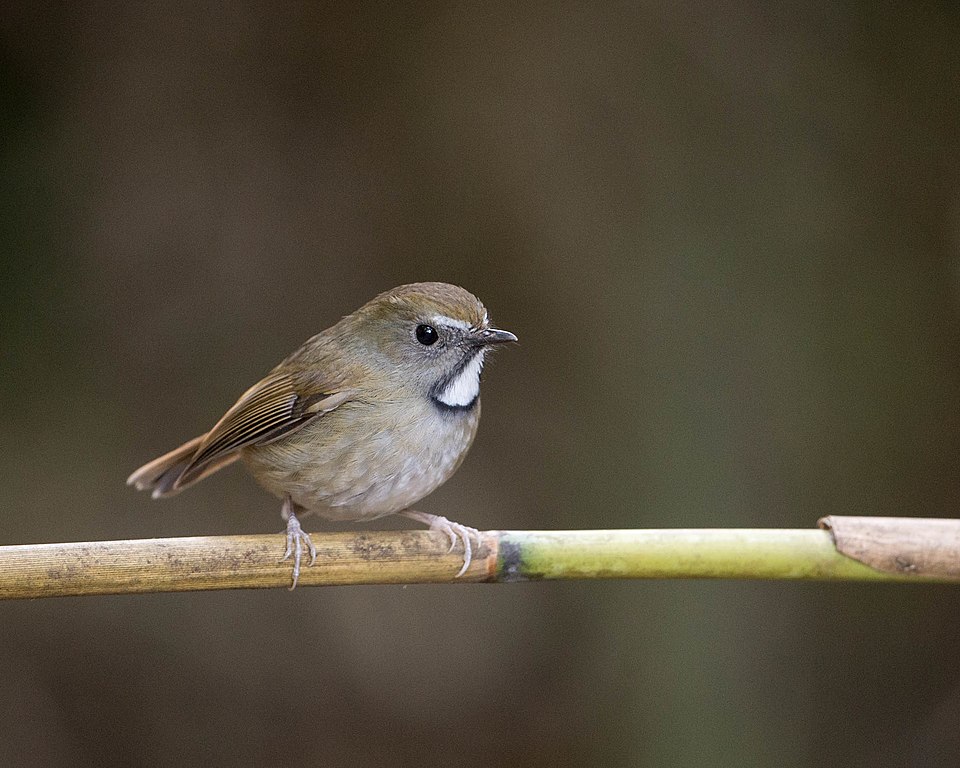
White-bellied Redstart
Hodgsonius phoenicuroides
Order: Passeriformes / Family: Muscicapidae

Wikimedia Commons
About the White-bellied Redstart
The White-bellied Redstart, scientifically known as Hodgsonius phoenicuroides, is a captivating member of the Muscicapidae family. This bird inhabits montane forests and scrublands across the Himalayas and extends its range into southeastern Asia. The species is particularly noted for its striking plumage, which includes a distinctive white belly that sharply contrasts with its vivid red tail, making it a standout in its native habitat.
The ecological role of the White-bellied Redstart is significant, as it contributes to the ecosystems it inhabits by participating in seed dispersal and insect population control. These birds are primarily insectivorous and help maintain balanced insect populations within their habitats. The White-bellied Redstart is also a seasonal migrant, moving to lower elevations or more southern regions during the winter months. This migration pattern not only aids in its survival but also allows it to exploit different ecological niches at various times of the year.
The bird's presence in specific geographic regions such as Bhutan, Nepal, and parts of China underscores its adaptability to various montane environments. It thrives in dense undergrowth and bamboo thickets, which provide both food and protection from predators. Its role in these ecosystems extends beyond predation, as it also serves as prey for larger avian species and mammals, thus being an integral part of the food web.
The White-bellied Redstart's significance is further highlighted during the breeding season, when its vocalizations become an essential part of its behavior. Males are known for their melodious songs, which not only attract mates but also establish territories. This bird's contribution to its environment, both as a predator and prey, along with its distinctive appearance and behavior, make it a species of interest for ornithologists and birdwatchers alike.
The White-bellied Redstart belongs to the family Muscicapidae, within the order Passeriformes. These birds typically live average 5 years with a max recorded of 7 years.
How to Identify a White-bellied Redstart
The White-bellied Redstart is a medium-sized songbird, measuring approximately 16-18 cm in length. One of its most distinctive features is its white belly, which contrasts vividly with its rich blue upperparts and fiery red tail. Adult males exhibit a more pronounced blue hue, while females tend to have a duller, brownish coloration, making it easier to distinguish between the sexes. Juveniles resemble females but have more mottled plumage, providing them with additional camouflage.
In terms of similar species, the Blue-fronted Redstart might cause some confusion, primarily due to its overlapping range. However, the Blue-fronted Redstart lacks the white belly characteristic of the White-bellied Redstart. When in flight, the White-bellied Redstart shows a distinctive silhouette with a fan-shaped tail, often exhibiting a jerky flight pattern typical of many redstarts.
When perched, this bird exhibits an upright posture, often flicking its tail as it surveys its surroundings. The combination of its striking colors, distinctive tail movements, and melodic songs makes the White-bellied Redstart an easily identifiable bird in its natural habitat.
Having trouble telling birds apart? Upload a photo to our bird identification tool for an instant species match.
White-bellied Redstart Habitat and Range
Preferred Habitat
The White-bellied Redstart primarily inhabits montane forests and dense scrublands. It is most commonly found at elevations ranging from 1,800 to 3,600 meters. These birds prefer areas with thick underbrush, often settling in bamboo thickets and rhododendron forests which provide ample cover and food resources.
During the breeding season, they remain in high-altitude habitats, while in winter, they may descend to lower elevations or move into subtropical forests and scrub areas. This seasonal habitat shift ensures their access to food and suitable nesting sites throughout the year.
While primarily associated with natural settings, the White-bellied Redstart is not commonly found in urban environments. Its reliance on dense vegetation makes it more prevalent in rural and less disturbed areas, where it can find the cover and resources necessary for survival.
Geographic Range
The breeding range of the White-bellied Redstart extends across the Himalayan regions, including Bhutan, Nepal, and northern India, reaching into the southwestern provinces of China. During the non-breeding season, the bird migrates to lower altitudes and can be found in parts of Myanmar, northern Thailand, and Vietnam.
Migration typically follows altitudinal gradients, although some populations may undertake longer latitudinal migrations to more southerly regions. The bird's presence is most dense in the montane forests of the Himalayas, where it is a common breeder.
In terms of population density, hotspots include the foothills of the Himalayas and the temperate forests of southwestern China. While not considered rare, the White-bellied Redstart's preference for specific habitats makes it less commonly seen outside its optimal range.
Want to know which birds visit your area? Browse our backyard birds by location guides for region-specific species lists.
What Does the White-bellied Redstart Eat?
The White-bellied Redstart primarily feeds on insects, which constitute the majority of its diet. It forages on the forest floor and within low vegetation, using its sharp eyesight to detect prey. Common prey items include beetles, ants, and caterpillars, which are abundant in its montane habitats.
Seasonal variations in diet occur, with the bird consuming more fruit and seeds when insect availability decreases, particularly in the colder months. This dietary flexibility aids its survival during the winter when it migrates to lower elevations.
The bird's foraging techniques are agile and include hopping along the ground or flitting between branches to catch insects on the wing. Feeding primarily occurs during the daylight hours, with peak activity in the early morning and late afternoon.
White-bellied Redstart Behavior and Social Structure
The White-bellied Redstart is generally solitary or found in pairs, especially during the breeding season. Males exhibit territorial behavior, singing from prominent perches to deter rivals and attract mates. The song of the White-bellied Redstart is a series of melodious notes, varying in pitch and rhythm, which can be heard echoing through its montane habitat.
During courtship, males may engage in display flights, showcasing their vibrant plumage and distinctive tail. These behaviors play an essential role in mate selection and territory establishment. Outside the breeding season, the birds may form loose associations but do not typically form large flocks.
In response to predators, the White-bellied Redstart may exhibit alarm calls and employ evasive flight patterns to escape. Despite its vibrant coloration, its reliance on dense undergrowth provides effective camouflage. Daily activity patterns include active foraging during daylight, with rest periods during the hottest part of the day.
White-bellied Redstart Nesting and Reproduction
The White-bellied Redstart constructs cup-shaped nests using grass, leaves, and moss, often lining the interior with softer materials such as feathers. Nests are typically placed close to the ground, concealed within dense vegetation to protect against predators.
Clutch size generally consists of 3-5 eggs, with both parents involved in incubation, which lasts approximately 12-14 days. The fledging period for the chicks ranges from 12-16 days, during which both parents actively feed and protect the young.
The species typically raises one brood per year, although under favorable conditions, a second brood may occur. Parental responsibilities are shared, with both male and female participating in feeding and guarding the nestlings, ensuring high survival rates for the young.
White-bellied Redstart Sounds and Vocalizations
The primary song of the White-bellied Redstart is a melodious series of notes, often described as rich and varied in pitch. The song serves multiple purposes, including territory establishment and mate attraction. It is typically delivered from a high perch and can carry long distances through its montane habitat.
In addition to its song, the bird produces a variety of call notes, including sharp, metallic 'chip' sounds used for communication between mates. Alarm calls are harsher and more rapid, serving to alert conspecifics of potential threats.
The dawn chorus features prominently in the bird's vocal behavior, with males often being the first to usher in the morning with their songs. The rich, varied quality of its song makes it a standout within its range and a favorite among birdwatchers.
Interesting Facts About the White-bellied Redstart
- 1The White-bellied Redstart was once classified under the genus Luscinia, reflecting its close relation to the nightingales.
- 2Despite its name, the White-bellied Redstart's belly is not entirely white; it transitions into a bluish-gray toward the flanks.
- 3It exhibits a remarkable altitudinal migration, moving over 1,000 meters between breeding and wintering grounds.
- 4The species is known to hybridize with the Blue-fronted Redstart in areas where their ranges overlap.
- 5Their nests are often well-hidden among bamboo thickets, making them difficult to spot even for experienced birders.
- 6The White-bellied Redstart's song has been likened to the tinkling of a small bell, with a sweet and varied melody.
- 7During the breeding season, males can sing for hours at a time, especially during dawn and dusk.
White-bellied Redstart Conservation Status
The White-bellied Redstart is currently listed as Least Concern by the IUCN, with stable population trends observed across its range. While the bird faces habitat loss due to deforestation and land conversion, its presence in remote montane regions offers some protection. Conservation efforts focus on preserving its natural habitat and mitigating the effects of human encroachment. Protected areas in countries like Bhutan and China provide vital refuges for the species. Historically, the population has remained relatively stable, with no significant declines reported. Continued monitoring and habitat conservation are essential to ensure the long-term survival of this vibrant songbird.