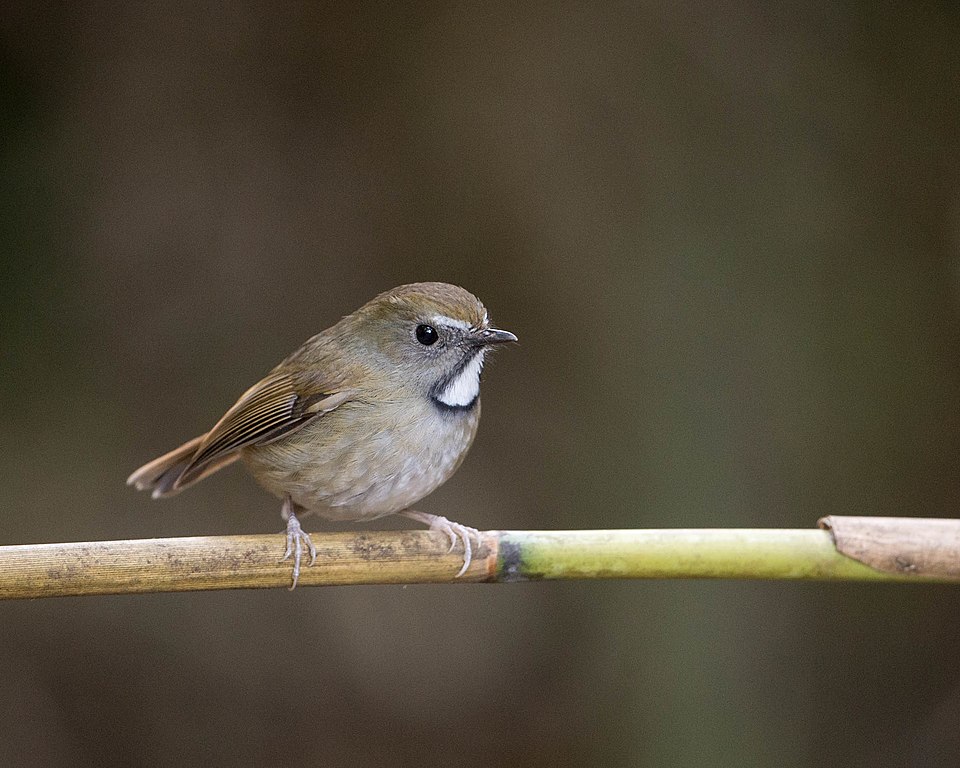
White-browed Bush-Robin
Tarsiger indicus
Order: Passeriformes / Family: Muscicapidae

Wikimedia Commons
About the White-browed Bush-Robin
The White-browed Bush-Robin, known scientifically as Tarsiger indicus, is a captivating member of the Muscicapidae family. This small passerine bird is renowned for its vibrant plumage and distinctive white eyebrow, making it a sought-after species for birdwatchers and naturalists alike. It occupies montane forests across the Asian continent, notably in countries such as Bhutan, Nepal, India, and parts of China. The White-browed Bush-Robin plays a crucial role in the ecosystem as both a predator of insects and a prey species for larger birds and mammals. Seasonally, these robins show altitudinal migration patterns, moving to lower elevations during winter months to escape harsher conditions in their typical montane habitats. During the breeding season, which spans from March to July, they prefer the dense undergrowth of temperate and subtropical forest regions, where they can find ample resources and concealment. Their ecological role extends to seed dispersal, as they occasionally consume small berries, contributing to the forest's plant diversity. Their presence indicates a healthy ecosystem, often flourishing in undisturbed forest areas where human impact is minimal. Observing this bird provides insight into the delicate balance of forest ecosystems and the importance of preserving their habitats for continued biodiversity.
The White-browed Bush-Robin belongs to the family Muscicapidae, within the order Passeriformes. These birds typically live typically lives 5-7 years in the wild..
How to Identify a White-browed Bush-Robin
The White-browed Bush-Robin presents a striking appearance with its bright orange underparts and a contrasting slate-blue upper body. Adults display a prominent white supercilium, or eyebrow, which is the key feature for identification. This white brow contrasts sharply with the darker head and back, giving the bird its common name. Males and females exhibit similar coloration, although the female's colors may appear slightly duller. Juveniles, on the other hand, have a more subdued plumage with less pronounced orange and a mottled appearance. Their perching posture is upright, often flicking their tails while perched, which can aid in field identification. In flight, this robin shows a compact silhouette with rapid wingbeats, typical of small passerines. While the White-browed Bush-Robin is quite unique in its appearance, it could potentially be confused with other Tarsiger species, such as the Himalayan Bluetail, which lacks the white brow and has more extensive blue coloration. Birdwatchers can differentiate them by focusing on the distinct head markings and the vibrant orange of the White-browed Bush-Robin.
Having trouble telling birds apart? Upload a photo to our bird identification tool for an instant species match.
White-browed Bush-Robin Habitat and Range
Preferred Habitat
Preferring the dense undergrowth of montane and submontane forests, the White-browed Bush-Robin thrives in habitats ranging from 1200 to 4000 meters in elevation. These birds are primarily found in temperate broadleaf and mixed forests, where dense vegetation provides ample cover and feeding opportunities. During the breeding season, they seek out areas with thick underbrush to build nests and rear their young. Seasonal shifts occur as they descend to lower elevations in winter, seeking milder climates and better foraging conditions. Although predominantly found in rural forested areas, the White-browed Bush-Robin can sometimes be observed in well-vegetated gardens and parks in nearby urban areas during migration, though they remain largely elusive and prefer undisturbed natural habitats.
Geographic Range
The White-browed Bush-Robin's range extends across the mountainous regions of South and Southeast Asia. It breeds primarily in the Himalayan foothills, covering parts of northeastern India, Bhutan, Nepal, and Tibet. In China, its range includes the Sichuan province and other adjacent areas with suitable high-altitude forests. During the non-breeding season, the robin migrates to lower altitudes and can be found in the hill forests of northern and eastern India, Bangladesh, and occasionally as far south as Thailand. Key migration corridors include the forested valleys and ridges that provide safe passage and abundant resources during their seasonal movements. Population density is typically higher in areas with pristine forest cover, where human disturbance is minimal.
Want to know which birds visit your area? Browse our backyard birds by location guides for region-specific species lists.
What Does the White-browed Bush-Robin Eat?
The White-browed Bush-Robin primarily feeds on insects and other small invertebrates, making it an adept insectivore. Its diet includes beetles, caterpillars, and other larvae, which it skillfully extracts from leaf litter and underbrush. During the breeding season, the robin's diet is enriched by the availability of these protein-rich food sources, crucial for the growth and development of its young. In the winter months, when insects become scarcer, the robin's diet diversifies to include small berries and fruits, allowing it to maintain energy levels. Foraging typically occurs in the lower strata of the forest, where the bird hops and flits among the foliage, using its keen eyesight to spot prey. Its feeding activity peaks during the early morning and late afternoon, capitalizing on the increased insect activity at these times.
White-browed Bush-Robin Behavior and Social Structure
The White-browed Bush-Robin is primarily solitary or found in pairs, especially during the breeding season when it exhibits territorial behavior. Males perform elaborate courtship displays, including singing and tail flicking, to attract females and establish dominance over breeding territories. These territories are aggressively defended, with intruding males often chased away through vocalizations and physical displays. Outside the breeding season, the robin may join mixed-species foraging flocks, which provide safety in numbers and increased foraging efficiency. Its response to predators includes a range of alarm calls and evasive maneuvers, often retreating into dense cover to avoid detection. Daily activity peaks in the early morning and late afternoon, consistent with many insectivorous birds.
White-browed Bush-Robin Nesting and Reproduction
The White-browed Bush-Robin constructs cup-shaped nests using fine twigs, grasses, and moss, often lined with feathers for insulation. Nest sites are typically well-concealed within dense underbrush or among the roots of large trees, providing protection from predators and harsh weather. A typical clutch consists of 3 to 5 eggs, with both parents sharing incubation duties over a period of approximately 14 days. Once hatched, the chicks remain in the nest for about two weeks, during which both parents actively feed and tend to their young. The species generally produces one to two broods per year, depending on environmental conditions and food availability.
White-browed Bush-Robin Sounds and Vocalizations
The primary song of the White-browed Bush-Robin is a series of clear, melodious whistles that rise and fall in pitch, creating a pleasing, musical quality. These vocalizations serve to establish territory and attract mates during the breeding season. Call notes are sharp and distinct, often described as a 'tick' or 'chik', used for communication between individuals or as alarm calls when predators are nearby. The robin participates actively in the dawn chorus, contributing its unique song to the early morning symphony of the forest. Its vocal repertoire is easily distinguished from other forest birds by the rhythmic and melodious structure of its song.
Interesting Facts About the White-browed Bush-Robin
- 1The White-browed Bush-Robin can be found at elevations as high as 4000 meters, showcasing its adaptation to challenging environments.
- 2Unlike many bird species, both male and female White-browed Bush-Robins participate in territorial defense.
- 3Despite its vibrant appearance, the robin's preference for dense undergrowth makes it difficult to spot.
- 4The White-browed Bush-Robin's song is a key element in its mating rituals, used to attract and maintain the attention of potential mates.
- 5This robin exhibits altitudinal migration, moving to lower elevations during winter to avoid harsh weather conditions.
- 6White-browed Bush-Robins are insectivorous but also consume berries, aiding in seed dispersal within their habitats.
- 7The species is a valuable indicator of forest health, as it thrives in undisturbed and pristine forest environments.
White-browed Bush-Robin Conservation Status
The White-browed Bush-Robin currently holds a status of Least Concern on the IUCN Red List, with its population considered stable. However, habitat destruction due to deforestation and land conversion poses a significant threat to its long-term viability. Conservation efforts focus on protecting the montane forest habitats critical to its survival. In regions where forests remain intact, the robin thrives, underscoring the importance of habitat preservation. Historical population trends have remained relatively stable, although localized declines have occurred in areas of significant habitat loss.