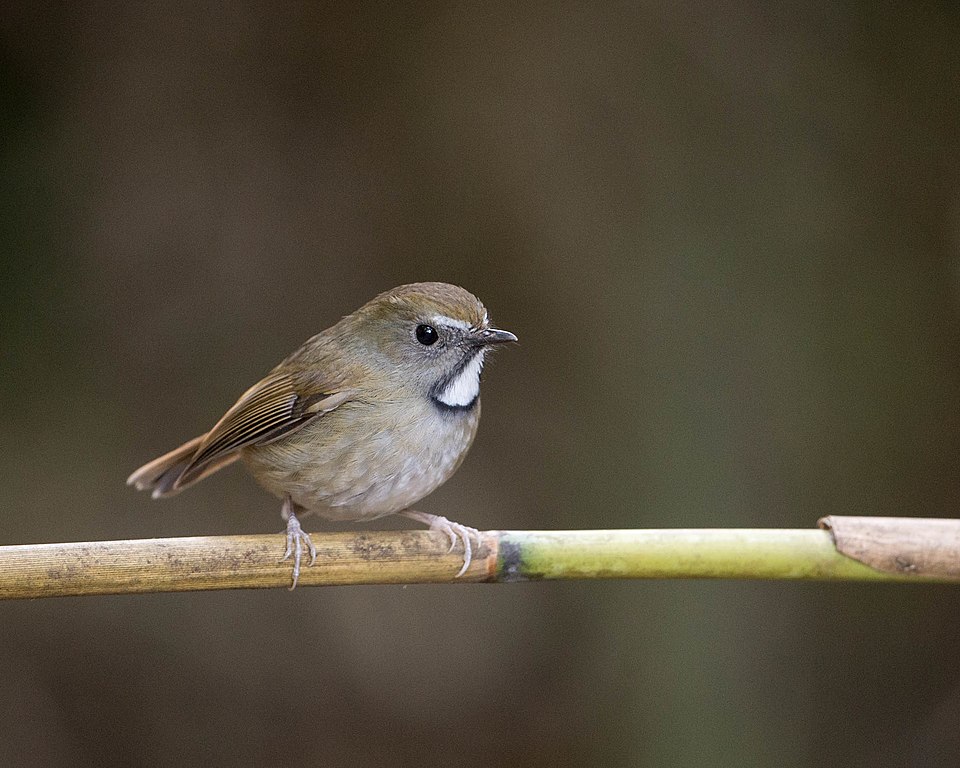
White-browed Robin-Chat
Cossypha heuglini
Order: Passeriformes / Family: Muscicapidae

Wikimedia Commons
About the White-browed Robin-Chat
The White-browed Robin-Chat, Cossypha heuglini, belongs to the family Muscicapidae within the order Passeriformes. This medium-sized songbird is renowned for its vibrant vocalizations and distinctive white eyebrow, making it a favorite among birdwatchers across sub-Saharan Africa. With a length ranging from 19 to 20 centimeters and a weight between 30 and 40 grams, the White-browed Robin-Chat is a robust presence in its environment. This bird predominantly inhabits wooded areas, thriving in both riparian forests and drier woodland savannas. One can often spot this species in countries such as Kenya, Tanzania, Zimbabwe, and Malawi. Its adaptability to various habitats underscores its ecological significance. The White-browed Robin-Chat plays a crucial role in maintaining the ecological balance by controlling insect populations and dispersing seeds. During the breeding season, which typically occurs from September to December, this species exhibits increased territorial behavior, characterized by frequent singing and defensive posturing. Outside of the breeding season, the White-browed Robin-Chat may become more elusive, although it remains active year-round. Its presence in both rural and semi-urban areas highlights its adaptability, as it often forages for insects and fruits in gardens and parks, contributing to pest control in agricultural regions.
The White-browed Robin-Chat belongs to the family Muscicapidae, within the order Passeriformes. These birds typically live average 5-7 years, with a maximum recorded of 9 years..
How to Identify a White-browed Robin-Chat
The White-browed Robin-Chat is easily distinguished by its bright white supercilium, which stands out against its rich rufous-orange underparts. The bird's upperparts are an olive-gray, providing excellent camouflage against the forest backdrop. Adult males and females appear similar in plumage, although females tend to be slightly duller. Juveniles can be identified by their more subdued coloration and the presence of streaks on the breast. In flight, the White-browed Robin-Chat displays a rounded silhouette with broad wings and a slightly fanned tail. Its perching posture is upright, often with the tail slightly raised and wings held close to the body. This species can be confused with the similar-looking Red-capped Robin-Chat, but the latter lacks the distinctive white eyebrow. Observers can differentiate the White-browed Robin-Chat by its characteristic head pattern and its more melodious, varied song.
Having trouble telling birds apart? Upload a photo to our bird identification tool for an instant species match.
White-browed Robin-Chat Habitat and Range
Preferred Habitat
The White-browed Robin-Chat inhabits a range of environments, from dense riverine forests to open woodland savannas. It prefers areas with ample undergrowth, which provide cover and foraging opportunities. This bird often resides at elevations from sea level up to 2,000 meters, notably in regions like the Eastern Arc Mountains of Tanzania. During the dry season, it may venture into gardens and agricultural lands, taking advantage of the increased availability of food. While it can adapt to semi-urban environments, it typically avoids densely populated city centers. Its ability to thrive in both wet and dry habitats demonstrates its ecological versatility.
Geographic Range
The White-browed Robin-Chat is found predominantly in sub-Saharan Africa, with its range extending from eastern South Africa northwards through Zimbabwe, Mozambique, and into Tanzania, Kenya, and parts of Ethiopia. It exhibits a non-migratory behavior, residing year-round within its range. However, some local movements may occur in response to seasonal food availability or environmental changes. In regions like the Zambezi Valley, the Robin-Chat is a common sight, often inhabiting riverbanks and floodplains. While widespread, its population density varies, with hotspots occurring in well-vegetated areas where food resources are abundant.
Want to know which birds visit your area? Browse our backyard birds by location guides for region-specific species lists.
What Does the White-browed Robin-Chat Eat?
The White-browed Robin-Chat primarily feeds on insects, making it a valuable insectivore in its ecosystem. Its diet includes beetles, caterpillars, and ants, supplemented by fruits and berries. During the breeding season, the bird may increase its insect consumption to meet the higher energy demands of rearing young. The Robin-Chat employs a foraging technique known as 'ground gleaning,' where it searches leaf litter and underbrush for prey. It may also capture insects in flight or pluck them from foliage. Typically, the bird forages during the cooler parts of the day, such as early morning and late afternoon, to avoid the heat of midday.
White-browed Robin-Chat Behavior and Social Structure
The White-browed Robin-Chat exhibits solitary or pair-based social structures, especially during the breeding season when it becomes highly territorial. Courtship involves an elaborate display, with the male singing from a prominent perch and performing a 'wing-flicking' dance to attract the female. Once paired, both birds defend their territory vigorously, often engaging in vocal duels with rivals. Outside the breeding season, the Robin-Chat may join mixed-species foraging flocks, benefiting from shared vigilance against predators. Its daily activity peaks in the early morning and late afternoon, with periods of rest during the hottest part of the day. In response to predators, the Robin-Chat employs a series of alarm calls and may engage in distraction displays to protect its nest.
White-browed Robin-Chat Nesting and Reproduction
The White-browed Robin-Chat constructs a cup-shaped nest, primarily using grass, leaves, and rootlets, often lined with softer materials such as feathers. Nests are typically located in dense shrubs or low trees, providing concealment from predators. The female lays a clutch of 2 to 3 eggs, with an incubation period of approximately 14 days. Both parents participate in feeding the chicks, which fledge about 16 to 18 days after hatching. The Robin-Chat may raise two broods per year, depending on environmental conditions and food availability. Parental investment is high, with both adults sharing responsibilities in feeding and protecting the young.
White-browed Robin-Chat Sounds and Vocalizations
The primary song of the White-browed Robin-Chat is a melodious and varied series of whistles and trills, often delivered from a prominent perch. Its song, characterized by clear, flute-like notes, can resemble phrases from other bird species, showcasing its mimicry ability. Call notes include sharp 'chik' sounds used in communication between pair members. Alarm calls are rapid and harsh, serving to alert conspecifics of potential threats. During the dawn chorus, the Robin-Chat's song is particularly pronounced, contributing to the vibrant soundscape of African forests.
Interesting Facts About the White-browed Robin-Chat
- 1The White-browed Robin-Chat's mimicry skills include imitating the calls of other birds, enhancing its complex song repertoire.
- 2During courtship, the male White-browed Robin-Chat performs a unique 'wing-flicking' display to attract females.
- 3This bird often joins mixed-species flocks outside the breeding season, benefiting from increased foraging success.
- 4The White-browed Robin-Chat can adapt to semi-urban environments, making it a familiar sight in gardens and parks.
- 5Its presence in gardens helps control insect populations, highlighting its role as a natural pest controller in agricultural areas.
- 6The White-browed Robin-Chat's song is most active during the dawn chorus, adding to the symphony of morning bird calls.
- 7This species is a year-round resident within its range, showing minimal migratory behavior compared to other songbirds.
White-browed Robin-Chat Conservation Status
The White-browed Robin-Chat is currently classified as Least Concern by the IUCN, with a stable population trend. Its adaptability to various habitats has buffered it against significant population declines. Primary threats include habitat destruction due to agricultural expansion and deforestation. Conservation efforts focus on preserving key habitats and promoting sustainable land-use practices. Historically, the species has maintained a relatively stable population, benefiting from its wide distribution and generalist diet.