
White-crowned Hornbill
Berenicornis comatus
Order: Bucerotiformes / Family: Bucerotidae
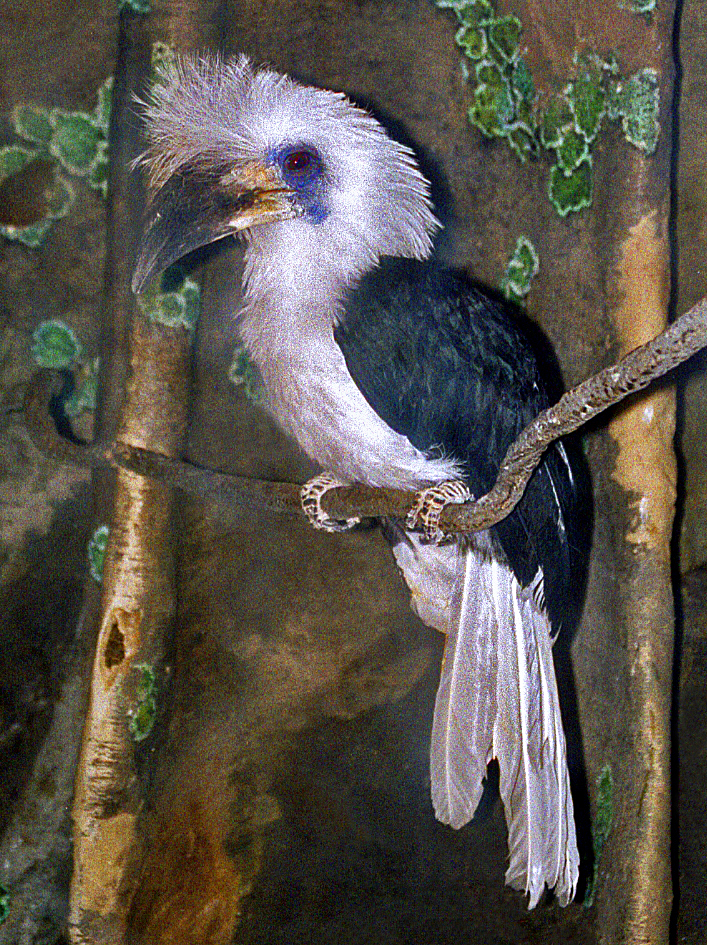
Wikimedia Commons
About the White-crowned Hornbill
The White-crowned Hornbill, scientifically known as Berenicornis comatus, is a captivating member of the family Bucerotidae. Endemic to the tropical forests of Southeast Asia, this hornbill occupies a critical ecological niche, playing a pivotal role in seed dispersal and forest dynamics. Its striking appearance and unique behaviors make it a focal species for biodiversity studies in its native habitat. Found predominantly in Malaysia, Sumatra, and Borneo, these birds inhabit dense lowland and montane rainforests, thriving at elevations from sea level up to 1,500 meters. This species is often observed in small groups or pairs, exhibiting fascinating social behaviors. White-crowned Hornbills are non-migratory and exhibit territorial tendencies, often seen returning to the same nesting sites yearly. Their presence is a vital indicator of forest health, as they require large, undisturbed tracts of forest to sustain their populations. As frugivores, they contribute significantly to the dispersal of tropical fruit seeds, aiding in forest regeneration. During the breeding season, which generally corresponds with the wet season, they become particularly vocal, engaging in a variety of calls that serve to reinforce pair bonds and establish territorial boundaries. The behavioral ecology of the White-crowned Hornbill underscores the complexity of tropical forest ecosystems and highlights the interconnectedness of species within these environments.
The White-crowned Hornbill belongs to the family Bucerotidae, within the order Bucerotiformes. These birds typically live average lifespan is 20 years, with some living up to 25 years..
How to Identify a White-crowned Hornbill
The White-crowned Hornbill is immediately recognizable by its contrasting plumage and distinctive casque. Adults display a prominent white crest that extends over a predominantly black body, creating a stark contrast that is unmistakable in the field. This striking appearance is shared by both males and females, although males typically possess a slightly more pronounced casque. Juveniles, on the other hand, exhibit a duller plumage with a less developed casque, gradually acquiring the adult coloration and structure as they mature. In flight, the White-crowned Hornbill's broad wings and long tail make for a distinctive silhouette, with alternating white and black wing feathers creating a striking pattern. Perched, these hornbills maintain an erect posture, their long tails often drooping below the branch. While their unique coloration sets them apart, they could potentially be confused with other sympatric hornbill species such as the Black Hornbill. However, the bright white crest of the White-crowned Hornbill is a definitive field mark that aids in accurate identification.
Having trouble telling birds apart? Upload a photo to our bird identification tool for an instant species match.
White-crowned Hornbill Habitat and Range
Preferred Habitat
The White-crowned Hornbill resides primarily in dense tropical rainforests, with a preference for lowland and montane areas. They are found up to elevations of 1,500 meters, although they are more commonly observed at lower elevations where the forest canopy is dense. These birds are specialists of primary forests, and their presence often indicates a well-preserved habitat. They are less frequently spotted in secondary forests or areas experiencing significant human disturbance. Though they can occasionally be found near forest edges, they are rarely seen in open or urban environments. Seasonal habitat shifts are minimal, as their evergreen rainforest home provides year-round resources.
Geographic Range
The White-crowned Hornbill's range is confined to the Sundaic region of Southeast Asia, including parts of southern Thailand, Peninsular Malaysia, Sumatra, and Borneo. They are primarily residents of these areas, with populations concentrated in regions where expansive tracts of primary rainforest remain intact. In Malaysia, they are frequently observed in national parks such as Taman Negara. In Borneo, they inhabit both Malaysian and Indonesian territories, with significant populations in protected areas like Danum Valley. Although not migratory, White-crowned Hornbills do exhibit local movements within their range, primarily driven by the availability of fruiting trees.
Want to know which birds visit your area? Browse our backyard birds by location guides for region-specific species lists.
What Does the White-crowned Hornbill Eat?
The diet of the White-crowned Hornbill is predominantly frugivorous, with a strong preference for a wide variety of tropical fruits. They are known to consume figs, berries, and other fleshy fruits, which they pluck skillfully from branches. In addition to fruits, they occasionally supplement their diet with small animals, including insects, lizards, and even small mammals. This opportunistic feeding behavior allows them to adapt to seasonal fluctuations in fruit availability. White-crowned Hornbills typically forage in the canopy, where they use their impressive bills to reach fruits that other animals may find inaccessible. They are most active during the early morning and late afternoon, times when fruit availability is often at its peak.
White-crowned Hornbill Behavior and Social Structure
White-crowned Hornbills exhibit intriguing social structures, often forming monogamous pairs or small family groups. They are territorial, with pairs defending their nesting sites vigorously against intruders. During courtship, males perform elaborate displays, characterized by head bobbing and feeding rituals, to reinforce pair bonds. These hornbills are vocal, using a series of calls to communicate with their mates and establish territory. Their calls are loud and varied, serving as both a means of maintaining contact within the dense forest and deterring potential rivals. Despite their social nature, White-crowned Hornbills seldom form large flocks, preferring the company of their family unit. They are diurnal, with peak activity occurring during the cooler parts of the day, and they exhibit a distinct pattern of roosting together in large trees at night.
White-crowned Hornbill Nesting and Reproduction
Nesting for the White-crowned Hornbill involves a unique and elaborate process. They typically nest in natural tree cavities, which are often high above the ground, providing safety from ground-based predators. The female seals herself inside the cavity using a mixture of mud, droppings, and fruit pulp, leaving only a small slit through which the male feeds her. This confinement lasts throughout the incubation period, which can extend up to 40 days. Clutch sizes range from one to two eggs, and the female remains sealed in the nest until the chicks are ready to fledge, a period that can last several months. The male plays a critical role during this time, tirelessly bringing food to the nest. Once the chicks are sufficiently developed, the female breaks out of the nest, and the family group continues to rely on the nest for protection until the fledglings are independent.
White-crowned Hornbill Sounds and Vocalizations
The vocalizations of the White-crowned Hornbill are distinctive and varied, consisting of a series of cackles and croaks that can carry over long distances. Their primary call, often described as a repetitive "caw-caw," is used to communicate with mates and signal alarm. During the dawn chorus, their calls become more frequent and intense, serving to establish territory and reinforce pair bonds. Alarm calls are sharper and more urgent, alerting others in the group to potential threats. The range and variety of their calls make them one of the more vocal hornbill species in their range, often filling the forest with their distinctive soundscape.
Interesting Facts About the White-crowned Hornbill
- 1The White-crowned Hornbill can live up to 30 years in the wild, exhibiting strong pair bonds throughout their lifespan.
- 2These hornbills have a unique nesting behavior where the female seals herself inside the nest cavity for the entire incubation period.
- 3Their casque, a hollow structure on top of their bill, is primarily used for vocalization resonance and aiding in sound production.
- 4Despite their striking appearance, White-crowned Hornbills are elusive and difficult to spot among the dense canopy foliage.
- 5They play a crucial role in seed dispersal, with some seeds only able to germinate after passing through their digestive system.
- 6White-crowned Hornbills have a mutualistic relationship with certain fruiting trees, relying on them for food while aiding in seed dispersal.
- 7Unlike many bird species, both male and female White-crowned Hornbills share similar plumage, making them difficult to distinguish from a distance.
White-crowned Hornbill Conservation Status
The White-crowned Hornbill currently holds a Near Threatened status on the IUCN Red List, with populations experiencing a downward trend. Habitat destruction, primarily due to logging and agricultural expansion, poses the most significant threat to their survival. Conservation efforts focus on habitat preservation, particularly in the few remaining tracts of primary rainforest in their range. National parks and protected areas offer some refuge, but the pressures of illegal logging and land conversion continue to challenge conservationists. Historical population declines correlate strongly with the rate of habitat loss, underscoring the critical need for effective management strategies to secure their future.


