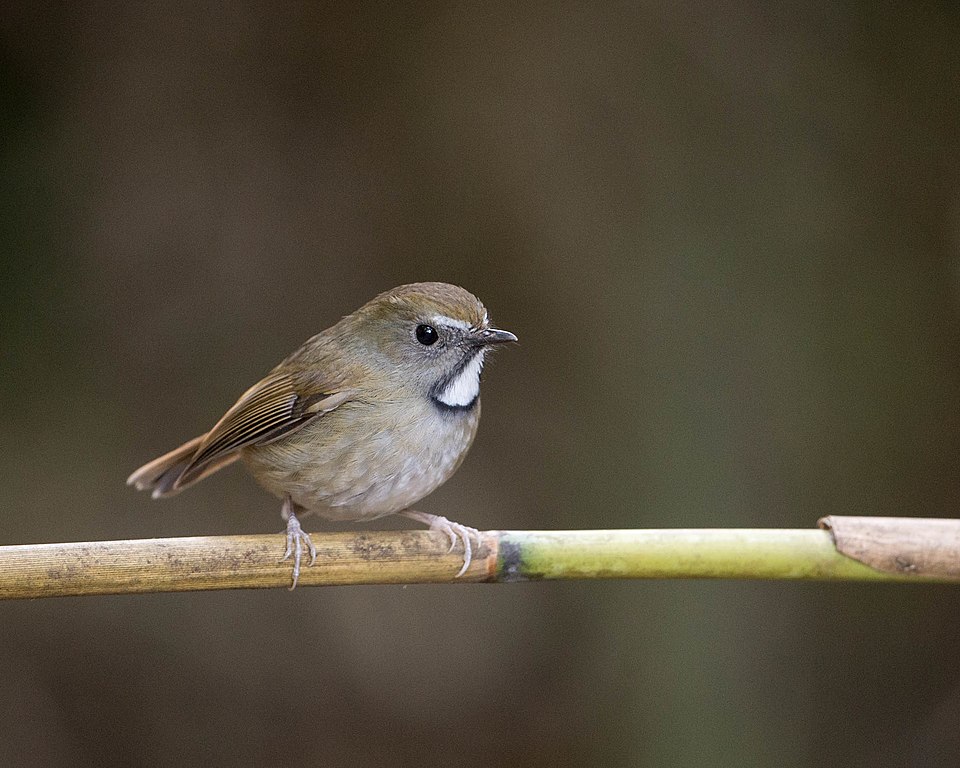
White-crowned Robin-Chat
Cossypha albicapillus
Order: Passeriformes / Family: Muscicapidae

Wikimedia Commons
About the White-crowned Robin-Chat
The White-crowned Robin-Chat, Cossypha albicapillus, is a captivating passerine bird belonging to the Muscicapidae family. This species is predominantly found in the dense forests and woodlands of West Africa, often near water sources, making it a common sight in countries such as Senegal, Gambia, and Nigeria. These regions provide the bird with its ideal habitat-dense undergrowth interspersed with open spaces for foraging. The White-crowned Robin-Chat plays a significant ecological role as both a seed disperser and an insect population controller, maintaining the balance of its ecosystem. Its presence is vital for the continuation of the forest habitat, as it aids in the germination of various plant species. Seasonally, this bird exhibits some movement within its range, typically shifting to slightly different habitats during the wet and dry seasons. During the dry season, it may move closer to more permanent water sources, while in the wet season, it can exploit a broader range of areas. The White-crowned Robin-Chat is not just a biological component of its environment but also a cultural symbol in several local traditions. It is often revered for its melodious song, which resonates through the forest canopy, especially during the dawn chorus. This bird's adaptability to different environmental conditions allows it to thrive, despite the encroachment of human activities in its natural habitat. However, continued deforestation and habitat destruction pose significant threats to its population. Conservation efforts aimed at preserving the West African forests are crucial not only for the White-crowned Robin-Chat but also for the myriad of other species that share its habitat.
The White-crowned Robin-Chat belongs to the family Muscicapidae, within the order Passeriformes. These birds typically live average 5-7 years with the maximum recorded at 10 years..
How to Identify a White-crowned Robin-Chat
The White-crowned Robin-Chat stands out with its distinct coloration and markings. Adults feature a conspicuous white crown on their head, which gives the bird its common name. This white crown contrasts sharply with the rich orange and brown tones of its body. The upperparts are generally a warm brown, while the face and underparts display a vibrant orange hue. Juvenile birds, on the other hand, have more muted tones, lacking the stark white crown of the adults, which develops as they mature. In terms of sexual dimorphism, males and females are largely similar in appearance, although males may exhibit slightly brighter plumage. The bird's silhouette in flight is characterized by its broad wings and relatively long tail, which is often fanned out, assisting in agile maneuvering through the forest understory. When perched, the White-crowned Robin-Chat maintains an upright posture, often flicking its tail and wings lightly, which can aid in its identification from a distance. Confusion with similar species, such as the Snowy-crowned Robin-Chat, can occur, though the latter typically inhabits slightly different ecological niches and has subtle plumage differences.
Having trouble telling birds apart? Upload a photo to our bird identification tool for an instant species match.
White-crowned Robin-Chat Habitat and Range
Preferred Habitat
The White-crowned Robin-Chat inhabits a variety of forested environments, particularly favoring dense woodlands and forest undergrowth. It thrives in areas with a high density of shrubs and small trees that provide ample cover and nesting sites. The bird can be found at elevations ranging from sea level to around 1,500 meters, though it shows a preference for lowland forests that offer abundant insect prey. Seasonal habitat shifts are evident, as the bird may move closer to water sources during drier periods. In more rural settings, the White-crowned Robin-Chat is often spotted along forest edges, while in urban areas, it can adapt to gardens and parks that mimic its natural forest habitat.
Geographic Range
The White-crowned Robin-Chat's range is concentrated in West Africa, with the bird being a year-round resident across several countries. Its breeding range includes Senegal, Gambia, Guinea-Bissau, and Nigeria, where it finds suitable nesting conditions in the dense forests. The bird does not undertake long migrations, but rather short altitudinal or habitat-based movements in response to seasonal changes in weather and food availability. Despite its relatively concentrated range, the White-crowned Robin-Chat is widespread within these regions, thriving in areas where the forest ecosystem remains intact. Population density hotspots are observed near water bodies and in regions with minimal human disturbance.
Want to know which birds visit your area? Browse our backyard birds by location guides for region-specific species lists.
What Does the White-crowned Robin-Chat Eat?
The diet of the White-crowned Robin-Chat primarily consists of insects and other small invertebrates, making it an important insectivore within its ecosystem. It forages actively within the leaf litter and low vegetation, using its keen eyesight to spot and capture prey. During the wet season, the bird's diet expands to include more diverse insect species, while in the dry season, it may rely more heavily on available fruits and berries. The bird's foraging technique involves short, quick hops and flights as it searches for insects, often flicking its tail upwards in a characteristic manner. Prey size typically ranges from small ants and beetles to larger caterpillars and grasshoppers.
White-crowned Robin-Chat Behavior and Social Structure
The White-crowned Robin-Chat exhibits a range of social and territorial behaviors. It is generally solitary or found in pairs, with each pair maintaining a defined territory that they defend vigorously against intruders. Territorial disputes often involve vocal displays and short chases. During the breeding season, courtship displays become more pronounced, with the male performing elaborate songs and physical displays to attract a mate. The bird's response to predators is cautious, often retreating into dense cover at the first sign of danger. Daily activity patterns reveal that the White-crowned Robin-Chat is most active during the early morning and late afternoon, taking advantage of cooler temperatures to forage.
White-crowned Robin-Chat Nesting and Reproduction
Nesting for the White-crowned Robin-Chat occurs primarily during the wet season when food is abundant. The nest is typically a cup-shaped structure constructed from leaves, grass, and twigs, placed low in a bush or tree. Preferred nest locations are within dense undergrowth, providing protection from predators. A typical clutch consists of two to three eggs, which are incubated by the female for approximately two weeks. Both parents participate in feeding the chicks once they hatch, and the fledging period lasts about 14 to 16 days. The species may produce up to two broods per year, depending on environmental conditions.
White-crowned Robin-Chat Sounds and Vocalizations
The White-crowned Robin-Chat is renowned for its rich and melodious song, which is a series of varied whistles and trills that can last several minutes. The primary song features a rhythm that rises and falls, with a clear, bell-like quality. Call notes are short and sharp, often used to communicate between mates or signal alarm. During the dawn chorus, the bird's song becomes particularly prominent, echoing through the forest as it establishes its territory and attracts a mate. Its vocalizations are often compared to those of the Nightingale, though with a distinct West African flair.
Interesting Facts About the White-crowned Robin-Chat
- 1The White-crowned Robin-Chat belongs to the Old World flycatcher family, Muscicapidae, showcasing remarkable adaptability within diverse habitats.
- 2This species is named for its striking white crown, which contrasts with its orange and brown plumage, making it easily recognizable.
- 3Unlike many bird species, the White-crowned Robin-Chat is a permanent resident of its range, showing limited migratory behavior.
- 4The bird's melodious song is highly valued and often compared to that of the Nightingale, adding to its allure among birdwatchers.
- 5Despite its small size, the White-crowned Robin-Chat plays a crucial role in controlling insect populations, acting as a natural pest manager.
- 6The species demonstrates a remarkable ability to adapt to urban environments, often inhabiting gardens and parks in city settings.
- 7During the breeding season, both male and female White-crowned Robin-Chats exhibit strong territorial instincts, defending their nesting sites.
White-crowned Robin-Chat Conservation Status
The White-crowned Robin-Chat is currently listed as Least Concern on the IUCN Red List, with a stable population trend. However, the primary threat to its survival is habitat loss due to deforestation and agricultural expansion in West Africa. Conservation efforts focus on preserving existing forest habitats and promoting sustainable land use practices. Historical population changes have been minimal, but ongoing environmental pressures necessitate continued monitoring and habitat protection to ensure the species' future viability.