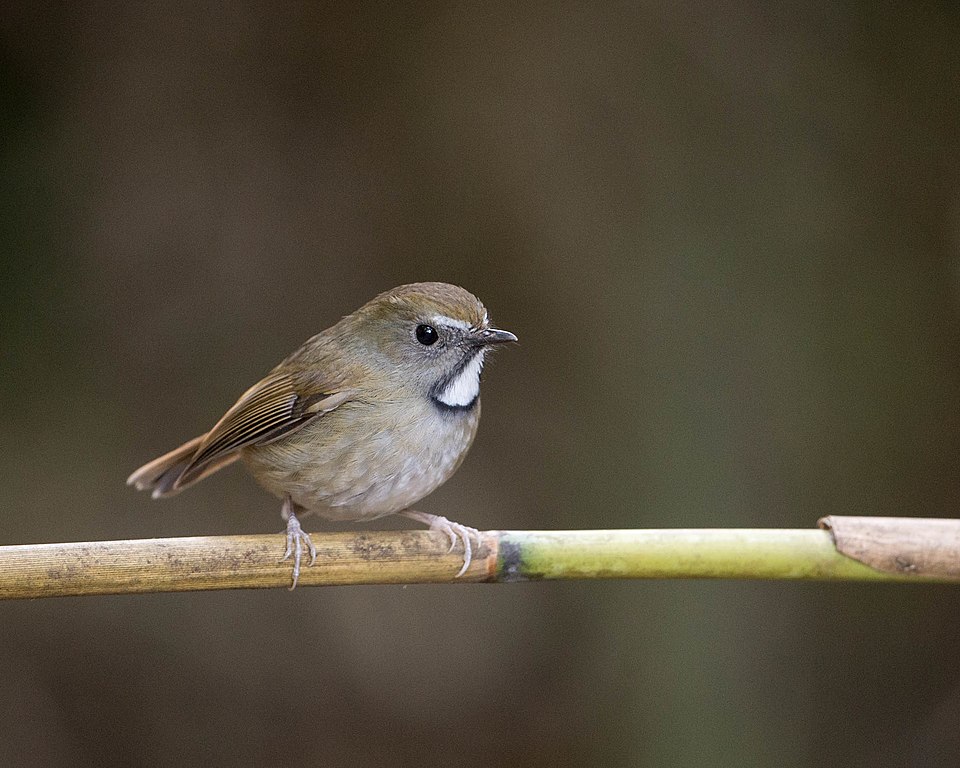
White-eyed Slaty Flycatcher
Dioptrornis fischeri
Order: Passeriformes / Family: Muscicapidae

Wikimedia Commons
About the White-eyed Slaty Flycatcher
The White-eyed Slaty Flycatcher (Dioptrornis fischeri) is a medium-sized bird that belongs to the family Muscicapidae. Primarily found in the highland regions of East Africa, this flycatcher has adapted well to a variety of environments ranging from montane forests to human-altered landscapes like gardens and plantations. Its range includes countries such as Kenya, Tanzania, and Uganda, where it favors altitudes between 1500 and 3000 meters. The bird is particularly prevalent in the Aberdare Range, Mount Kenya, and the Ngorongoro Crater, where the dense undergrowth provides ample feeding and nesting opportunities.
Significance lies in its role as both a predator and a prey species in its ecosystem. By feeding on a wide array of insects, the White-eyed Slaty Flycatcher helps control insect populations, contributing to the ecological balance. Its presence in diverse habitats, including secondary growth areas, indicates a degree of adaptability that allows it to thrive despite changes in the landscape. Additionally, this flycatcher serves as a food source for larger predators, such as birds of prey.
White-eyed Slaty Flycatchers are non-migratory, remaining in their breeding territories year-round. Their activity peaks during the rainy seasons in April and November when insect abundance provides ample food for raising young. During these periods, their conspicuous calls and songs become more frequent, serving as a tool for territory defense and mate attraction. The species has a stable population trend due to its versatility in habitat selection and diet, making it less susceptible to localized environmental changes than more specialized birds.
The White-eyed Slaty Flycatcher belongs to the family Muscicapidae, within the order Passeriformes. These birds typically live 4-6 years with a maximum recorded of 9 years..
How to Identify a White-eyed Slaty Flycatcher
Adult White-eyed Slaty Flycatchers are identifiable by their slaty gray plumage and distinctive white eye ring, which stands out against their dark feathers. They measure about 16-18 cm in length, with a wingspan of approximately 25-30 cm. The sexes appear similar, though females may exhibit slightly duller plumage. Juveniles have a more mottled appearance, with brownish tones speckled across their upper parts and less pronounced eye rings.
In terms of field marks, the bird's gray coloration and white eye ring are most notable. The tail is relatively long, with a slight notch at the end, and the bill is dark and slightly hooked, typical of insectivorous birds. While perched, they maintain an upright posture, giving them a sleek, alert appearance.
Confusion with similar species such as the Northern Black Flycatcher or the Southern Black Flycatcher is possible, but the latter lack the white eye ring and have a more uniform black coloration. In flight, the White-eyed Slaty Flycatcher displays a steady, direct flight pattern with occasional bursts of agility when pursuing prey.
Having trouble telling birds apart? Upload a photo to our bird identification tool for an instant species match.
White-eyed Slaty Flycatcher Habitat and Range
Preferred Habitat
The White-eyed Slaty Flycatcher predominantly inhabits montane and sub-montane forests. It thrives in areas with dense undergrowth, which offer abundant insect prey. These environments include both primary and secondary forests, as well as forest edges and clearings. They are commonly found at elevations ranging from 1500 to 3000 meters.
In addition to natural forests, this flycatcher adapts well to human-altered landscapes such as gardens, coffee plantations, and agricultural areas. Their ability to thrive in both rural and semi-urban environments demonstrates a flexible habitat preference. Seasonal shifts are minimal, as the species tends to remain within its established territories year-round, displaying a preference for consistent ecological niches.
Geographic Range
The White-eyed Slaty Flycatcher is endemic to East Africa, with a range spanning parts of Kenya, Tanzania, and Uganda. Key regions include the central and western highlands of Kenya, the Ngorongoro Highlands in Tanzania, and the Rwenzori Mountains in Uganda. The species is non-migratory, maintaining stable populations within these areas throughout the year.
In Kenya, the Aberdare Range and Mount Kenya host significant populations, while in Tanzania, they are frequently observed in the Usambara and Uluguru Mountains. Uganda's Bwindi Impenetrable Forest also supports a notable population. Population density tends to be higher in areas with lush vegetation and abundant food sources.
Want to know which birds visit your area? Browse our backyard birds by location guides for region-specific species lists.
What Does the White-eyed Slaty Flycatcher Eat?
Primarily insectivorous, the White-eyed Slaty Flycatcher feeds on a variety of insects including beetles, flies, and caterpillars. During the rainy seasons, they exploit the increased availability of insects to sustain their energy-intensive breeding activities.
The bird employs a sallying technique, launching from perches to catch prey mid-flight. This active foraging behavior is complemented by gleaning insects off foliage. The flycatcher also adapts its diet seasonally, incorporating fruit and berries when insect availability declines. Prey size varies, but they typically target insects small enough to be swallowed whole, maximizing energy intake with minimal effort. Feeding activity peaks in the early morning and late afternoon, aligning with insect activity.
White-eyed Slaty Flycatcher Behavior and Social Structure
The White-eyed Slaty Flycatcher exhibits a solitary or paired social structure outside of the breeding season. During the breeding period, they become territorial, with males vigorously defending their territories through song and physical displays. Songs serve not only to claim territory but also to attract mates, often delivered from prominent perches.
Courtship involves aerial displays and the presentation of food by the male to the female, strengthening pair bonds. Once paired, they maintain strong monogamous relationships, often returning to the same territories each year.
Daily activity consists of active foraging interspersed with periods of rest. The flycatcher is diurnal, with peak activity during the cooler parts of the day. Although generally silent, they emit sharp calls when alarmed, alerting others to potential predators such as snakes and raptors.
White-eyed Slaty Flycatcher Nesting and Reproduction
White-eyed Slaty Flycatchers construct cup-shaped nests using grass, leaves, and twigs, lined with softer materials such as feathers. Nests are typically built in trees or shrubs, positioned between 1 and 5 meters above the ground, well-concealed by foliage.
The female lays a clutch of 2 to 3 eggs, which she incubates for about 14 to 16 days. During this period, the male plays an active role in providing food to the nesting female. Once hatched, both parents participate in feeding the young, which fledge approximately 14 to 18 days post-hatching. The species may raise one to two broods per year, depending on environmental conditions.
White-eyed Slaty Flycatcher Sounds and Vocalizations
The primary song of the White-eyed Slaty Flycatcher comprises a series of melodious whistles and trills, delivered with a clear, ascending pitch. This song is often heard in the early morning as part of the dawn chorus, serving to establish territory and attract mates.
Call notes include short, sharp 'chip' sounds used for communication between mates and alerting others to danger. The alarm call is more urgent, a rapid series of high-pitched notes. While not as vocally diverse as some songbirds, its calls are distinctive within its range.
Interesting Facts About the White-eyed Slaty Flycatcher
- 1The White-eyed Slaty Flycatcher is often seen in gardens, making it a familiar sight for residents in East Africa's highland towns.
- 2Despite its stable population, the flycatcher’s habitat choice makes it an indicator species for environmental health in montane regions.
- 3Its sallying hunting technique is energy-efficient, allowing it to catch multiple insects in quick succession.
- 4The White-eyed Slaty Flycatcher's distinctive song makes it easier for birders to identify in dense forests.
- 5During courtship, males often present food to females, a gesture that strengthens pair bonds.
- 6Juveniles have a mottled appearance, allowing them to blend into their environment and avoid predators.
- 7Though primarily insectivorous, the flycatcher adapts to seasonal food shortages by incorporating fruits into its diet.
White-eyed Slaty Flycatcher Conservation Status
The IUCN currently lists the White-eyed Slaty Flycatcher as Least Concern, with stable population trends across its range. Its adaptability to different environments contributes to its resilience against habitat loss. However, deforestation and habitat fragmentation pose potential threats, particularly in areas where agricultural expansion encroaches on forested regions. Conservation efforts focus on habitat preservation and sustainable land use practices. Historical data suggest a stable population, with minor fluctuations linked to seasonal and environmental changes.