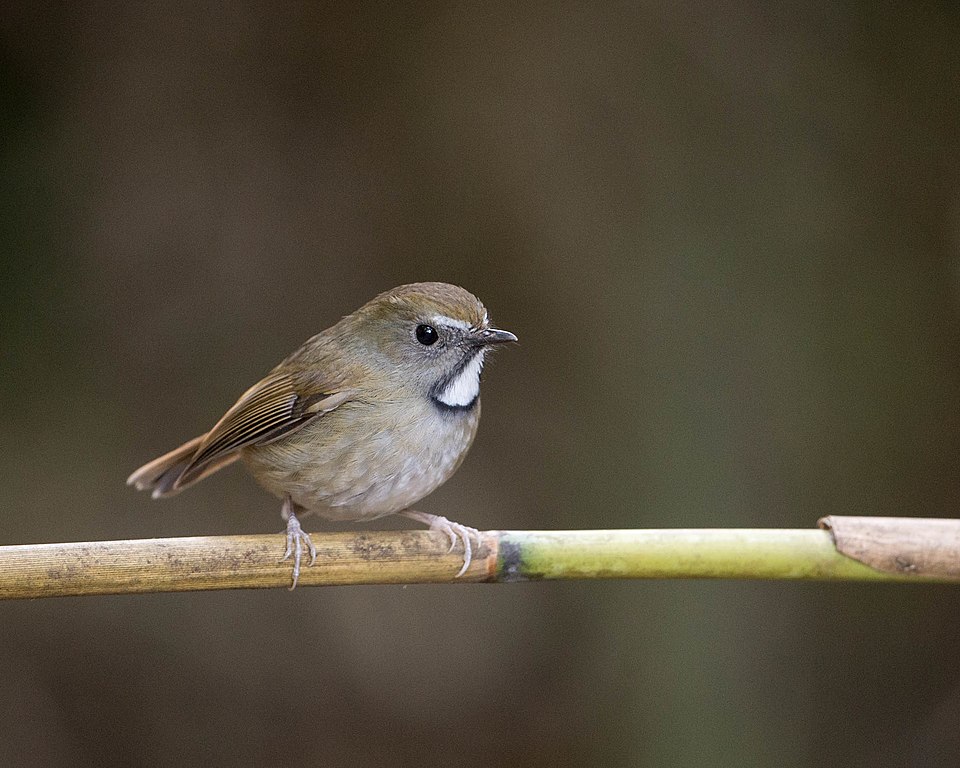
White-fronted Black Chat
Pentholaea albifrons
Order: Passeriformes / Family: Muscicapidae
About the White-fronted Black Chat
The White-fronted Black Chat, scientifically known as Pentholaea albifrons, is a captivating bird belonging to the Muscicapidae family. It inhabits sub-Saharan Africa, thriving in open savannas, grassy plains, and lightly wooded regions. This bird plays a significant role in its ecosystem by controlling insect populations, as it feeds primarily on a variety of insects and small arthropods. The species displays a marked preference for areas where it can easily perch and scan the ground for prey, demonstrating its adaptability and keen hunting instincts.
In terms of ecological significance, the White-fronted Black Chat contributes to the balance of its habitat by participating in seed dispersal and predation of insects. During the breeding season, which typically occurs during the rainy season, these birds become particularly active, displaying their distinctive territorial behaviors and engaging in courtship rituals. The rainy season, spanning from November to April in many parts of its range, provides ample food resources for raising young, thereby increasing reproductive success.
The White-fronted Black Chat's presence across diverse regions showcases its adaptability and resilience. In countries like Ethiopia, Kenya, and South Africa, the bird is a familiar sight in open areas, where it can often be seen perching conspicuously on shrubs or low trees. Its ability to thrive in both natural and human-altered landscapes highlights its importance as a species capable of coexisting with expanding human populations. This adaptability may also serve as a buffer against some of the challenges posed by habitat loss, although ongoing conservation efforts remain crucial to ensure its long-term survival.
The White-fronted Black Chat belongs to the family Muscicapidae, within the order Passeriformes. These birds typically live average 5-7 years, with some living up to 10 years..
How to Identify a White-fronted Black Chat
Adult White-fronted Black Chats are easily identified by their stark contrast of a white forehead against an otherwise black plumage. Males and females share this striking appearance, though males may exhibit slightly more lustrous black feathers. Juveniles lack the distinctive white forehead, appearing uniformly dark, which can lead to initial confusion in the field.
The bird's perching posture is upright and alert, often seen on open branches or rocks, scanning the ground for prey. Its flight silhouette is characterized by a shallow, rapid wingbeat interspersed with brief glides, making it distinct from the more languid flight patterns of similar species.
When comparing the White-fronted Black Chat to other species, the white forehead is a key distinguishing feature. Other similarly sized and colored chats or flycatchers may share its habitat, but none exhibit the same combination of a white forehead with entirely black body plumage. This unique field mark makes the White-fronted Black Chat relatively easy to identify for experienced birders.
Having trouble telling birds apart? Upload a photo to our bird identification tool for an instant species match.
White-fronted Black Chat Habitat and Range
Preferred Habitat
The White-fronted Black Chat inhabits open savannas, grassy plains, and lightly wooded areas, often at elevations ranging from sea level to around 2,000 meters. Its preference for sparse vegetation and open ground makes it well-suited for regions such as the Serengeti in Tanzania and the Kalahari Desert in Botswana.
Seasonally, the bird may shift slightly in habitat preference, moving towards areas that offer increased food supply during the breeding season. While generally more common in rural and natural landscapes, the White-fronted Black Chat can occasionally be found in urban environments where open spaces are available.
Its adaptability to various habitat types, including human-altered landscapes, suggests a level of ecological flexibility. Despite this, the bird maintains a strong preference for regions where it can effectively forage for insects and take advantage of open perching sites.
Geographic Range
The White-fronted Black Chat's range extends across sub-Saharan Africa, from Ethiopia in the northeast to South Africa in the south. The bird breeds throughout much of this range, favoring areas with a reliable insect supply during the rainy season. Countries such as Kenya, Tanzania, and Zambia serve as prime locations for observing this species during its breeding activities.
During non-breeding times, the White-fronted Black Chat remains within its general range but may relocate locally to optimize access to food and suitable habitat. It does not undertake long-distance migrations, displaying more of a resident or locally nomadic behavior pattern.
Population density tends to be highest in areas where open savannas and lightly wooded regions dominate the landscape. These habitats provide ample opportunities for foraging and nesting, supporting stable populations across much of its range.
Want to know which birds visit your area? Browse our backyard birds by location guides for region-specific species lists.
What Does the White-fronted Black Chat Eat?
The White-fronted Black Chat primarily feeds on insects and small arthropods, making it an important insectivore in its ecosystem. Its diet includes beetles, grasshoppers, ants, and spiders, which it captures through a combination of ground foraging and short aerial sallies.
Seasonal changes in insect abundance influence its diet, with a notable increase in feeding activity during the rainy season when insects are most plentiful. This seasonal abundance provides necessary nutrition for breeding and raising young, ensuring the species' continued survival.
The bird employs a sit-and-wait foraging strategy, often perching silently before swooping down to capture prey. Its keen eyesight aids in detecting movement, allowing it to efficiently exploit available food resources. The White-fronted Black Chat's ability to adapt its foraging techniques to different conditions contributes to its success in diverse environments.
White-fronted Black Chat Behavior and Social Structure
The White-fronted Black Chat exhibits a range of behaviors that underscore its adaptability and resourcefulness. It maintains a largely solitary or paired existence, especially during the breeding season, when males become highly territorial, defending their chosen nesting sites with vigor.
Courtship displays involve both visual and vocal elements, with males singing to attract females and establish dominance over their territory. These displays are particularly pronounced during the early morning and late afternoon when the birds are most active. The White-fronted Black Chat's song serves as both an invitation and a declaration, highlighting its dual role in mating and territorial defense.
The species tends to forage alone or in pairs, seldom forming large flocks. It responds to predators with alarm calls and evasive flight, often retreating to dense cover if threatened. Daily activities include periods of feeding interspersed with rest and preening, maintaining a balance between energy expenditure and conservation.
White-fronted Black Chat Nesting and Reproduction
The White-fronted Black Chat constructs cup-shaped nests made from a mixture of grasses, twigs, and other plant materials. These nests are typically placed in low shrubs or small trees, providing both concealment and easy access for the adult birds.
A typical clutch consists of 2 to 4 eggs, with the female primarily responsible for incubation, which lasts about 12 to 14 days. Both parents participate in feeding the chicks, which fledge approximately 14 to 16 days after hatching.
The species often raises two broods per year, especially during periods of abundant food supply. Parental roles are shared, with both male and female contributing to the care and protection of the young, ensuring high survival rates for fledglings.
White-fronted Black Chat Sounds and Vocalizations
The primary song of the White-fronted Black Chat is a melodic series of whistles and trills, varying in tempo and pitch. This song serves both territorial and courtship purposes, resonating through the bird's habitat during the early morning hours.
Additionally, the bird produces a set of sharp call notes used for communication between mates or as alarm calls when predators approach. These calls contrast with the more melodious song, providing a clear signal of urgency.
The dawn chorus, featuring the song of the White-fronted Black Chat, adds a vibrant acoustic element to its environment, marking the start of daily activities with a distinct and recognizable sound.
Interesting Facts About the White-fronted Black Chat
- 1The White-fronted Black Chat can cover large distances in search of food, exploiting its wide range to thrive.
- 2Despite its small size, the White-fronted Black Chat's song can travel remarkable distances, aiding in territory establishment.
- 3The bird's distinctive white forehead patch makes it easy to spot even from significant distances.
- 4White-fronted Black Chats are known to engage in mimicry, sometimes replicating sounds of other local species.
- 5During courtship, males may perform aerial displays to impress potential mates, showcasing agility.
- 6They often utilize man-made structures as perching sites, demonstrating adaptability to human environments.
- 7The White-fronted Black Chat's nesting success is closely tied to the seasonal availability of insect prey.
White-fronted Black Chat Conservation Status
The White-fronted Black Chat is currently listed as Least Concern on the IUCN Red List, with stable population trends observed across much of its range. Although habitat loss due to agricultural expansion and urban development poses potential threats, the species' adaptability to various landscapes has mitigated severe population declines. Conservation efforts focus on preserving natural habitats and maintaining open spaces where the bird can thrive. Historical data suggest that the White-fronted Black Chat has maintained relatively stable numbers, likely due to its ecological flexibility and ability to exploit a range of environments. Ongoing monitoring and habitat protection efforts remain crucial to ensure that this adaptable songbird continues to flourish across its sub-Saharan African range.