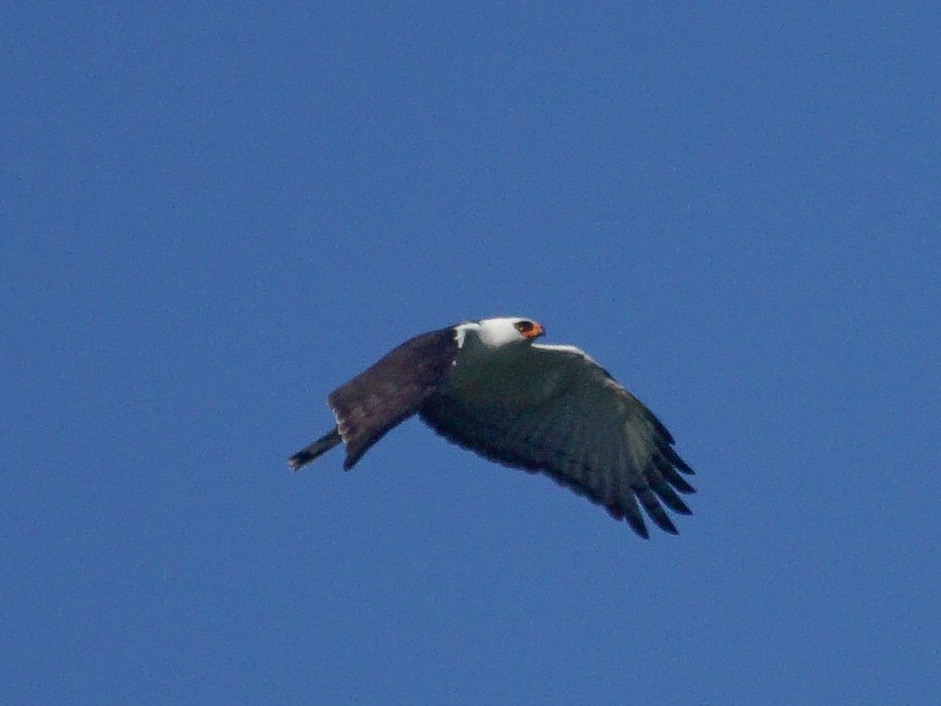
White Hawk
Leucopternis albicollis
Order: Accipitriformes / Family: Accipitridae
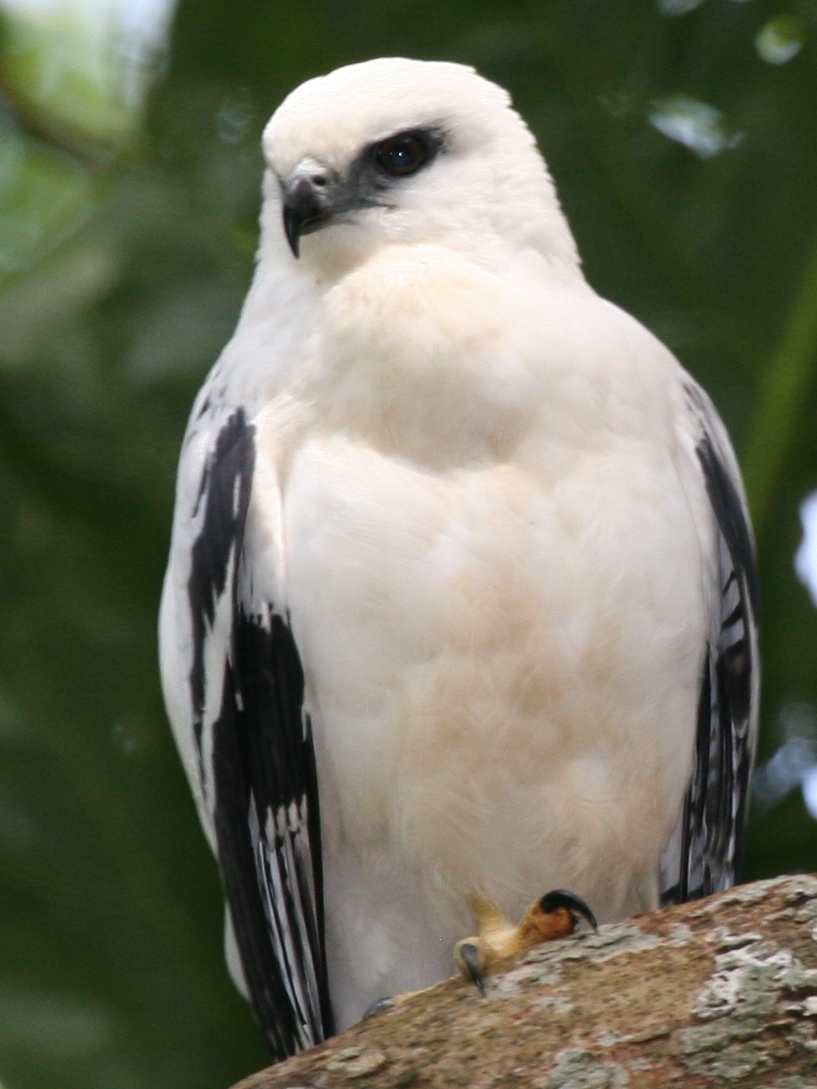
Wikimedia Commons
About the White Hawk
The White Hawk (Leucopternis albicollis) is a captivating raptor that stands out due to its pristine white plumage adorned with black markings on the wings and tail. This bird of prey is primarily found in the tropical and subtropical forests of Central and South America, ranging from southern Mexico through Brazil and Peru. Its presence is a sign of a healthy forest ecosystem, as it occupies the upper canopy where it hunts for reptiles and small mammals. Unlike many other raptors, the White Hawk has adapted well to dense forest environments, indicating its specialized role within these ecosystems.
Ecologically, the White Hawk plays a crucial role as a top predator within its habitat, helping to maintain the balance by controlling the population of its prey. Its diet consists mainly of snakes and lizards, but it also consumes small birds and mammals when available. This dietary preference positions the White Hawk as an important regulator of reptile populations in its habitat, indirectly affecting the distribution and abundance of other species.
Seasonal behaviors of the White Hawk are relatively stable as it is not a migratory species. However, during the breeding season, which typically occurs at the onset of the wet season, the White Hawk becomes more territorial. Pairs are known to engage in elaborate courtship displays involving aerial maneuvers and vocalizations to strengthen pair bonds and establish breeding territories. As a sentinel of forest health, the White Hawk's presence or absence can indicate changes in forest composition and the impact of human activities.
The White Hawk belongs to the family Accipitridae, within the order Accipitriformes. These birds typically live average 12 years with a maximum of 15 years recorded..
How to Identify a White Hawk
The adult White Hawk is unmistakable due to its predominantly white plumage, except for the black tips on its wings and tail, which create a stark contrast in flight. This striking appearance makes it easier to identify, even from a distance. The bird measures approximately 46-56 cm in length, with a wingspan of around 100-120 cm, categorizing it as a medium-sized raptor. Juvenile White Hawks display a mottled brown and white plumage, providing them with camouflage in the forest canopy and differentiating them from the adults.
Both male and female White Hawks exhibit similar plumage, making it difficult to differentiate between the sexes based solely on appearance. However, males generally tend to be slightly smaller than females. In terms of behavior, the White Hawk often perches prominently on exposed branches in the forest canopy, scanning for prey below.
In flight, the White Hawk's broad wings and short tail give it a distinctive silhouette. It soars with wings held flat, and its flight is characterized by slow, deliberate wingbeats interspersed with glides. When perched, the White Hawk maintains an upright posture with its head held high, surveying its surroundings for potential threats or prey.
Having trouble telling birds apart? Upload a photo to our bird identification tool for an instant species match.
White Hawk Habitat and Range
Preferred Habitat
The White Hawk inhabits a variety of forest types, including lowland rainforests, montane forests, and occasionally forest edges. It prefers areas with dense canopy cover, which provides both hunting opportunities and protection from potential predators. Typically found at elevations ranging from sea level to 1,500 meters, the White Hawk is most commonly associated with primary forests.
During the breeding season, the White Hawk selects territories with abundant prey and suitable nesting sites, often within large tracts of uninterrupted forest. It is less frequently observed in secondary growth forests, although it can adapt to these areas if necessary. The White Hawk typically avoids urban areas, remaining elusive and maintaining its preference for undisturbed habitats.
Geographic Range
The White Hawk's range spans a wide geographical area, encompassing both Central and South America. It breeds from southern Mexico, through Central American countries like Costa Rica and Panama, and into the northern regions of South America, including Colombia, Venezuela, and the Amazon basin.
This bird is a resident species, meaning it does not migrate but remains within its established range year-round. Within this range, the White Hawk's population density varies, with higher concentrations in regions with extensive forest cover and lower human disturbance. The most significant populations are found in the Amazon rainforest, where the species thrives in the vast contiguous forests.
While the White Hawk is generally considered a resident, some local movements may occur in response to prey availability or habitat disturbances. These movements, however, are typically short-range and do not constitute long-distance migrations.
Want to know which birds visit your area? Browse our backyard birds by location guides for region-specific species lists.
What Does the White Hawk Eat?
The White Hawk primarily preys on reptiles, making snakes and lizards the cornerstone of its diet. This raptor is an adept hunter, using its keen eyesight to spot prey from high perches or during slow flight over the forest canopy. It captures its prey with swift, precise strikes, often using its sharp talons to immobilize the victim immediately.
During certain seasons, particularly when reptiles are less active, the White Hawk's diet expands to include small mammals such as rodents, as well as birds and amphibians. It is an opportunistic feeder, adjusting its hunting strategy based on prey availability. This adaptability is crucial for its survival, especially in fluctuating environmental conditions.
The White Hawk typically hunts during daylight hours, with peak activity occurring in the early morning and late afternoon. This schedule allows it to capitalize on the activity patterns of its prey, many of which are more active during these cooler parts of the day.
White Hawk Behavior and Social Structure
The White Hawk is generally solitary, outside of the breeding season, when it forms monogamous pairs. These pairs maintain large territories, which they defend vigorously against intruders. Territorial displays often include soaring flights accompanied by high-pitched calls, which serve both as a warning to rivals and a display to strengthen pair bonds.
Courtship behavior in the White Hawk includes aerial displays where pairs engage in synchronized flying and vocal exchanges. These displays are crucial for pair bonding and ensuring reproductive success. During courtship, the male may also present food offerings to the female, reinforcing their partnership.
While the White Hawk is primarily solitary, it may occasionally join mixed-species flocks, particularly during foraging, to take advantage of the increased efficiency in locating prey. When threatened by predators or human presence, the White Hawk exhibits defensive behaviors, such as mobbing or aggressive vocalizations, to deter the threat.
The White Hawk follows a diurnal activity pattern, with most of its hunting and foraging occurring during daylight hours. It spends a significant amount of time perched in high vantage points, scanning for prey or potential threats.
White Hawk Nesting and Reproduction
The White Hawk constructs its nest high in the forest canopy, typically in the fork of a large tree. The nest is a large platform made of sticks, lined with softer materials such as leaves and moss to provide a comfortable environment for the eggs and chicks.
A typical clutch consists of 1-2 eggs, which the female incubates for about 35 days. During this period, the male provides food for the female, ensuring she can remain on the nest to protect the eggs. Once hatched, the young are altricial and require constant care and feeding from both parents.
Fledging occurs approximately 40-50 days after hatching, but the young birds remain dependent on their parents for several more weeks as they learn to hunt and survive independently. The White Hawk typically raises one brood per year, although occasionally, a second brood may occur if conditions are favorable.
White Hawk Sounds and Vocalizations
The White Hawk's vocalizations are distinctive, consisting of high-pitched whistles and screams that can be heard echoing through the forest. Its primary call is a series of clear, piercing notes that rise and fall in pitch, serving as a territorial announcement and a means of communication between mates.
Alarm calls are sharper and more abrupt, intended to alert other birds to potential threats. These calls can resemble the sound of a whistle being rapidly blown, capturing attention quickly.
During the dawn chorus, the White Hawk may engage in vocal exchanges with its mate, reinforcing their bond and coordinating daily activities. Its calls, while not melodious, are a vital aspect of its behavioral repertoire, ensuring effective communication in the dense forest environment.
Interesting Facts About the White Hawk
- 1The White Hawk's striking plumage not only aids in camouflage but also helps in thermoregulation, reflecting sunlight to keep cool in tropical environments.
- 2Despite their formidable appearance, White Hawks are not aggressive toward humans and often tolerate observers in their territory.
- 3White Hawks have been observed following army ant swarms to catch prey items that are flushed out by the ants' movement.
- 4The species' call resembles a piercing whistle, which can carry over long distances in the dense forest environment.
- 5Unlike many raptors, the White Hawk is known to adapt well to secondary forests, showing flexibility in habitat preference.
- 6White Hawks are known for their 'sit-and-wait' hunting strategy, spending long periods perched before making a quick strike.
- 7The White Hawk's wingspan can reach up to 120 cm, aiding in its ability to soar gracefully over the forest canopy.
White Hawk Conservation Status
Currently, the White Hawk is classified as Least Concern by the IUCN, with a stable population trend. However, its reliance on forest habitats makes it vulnerable to deforestation and habitat fragmentation. As human activities continue to encroach on tropical forests, conservation efforts focus on preserving large tracts of forest to ensure the White Hawk's survival. Protected areas and national parks throughout its range play a significant role in safeguarding the White Hawk's habitat. Conservation organizations also work with local communities to promote sustainable land use practices that balance human needs with wildlife conservation. Historically, the White Hawk's population has remained relatively stable, but continued monitoring is essential to detect any potential declines resulting from environmental changes or increased human pressure.
Other Accipitridae Species


Birds Similar to the White Hawk
These species are often confused with the White Hawk due to similar appearance or overlapping range.