
White-headed Robin-Chat
Cossypha heinrichi
Order: Passeriformes / Family: Muscicapidae

Wikimedia Commons
About the White-headed Robin-Chat
The White-headed Robin-Chat (Cossypha heinrichi) is a captivating and elusive bird found predominantly in Angola. Known for its striking appearance, it features a pure white head that contrasts vividly with its deep orange underparts and dark wings. This robin-chat belongs to the Muscicapidae family, which consists of small passerine birds often characterized by their melodious songs. Despite being relatively unknown to casual birdwatchers, the White-headed Robin-Chat holds a significant place in the ecology of its native environment.
This species thrives in dense tropical forests, particularly those situated in the western part of Angola, such as the Angolan escarpment forests. These regions are rich in biodiversity, providing the bird with abundant food sources and nesting sites. The White-headed Robin-Chat plays a crucial role in seed dispersal, aiding in maintaining the health of these ecosystems. Its presence often indicates a well-preserved forest habitat.
During the breeding season, which typically occurs from September to December, the White-headed Robin-Chat becomes more vocal and active. Males engage in elaborate displays to attract mates, showcasing their plumage while performing complex songs. Post-breeding, the bird's activity decreases as it becomes more secretive, often retreating deeper into the forest. This seasonal behavior highlights the species' adaptability to the varying conditions of its habitat, ensuring its survival in the dense forests of Angola.
The White-headed Robin-Chat belongs to the family Muscicapidae, within the order Passeriformes. These birds typically live average 6-8 years, with a maximum recorded of 11 years..
How to Identify a White-headed Robin-Chat
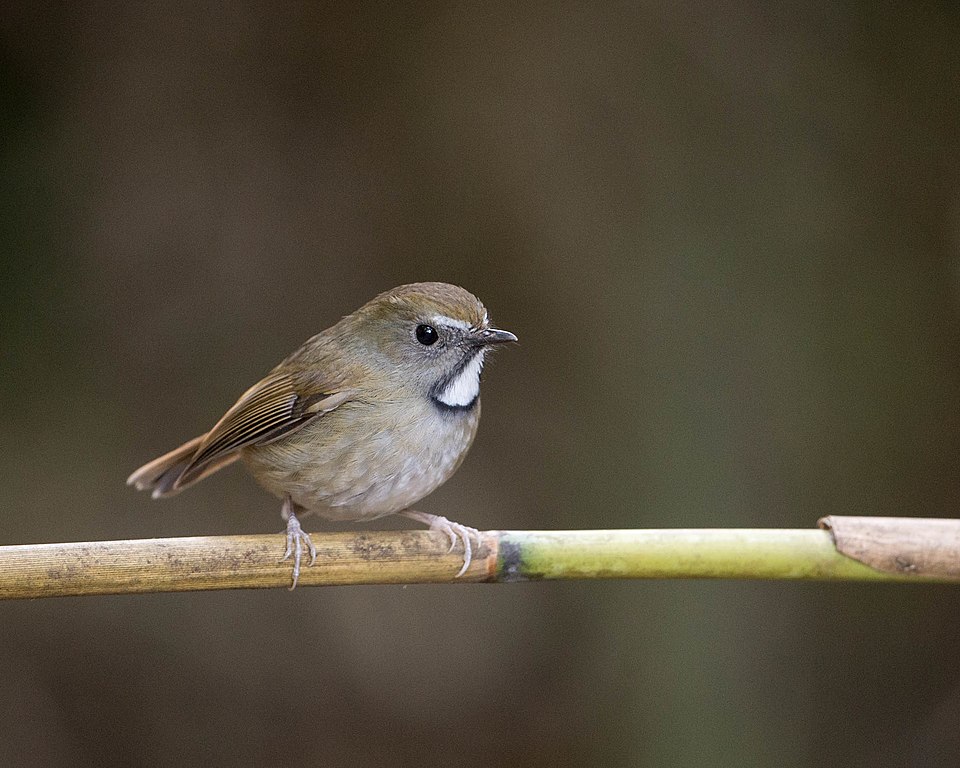
Adult White-headed Robin-Chats are easily recognized by their stark white heads, which contrast with their bright orange underparts and black wings. Their eyes are dark, adding to the sharp contrast of the head's coloration. Juveniles, however, display a more subdued coloration, with a mottled brown head and paler orange underparts, gradually acquiring the adult's distinctive plumage as they mature.
There is little sexual dimorphism in this species, meaning males and females look quite similar. However, during the breeding season, males may appear slightly more vibrant due to hormonal changes that enhance their plumage's coloration. This feature helps them in attracting females through visual displays.
The White-headed Robin-Chat's silhouette in flight is compact, with a rounded body and moderately long tail. When perched, it exhibits an upright stance, often flicking its tail as a behavioral trait. Although its unique coloration minimizes confusion with other species, it may be mistaken for the Cape Robin-Chat due to similar habitats. The key differentiator is the White-headed Robin-Chat's distinct head coloration.
Having trouble telling birds apart? Upload a photo to our bird identification tool for an instant species match.
White-headed Robin-Chat Habitat and Range
Preferred Habitat
The White-headed Robin-Chat primarily inhabits the dense, humid forests of western Angola. These forests, rich in biodiversity, provide the necessary cover and resources for the species to thrive. The bird favors mid-elevation forests, typically between 500 to 1,500 meters above sea level, where the climate remains stable year-round.
While it prefers undisturbed forested regions, this species can also be found in secondary growth areas, suggesting some adaptability to habitat changes. However, the White-headed Robin-Chat is rarely seen in urban environments, as it tends to avoid human settlements and open areas.
Seasonally, the bird exhibits slight shifts in habitat preference, moving deeper into forests during dry months when resources become scarce. These movements ensure access to food and suitable nesting sites throughout the year.
Geographic Range
The White-headed Robin-Chat's range is restricted primarily to Angola, with its population concentrated in the western regions of the country. Key locations include the Angolan escarpment and the adjacent forested areas, where the bird is most commonly observed.
Breeding occurs within this limited range, with no significant migration patterns reported. Instead, the species exhibits local movements within its range, adjusting to seasonal resource availability rather than undertaking long-distance migrations.
Due to its restricted range, the White-headed Robin-Chat is considered a range-restricted species, with population density highest in undisturbed forested areas. Habitat fragmentation poses a threat, potentially limiting the bird's range further if deforestation continues unabated.
Want to know which birds visit your area? Browse our backyard birds by location guides for region-specific species lists.
What Does the White-headed Robin-Chat Eat?
The diet of the White-headed Robin-Chat consists primarily of insects, which it forages from the leaf litter and low vegetation within its forest habitat. It displays a keen eye for movement, skillfully capturing beetles, ants, and caterpillars, which form the bulk of its diet.
During the rainy season, the abundance of insects allows the bird to feed more frequently, while in drier months, it may consume small fruits and seeds as supplementary food sources. This dietary flexibility ensures its survival throughout varying conditions.
The species employs a methodical foraging technique, often observed hopping along the forest floor, pausing to inspect potential food items. The bird forages alone or in pairs, rarely seen in larger groups, which suits its territorial nature.
White-headed Robin-Chat Behavior and Social Structure
The White-headed Robin-Chat exhibits a solitary or paired lifestyle, characteristic of many robin-chats. It maintains a defined territory, especially during the breeding season, when males become particularly vocal and defensive of their chosen area.
Courtship involves elaborate displays by the male, who showcases his plumage and vocal abilities to attract a mate. These displays often occur from prominent perches, where the male can survey his territory and sing his melodious song.
In response to predators, the White-headed Robin-Chat relies on its cryptic behavior, often retreating into dense cover. It exhibits a strong dawn chorus, where its song serves to establish territory boundaries and attract mates. Daily activity peaks during early morning and late afternoon, with midday often spent in shaded areas to avoid the heat.
White-headed Robin-Chat Nesting and Reproduction
The White-headed Robin-Chat constructs cup-shaped nests, often well-hidden among dense foliage or in low shrubs. These nests are meticulously crafted using twigs, leaves, and other plant materials, providing a secure environment for their young.
Clutch size typically ranges from two to three eggs, which are incubated primarily by the female. The incubation period lasts approximately two weeks, during which the male may assist by bringing food to the female.
Once hatched, the chicks remain in the nest for another two to three weeks before fledging. Both parents participate in feeding the young and defending the nest site from potential threats. The species usually raises one brood per year, though favorable conditions may occasionally allow for a second.
White-headed Robin-Chat Sounds and Vocalizations
The primary song of the White-headed Robin-Chat is a melodious series of clear, flute-like notes delivered in a rhythmic pattern. Often heard at dawn, this song serves to establish territory and attract mates. Its call notes, though less complex, are distinct and used for communication between mates.
Alarm calls are sharper and more abrupt, signaling potential danger to nearby birds. These calls are particularly important during the breeding season when the protection of young is paramount.
The bird's vocalizations are often compared to the Cape Robin-Chat, though the White-headed Robin-Chat's song is generally considered to be more melodious and varied.
Interesting Facts About the White-headed Robin-Chat
- 1The White-headed Robin-Chat's song is so melodic that it is often likened to a flute, captivating listeners during its dawn chorus.
- 2Despite its vibrant appearance, this species was first documented in the 20th century, highlighting its elusive nature.
- 3The bird's preference for dense forest habitats makes it a key indicator species for the health of Angola's forest ecosystems.
- 4White-headed Robin-Chats are adept at mimicry, sometimes incorporating other birds' calls into their songs.
- 5A White-headed Robin-Chat's territory can span up to 5 hectares, ensuring ample resources for feeding and breeding.
- 6The species plays a vital role in seed dispersal, contributing to the regeneration of its native forest habitats.
- 7The White-headed Robin-Chat has a lifespan of up to 8 years in the wild, provided its habitat remains undisturbed.
White-headed Robin-Chat Conservation Status
The IUCN currently lists the White-headed Robin-Chat as Near Threatened, with its population trend showing signs of decline. Deforestation and habitat fragmentation pose significant threats to its limited range, as these activities reduce available habitat and resources. Conservation efforts focus on protecting the remaining forested areas in Angola, with initiatives to promote sustainable land use practices. Historical data suggests that the species was once more widespread, but current pressures have confined it to smaller, isolated populations. Continued monitoring and habitat protection are crucial for the bird's long-term survival. Conservationists advocate for the establishment of protected areas and increased awareness of the species' plight among local communities.
Other Muscicapidae Species


Birds Similar to the White-headed Robin-Chat
These species are often confused with the White-headed Robin-Chat due to similar appearance or overlapping range.