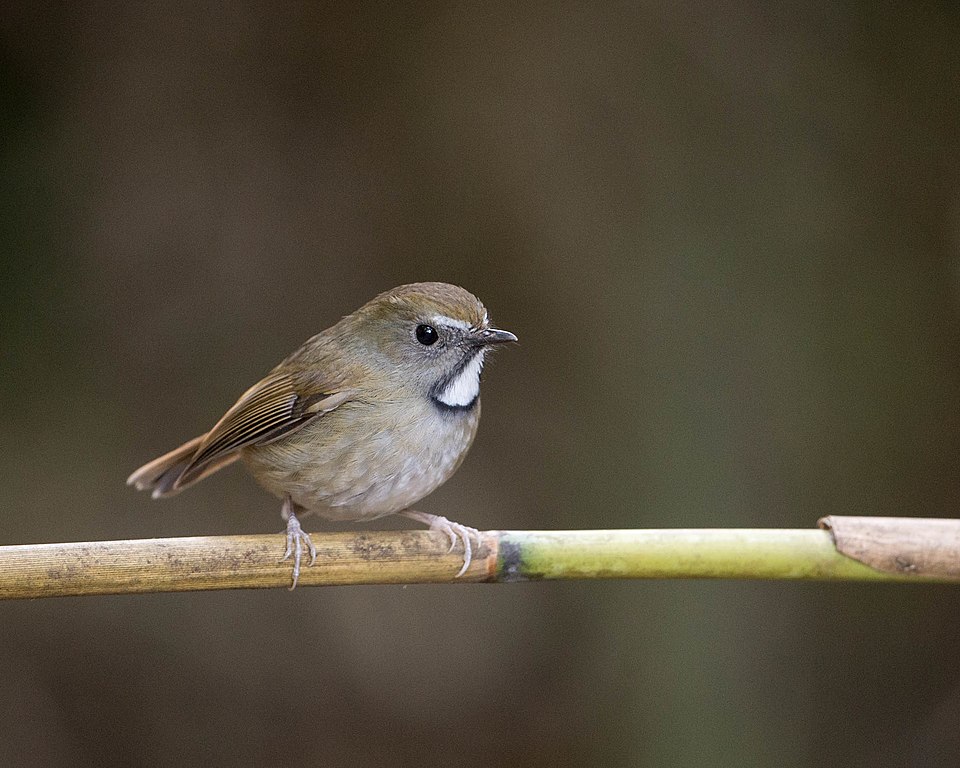
White-tailed Rubythroat
Luscinia pectoralis
Order: Passeriformes / Family: Muscicapidae

Wikimedia Commons
About the White-tailed Rubythroat
The White-tailed Rubythroat, or Luscinia pectoralis, is a captivating bird belonging to the Muscicapidae family. Known for its striking red throat, this bird inhabits mountainous regions across Central Asia, particularly thriving in the Himalayas, where it resides amidst dense underbrush and alpine meadows. The significance of the White-tailed Rubythroat extends beyond its beauty; it plays a crucial role in the ecosystem by controlling insect populations. Its vibrant plumage is not just a display of aesthetics but an indicator of environmental health, as it thrives in habitats with rich biodiversity. The ecological role of the White-tailed Rubythroat is vital, as it contributes to the pollination of certain plant species and dispersal of seeds, thus maintaining the balance of its mountainous environment.
During the breeding season, which spans from April to June, the White-tailed Rubythroat exhibits fascinating behaviors. Males become highly territorial and are known for their melodious song, which resonates through the valleys and serves both to attract mates and deter rivals. This bird's presence in regions like Nepal, Bhutan, and parts of India highlights its adaptability to various microhabitats within its range. During the non-breeding season, the White-tailed Rubythroat descends to lower elevations, often inhabiting scrublands and dry forests, showcasing its remarkable ability to adapt to different environmental conditions.
The White-tailed Rubythroat is not just a visual delight but also serves as an indicator species, reflecting the health of its environment. Its existence in diverse habitats, from subalpine regions to temperate forests, underscores its ecological importance. As a resident of these varied ecosystems, the White-tailed Rubythroat contributes to the intricate web of life, supporting both plant and animal communities through its foraging and nesting behaviors.
The White-tailed Rubythroat belongs to the family Muscicapidae, within the order Passeriformes. These birds typically live average 5-6 years with a maximum recorded of 9 years..
How to Identify a White-tailed Rubythroat
Identifying the White-tailed Rubythroat involves looking for its distinctive features. Adult males possess a striking ruby-red throat patch that contrasts sharply with their olive-brown upperparts. The white tail, edged with black, provides a clear field mark when the bird is in flight or perched. Females, while less vibrant, have a buff-colored throat and more subdued plumage, making them harder to spot amidst dense foliage.
Juveniles resemble females but may show more mottling on their underparts. In flight, the White-tailed Rubythroat's silhouette is compact, with rounded wings and a slightly forked tail. When perched, they often adopt an upright stance, flicking their tails in a characteristic manner. Birders may confuse this species with the Siberian Rubythroat, but the latter lacks the distinctive white tail and has a more extensive red throat patch.
While the White-tailed Rubythroat is primarily a ground-dwelling bird, it occasionally perches on low branches to sing. Its song is a series of melodious whistles, often accompanied by tail flicking. Observing these behaviors, along with its unique plumage, aids in distinguishing it from similar species in mixed-species flocks.
Having trouble telling birds apart? Upload a photo to our bird identification tool for an instant species match.
White-tailed Rubythroat Habitat and Range
Preferred Habitat
The White-tailed Rubythroat prefers habitats in mountainous regions where it can find dense underbrush. It thrives in alpine meadows and subalpine scrub, primarily between elevations of 2,500 to 4,500 meters. In the Himalayas, this bird is commonly found in rhododendron and juniper thickets.
During winter, the White-tailed Rubythroat descends to lower elevations, occupying dry forests and scrublands. These seasonal shifts allow it to take advantage of different food sources throughout the year. While primarily a bird of natural habitats, it occasionally ventures into human-altered landscapes, seeking cover in large gardens and plantations.
Although less common in urban areas, the White-tailed Rubythroat may be spotted in the outskirts of mountain towns, where suitable cover and food sources exist. Its presence in both rural and semi-urban settings highlights its adaptability to varied environments and the necessity of habitat conservation across its range.
Geographic Range
The White-tailed Rubythroat's range spans the mountainous regions of Central Asia. During the breeding season, it occupies the high-altitude zones of the Himalayas, extending from northern Pakistan, through India and Nepal, to Bhutan and southeastern Tibet. These areas provide the dense shrubbery and meadows crucial for nesting and feeding.
As winter approaches, the White-tailed Rubythroat migrates to lower elevations, moving into the foothills and valleys of its breeding range. In India, it can be found in states like Uttarakhand and Himachal Pradesh, where the climate is milder. The altitudinal migration of this species is a key strategy for survival, allowing it to exploit different ecological niches throughout the year.
Population density is highest in regions with abundant undergrowth and minimal human disturbance. While not entirely migratory, some populations might undertake short-distance movements in response to food availability and environmental conditions. The White-tailed Rubythroat's adaptability to these varied habitats ensures its presence across a broad geographical range.
Want to know which birds visit your area? Browse our backyard birds by location guides for region-specific species lists.
What Does the White-tailed Rubythroat Eat?
The White-tailed Rubythroat primarily feeds on insects, which it forages from the ground and low vegetation. Its diet includes beetles, caterpillars, and spiders, which provide the high protein necessary for breeding and raising young. During the summer, when insect activity peaks, this bird exploits the abundance of food to fuel its energetic lifestyle.
In addition to insects, the White-tailed Rubythroat occasionally consumes berries and other small fruits, particularly in winter when insects are less available. This dietary flexibility allows it to survive seasonal shifts in food availability. The bird employs a foraging technique known as 'gleaning,' picking prey from leaves and branches or capturing it on the ground.
The White-tailed Rubythroat also exhibits a unique feeding schedule, being most active during the early morning and late afternoon. This pattern helps it avoid the midday heat and maximizes its feeding efficiency. By maintaining a varied diet, it supports its energetic needs throughout the year, adapting to the changing resources of its mountainous habitat.
White-tailed Rubythroat Behavior and Social Structure
The White-tailed Rubythroat displays fascinating behaviors that make it a subject of interest for birders and ornithologists alike. It is a territorial bird, with males establishing and defending territories during the breeding season. They use their melodious songs as an auditory marker of their presence and dominance, engaging in vocal duels with rivals to maintain their territory.
Courtship displays of the White-tailed Rubythroat are elaborate, involving singing, tail flicking, and wing quivering. These displays occur in dense vegetation, providing a private setting for the pair. The species is generally solitary outside the breeding season, although it may join mixed-species flocks in winter, enhancing its foraging efficiency.
The White-tailed Rubythroat exhibits daily activity patterns that include foraging during the cooler parts of the day and resting during midday. It responds to predators with alarm calls and evasive maneuvers, often retreating into dense cover to avoid detection. These behaviors reflect its adaptation to the challenging environments of its high-altitude habitats.
White-tailed Rubythroat Nesting and Reproduction
Nesting for the White-tailed Rubythroat typically occurs on or near the ground, concealed within dense shrubs or underbrush. The nest is a cup-shaped structure made of grass, leaves, and moss, providing camouflage and insulation. The female primarily constructs the nest, selecting materials that blend with the surrounding environment.
Clutch size ranges from three to five eggs, which the female incubates for about 12 to 14 days. During this period, the male may assist by bringing food to the female. After hatching, both parents participate in feeding the chicks, ensuring a steady supply of insects for rapid growth.
The fledging period lasts about 12 to 16 days, after which the young leave the nest but remain dependent on the parents for several weeks. The White-tailed Rubythroat usually raises one brood per year, although in favorable conditions, a second brood may occur. This reproductive strategy reflects the bird's adaptation to the varying climates of its mountainous range.
White-tailed Rubythroat Sounds and Vocalizations
The song of the White-tailed Rubythroat is a series of melodious whistles and trills, characterized by a clear, resonant quality. It often sings from a concealed perch within dense vegetation, making its presence known while remaining hidden from view. The primary song serves as a territorial marker and a mating call.
In addition to its song, the White-tailed Rubythroat produces a variety of call notes, including sharp 'tek' sounds used as contact calls between mates. Its alarm calls are more abrupt and loud, designed to alert others of potential threats. During the dawn chorus, its song is particularly vigorous, contributing to the symphony of sounds in its habitat.
Comparatively, the White-tailed Rubythroat's vocalizations are less complex than those of some other thrushes, but their clarity and volume make them distinctive. Listening for these sounds can aid birders in locating this elusive species amidst the dense underbrush.
Interesting Facts About the White-tailed Rubythroat
- 1The White-tailed Rubythroat's scientific name, Luscinia pectoralis, reflects its melodious song, with 'Luscinia' meaning nightingale in Latin.
- 2Despite its vibrant throat, the White-tailed Rubythroat blends seamlessly into its environment, thanks to its olive-brown upperparts.
- 3White-tailed Rubythroats are known to migrate altitudinally rather than latitudinally, moving between elevations with the seasons.
- 4Their nests are often placed less than a meter off the ground, using dense vegetation for cover and protection from predators.
- 5The species thrives at elevations where oxygen levels are lower, showcasing its remarkable physiological adaptations.
- 6The White-tailed Rubythroat's song can travel long distances across mountainous terrains, enhancing its territorial effectiveness.
- 7In some cultures, the presence of the White-tailed Rubythroat is considered a harbinger of spring due to its arrival in breeding areas.
White-tailed Rubythroat Conservation Status
The White-tailed Rubythroat is currently listed as Least Concern on the IUCN Red List, with stable population trends. However, habitat loss due to deforestation and land conversion for agriculture poses a threat to its long-term survival. Climate change also impacts its montane habitats, altering the availability of resources. Conservation efforts focus on habitat preservation, particularly in protected areas within its range. Monitoring population trends and conducting research on its ecological needs are crucial for future conservation planning. Historically, the White-tailed Rubythroat has maintained stable populations, but ongoing environmental changes necessitate proactive measures. Community engagement and awareness programs in regions where the bird resides can help mitigate habitat destruction and promote sustainable land use practices. Ensuring the conservation of its high-altitude habitats is essential for the continued survival of this striking songbird.