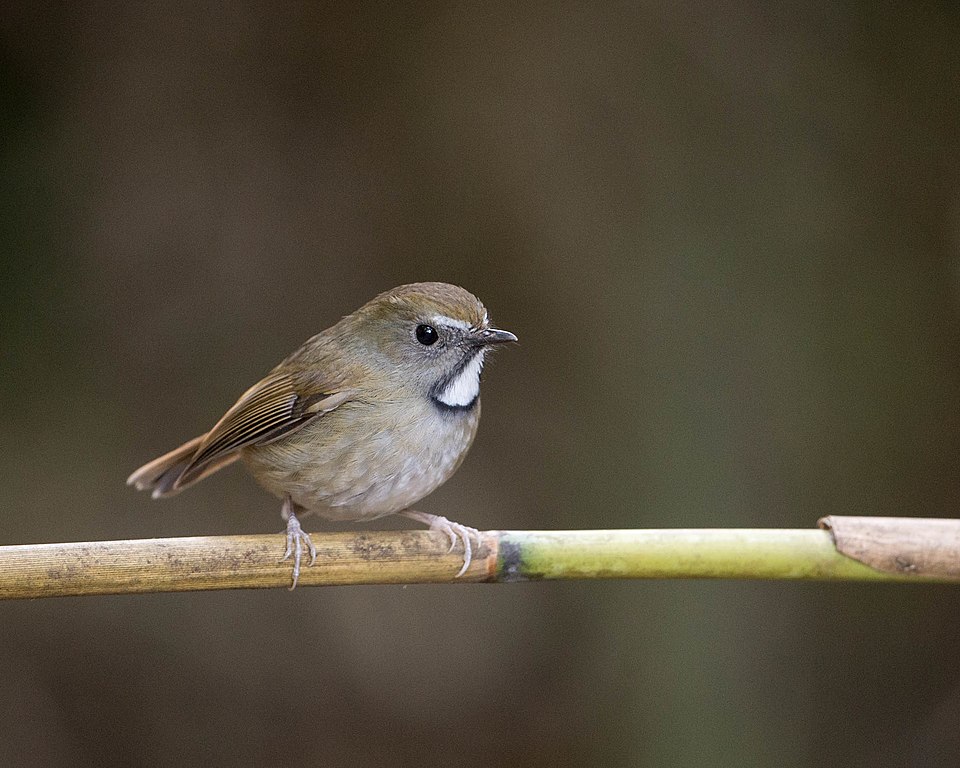
White-throated Robin-Chat
Cossypha humeralis
Order: Passeriformes / Family: Muscicapidae
Wikimedia Commons
About the White-throated Robin-Chat
The White-throated Robin-Chat (Cossypha humeralis) is a striking bird that captivates bird watchers with its vivid plumage and melodious song. This species inhabits a range of environments across southern and eastern Africa, including countries like South Africa, Zimbabwe, and Mozambique. Typically found in woodland and forest margins, the White-throated Robin-Chat plays a crucial role in its ecosystem, acting as both a predator to insects and a prey item for larger birds. During the breeding season, they become more vocal, filling the air with their rich, melodious song, which serves to both attract mates and defend territory.
Ecologically, the White-throated Robin-Chat contributes to insect control, feeding on a variety of invertebrates and thus helping to maintain the ecological balance. Its presence often indicates a healthy environment, as it thrives in areas with abundant insect life. This bird is also an important part of local folklore and culture, often celebrated for its beauty and song.
In terms of seasonal behavior, the White-throated Robin-Chat displays some shifts in habitat use, although it is predominantly a resident species. During the dry season, it might be found in slightly denser habitats where water sources are more reliable. Outside of the breeding season, these birds may be less vocal and more secretive, making them challenging but rewarding targets for birders seeking to observe them in their natural setting.
The White-throated Robin-Chat belongs to the family Muscicapidae, within the order Passeriformes. These birds typically live up to 5 years in the wild, with some individuals living longer..
How to Identify a White-throated Robin-Chat
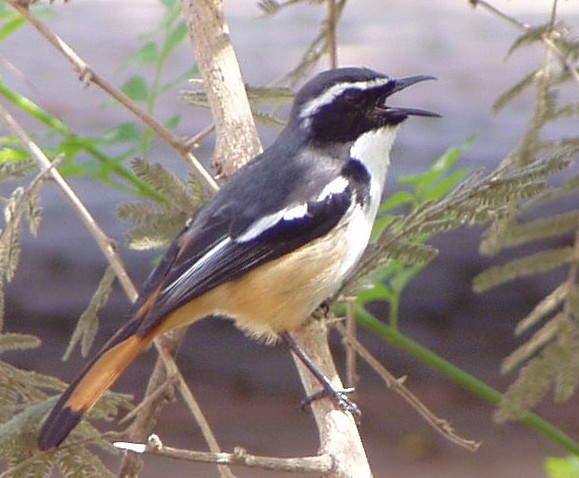
The White-throated Robin-Chat is easily recognizable by its vibrant orange underparts and contrasting white throat, which gives the bird its common name. Adult males and females share similar plumage, though males may exhibit slightly more vibrant coloration, especially during the breeding season. The upperparts are a slate gray, providing a subtle contrast to the bright orange belly and flanks. Juvenile birds are duller, with a more mottled appearance that provides camouflage in their woodland habitats.
In terms of size, this robin-chat is medium-sized, measuring around 19 to 20 centimeters in length. Its wings are rounded and its tail is relatively short, which aids in its agile movements through dense foliage. When perched, the bird often adopts an upright posture, which, along with its bright coloration, makes field identification straightforward.
Confusion with similar species can occur, such as with the Cape Robin-Chat or the Red-capped Robin-Chat. However, the White-throated Robin-Chat's distinctive orange underparts and the clear white throat patch are key distinguishing features. Observers should note the bird's behavior and song, as these can also aid in proper identification.
Having trouble telling birds apart? Upload a photo to our bird identification tool for an instant species match.
White-throated Robin-Chat Habitat and Range
Preferred Habitat
The White-throated Robin-Chat thrives in a variety of habitats, predominantly favoring woodland and forest edges. It can be found at elevations ranging from sea level to about 2,000 meters, although it prefers areas with dense understory vegetation that provides cover and foraging opportunities. Typical habitats include Acacia woodlands, riparian forests, and suburban gardens, where it can find ample food and nesting sites.
During different seasons, the bird may shift slightly in its habitat preferences, particularly moving towards areas with more reliable water sources during dry periods. It is also adaptable to human-altered landscapes and can often be found in rural and suburban environments, where gardens and parks provide suitable habitat.
Urban presence is notable, as the White-throated Robin-Chat has adapted well to life in gardens and parks, where it benefits from the diverse plantings and insect availability. Its adaptability makes it a common sight in both rural and urban settings across its range.
Geographic Range
The White-throated Robin-Chat is native to southern and eastern Africa, with a range that includes South Africa, Zimbabwe, Mozambique, Botswana, and Namibia. It is predominantly a resident species, although some local movements may occur in response to environmental conditions.
In South Africa, it is particularly common in the eastern parts, including the provinces of KwaZulu-Natal and Limpopo. The bird's distribution extends northward into Zimbabwe and Mozambique, where it occupies suitable habitats with sufficient cover and food availability.
While it does not undertake long-distance migrations, the White-throated Robin-Chat may exhibit local movements, especially in response to seasonal changes in habitat quality. This includes moving between different altitudes or habitat types to optimize foraging success and nesting opportunities.
Want to know which birds visit your area? Browse our backyard birds by location guides for region-specific species lists.
What Does the White-throated Robin-Chat Eat?
The diet of the White-throated Robin-Chat primarily consists of insects and other invertebrates, which it deftly captures with its sharp bill. Common prey items include beetles, caterpillars, and spiders, which it hunts by foraging on the ground or gleaning from foliage. The bird employs a sit-and-wait strategy, often pouncing on prey from a low perch.
During the breeding season, the White-throated Robin-Chat may increase its foraging activity to meet the demands of feeding its young. Its diet may also include small fruits and berries, providing a source of energy and variation in its diet.
The bird's feeding schedule is primarily diurnal, with peak activity occurring in the early morning and late afternoon. This schedule allows it to exploit the times when insects are most active or available.
White-throated Robin-Chat Behavior and Social Structure
The White-throated Robin-Chat exhibits a largely solitary or paired lifestyle, especially during the breeding season when pairs defend territories vigorously. Males engage in elaborate courtship displays, including singing from prominent perches and fluffing their feathers to attract potential mates.
Territorial behavior is marked by frequent vocalizations and displays aimed at deterring intruders. This bird is known for its strong attachment to particular territories, often returning to the same area annually.
Outside of the breeding season, the White-throated Robin-Chat becomes more elusive, reducing vocal activity and becoming more secretive. Its activity patterns are crepuscular, with peak activity at dawn and dusk, which aligns with the periods of increased insect activity. In response to predators, the bird exhibits cautious behavior, often seeking cover or freezing until the threat has passed.
White-throated Robin-Chat Nesting and Reproduction
The White-throated Robin-Chat constructs its nest in dense vegetation, often within thorny shrubs or small trees that provide protection from predators. The nest is a cup-shaped structure made from grasses, leaves, and rootlets, providing a secure environment for the eggs and chicks.
Typically, the female lays a clutch of 2 to 3 eggs, and both parents share in the incubation duties, which lasts around 14 to 16 days. After hatching, the chicks are altricial and require significant parental care, remaining in the nest for approximately 14 days before fledging.
Parental roles are divided, with both parents involved in feeding the chicks and defending the nest site. The species may raise two broods per year if conditions allow, particularly in regions with extended favorable weather.
White-throated Robin-Chat Sounds and Vocalizations
The song of the White-throated Robin-Chat is a rich and varied series of melodious whistles and trills, often delivered from a high perch. The rhythm is fluid and the pitch varies, making it a delightful sound that resonates through its woodland habitat.
Call notes include a sharp 'chit' or 'chip', used in communication between mates or as an alarm signal to indicate potential danger. During the dawn chorus, the bird's song is particularly prominent, playing a crucial role in territorial defense and mate attraction.
Compared to similar species, the White-throated Robin-Chat's song is more complex and melodious, which can help birders distinguish it from other robin-chats in the area.
Interesting Facts About the White-throated Robin-Chat
- 1The White-throated Robin-Chat can mimic the calls of other bird species, adding complexity to its already varied song.
- 2This species exhibits a notable territorial drive, often returning to the same area year after year.
- 3Its vivid orange underparts make the White-throated Robin-Chat one of the most visually striking birds in its range.
- 4The bird's song varies geographically, with populations in different regions developing distinct vocal variations.
- 5White-throated Robin-Chats often forage on the ground, using a variety of techniques to capture their prey.
- 6They are known to participate in mixed-species flocks, benefiting from the added protection against predators.
- 7The species is a favorite among birders for its engaging behavior and stunning appearance in natural habitats.
White-throated Robin-Chat Conservation Status
The White-throated Robin-Chat is classified as Least Concern by the IUCN, with a stable population trend. However, habitat loss due to agricultural expansion and urban development poses a potential threat. Conservation efforts focus on habitat preservation and maintaining the ecological integrity of woodlands and forest edges where the species thrives. Historically, the population has remained stable, benefiting from its adaptability to human-modified environments. Continued monitoring and habitat management are essential to ensure its long-term survival, particularly in regions facing rapid environmental changes.