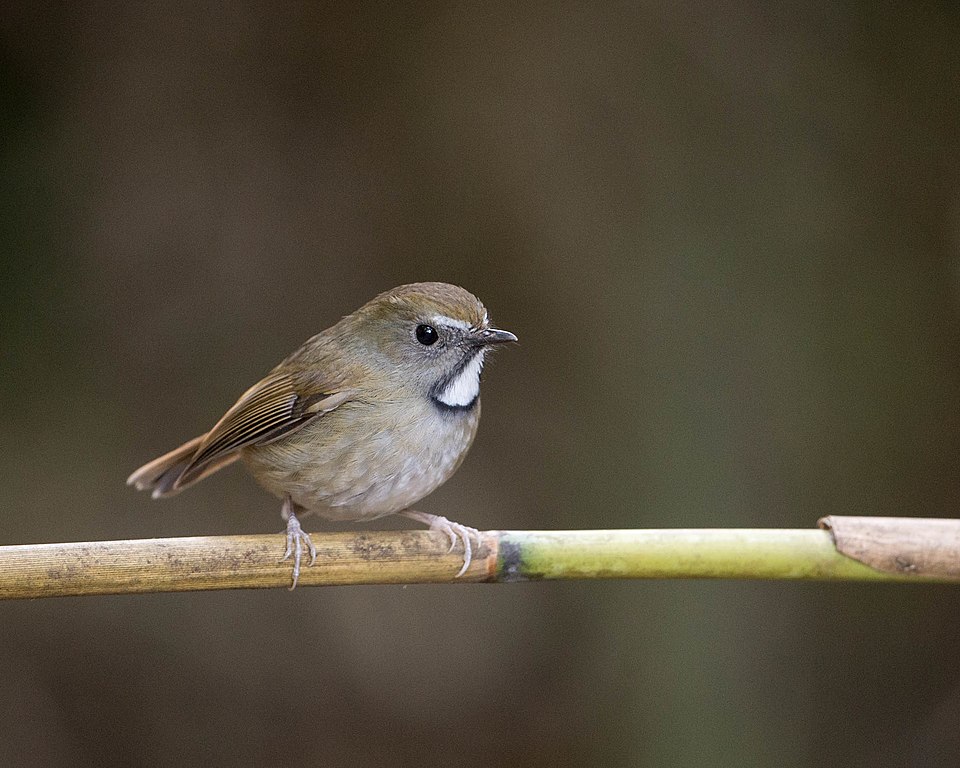
White-vented Shama
Copsychus niger
Order: Passeriformes / Family: Muscicapidae

Wikimedia Commons
About the White-vented Shama
The White-vented Shama, known scientifically as Copsychus niger, is a member of the Muscicapidae family, renowned for its melodious vocalizations. This species is often found in the lush forests of the Philippine archipelago, particularly in islands such as Luzon, Mindoro, and Palawan. The White-vented Shama plays a crucial role in its ecosystem as both a predator of insects and a prey species for larger birds and mammals.
This bird is significant not only for its auditory contributions to the forest soundscape but also for its role in insect population control, thereby contributing to the health of forest ecosystems. The White-vented Shama exhibits a preference for dense underbrush and bamboo thickets, where it can easily find both cover and food. Its presence in these areas indicates a healthy, biodiverse environment.
Seasonal behaviors include increased vocal activity during the breeding season, which generally occurs from March to August. During this time, males are known to perform elaborate songs to attract mates and establish territories, making them more conspicuous than in other months when they are more reclusive. The White-vented Shama is a year-round resident, exhibiting minimal migratory behavior, which underscores its strong adaptation to the regional environment of the Philippines.
The White-vented Shama belongs to the family Muscicapidae, within the order Passeriformes. These birds typically live average 5-7 years, with a maximum recorded of 9 years..
How to Identify a White-vented Shama
The White-vented Shama is a medium-sized songbird with a striking appearance. Adult males exhibit a glossy black plumage with a gleaming sheen, which contrasts sharply with their white vent. Females, while similar in shape and size, have a slightly duller black coloration and may exhibit some brownish tones, particularly on their underparts. Juvenile White-vented Shamas are distinguishable by their brownish plumage, which gradually darkens as they mature.
In flight, the White-vented Shama presents a silhouette characteristic of the Muscicapidae family, with a relatively long tail and broad wings. When perching, its upright posture and frequently fanned tail make it easily recognizable. This species' tail fanning is an important identification mark, often used in displays and signaling.
Confusion may arise with other black songbirds, but the white vent is a distinctive feature that sets the White-vented Shama apart. Its song, a series of melodious whistles and tunes, is another key feature that aids in identification, often heard before the bird is seen.
Having trouble telling birds apart? Upload a photo to our bird identification tool for an instant species match.
White-vented Shama Habitat and Range
Preferred Habitat
White-vented Shamas inhabit lowland and montane forests, with a particular affinity for dense undergrowth and bamboo thickets. They thrive in areas where the forest canopy is intact, offering ample protection from predators and suitable nesting sites. Although primarily found at elevations ranging from sea level to 1,500 meters, they are more commonly seen in lowland tropical forests.
This species demonstrates a degree of adaptability to habitat changes but is still predominantly found in forested regions. While they can sometimes be spotted on the outskirts of urban areas, their presence in such locations is typically limited to parks and gardens that mimic their natural forest habitat. The White-vented Shama's preference for secluded, densely vegetated areas makes it less common in highly urbanized settings.
Geographic Range
The White-vented Shama's range is confined to the Philippines, where it is a resident breeder. It is found on several islands, including Luzon, Mindoro, and Palawan, with each island hosting its own populations that may show slight variations in plumage or song. The bird does not migrate and remains in its range throughout the year.
Population density varies across its range, with some islands hosting more robust populations due to better-preserved habitats. In regions where deforestation has occurred, populations might be sparser. While the species does not use specific migration corridors due to its sedentary nature, it does disperse locally, often following the availability of resources such as food and nesting materials.
Want to know which birds visit your area? Browse our backyard birds by location guides for region-specific species lists.
What Does the White-vented Shama Eat?
The White-vented Shama primarily feeds on insects, making it an important insectivore within its ecosystem. Its diet includes beetles, grasshoppers, and caterpillars, which it captures both on the ground and in foliage. This bird employs a variety of foraging techniques, including gleaning from leaves and branches and occasionally hawking insects in flight.
Seasonal changes in diet are minimal due to the relatively stable climate of the Philippine forests. However, during the breeding season, there is an increased intake of protein-rich insects to support egg production and chick development. The White-vented Shama typically forages during the early morning and late afternoon, taking advantage of the cooler temperatures and heightened insect activity during these periods.
White-vented Shama Behavior and Social Structure
The White-vented Shama is known for its territorial behavior, particularly during the breeding season when males sing vigorously to establish their dominance over a particular area. These birds usually defend territories of about one hectare, although this can vary depending on habitat quality.
Courtship involves elaborate vocal displays, with males singing complex songs that demonstrate their fitness to potential mates. These songs are often accompanied by visual displays, such as fanning the tail and fluttering wings to catch the attention of females.
Socially, the White-vented Shama tends to be solitary or found in pairs, especially outside the breeding season. They exhibit a cautious behavior around predators, relying on their cryptic plumage and the dense forest cover for protection. Daily activity patterns include periods of rest during the hottest parts of the day, with increased activity during the cooler morning and late afternoon hours.
White-vented Shama Nesting and Reproduction
White-vented Shamas construct cup-shaped nests using a variety of natural materials, including twigs, leaves, and rootlets. These nests are typically located in dense vegetation or within the crook of a tree, offering protection from predators and the elements.
The typical clutch size ranges from two to four eggs, with the female primarily responsible for incubation, which lasts about 12 to 14 days. Both parents participate in feeding the chicks once they hatch. The fledging period lasts roughly 10 to 12 days, during which the young are highly dependent on their parents for food and protection.
The White-vented Shama usually raises one to two broods per year, depending on environmental conditions and food availability. The nesting season aligns with the drier months, providing optimal conditions for chick survival.
White-vented Shama Sounds and Vocalizations
The White-vented Shama's song is a rich, melodious series of whistles and trills, often compared to the sound of a flute. These songs vary in pitch and rhythm, showcasing the bird's vocal versatility. Its primary call notes are sharp, clear, and can be heard echoing through its forest habitat.
Alarm calls are distinctly different, manifesting as harsh, repetitive notes that quickly alert other birds to potential danger. The dawn chorus is a notable aspect of their daily routine, where males sing vigorously at first light, marking the beginning of their territorial and courtship activities.
Interesting Facts About the White-vented Shama
- 1The White-vented Shama is known for its mimicry skills and can imitate the calls of other bird species.
- 2Despite its small size, the White-vented Shama's song can carry over long distances, up to several hundred meters.
- 3Males and females often perform duets, a behavior that strengthens pair bonds and aids territory defense.
- 4This species can be found in bamboo forests, where its black and white plumage provides excellent camouflage.
- 5The White-vented Shama is closely related to the famously vocal magpie-robins, sharing many of their singing traits.
White-vented Shama Conservation Status
The White-vented Shama is currently listed as Least Concern by the IUCN, although its populations face pressures from habitat destruction due to logging and land conversion. Despite these threats, the species remains relatively stable across most of its range, thanks to its adaptability to various forest habitats. Conservation efforts focus on habitat protection and reforestation projects, particularly on heavily impacted islands like Luzon. Historical changes in population are closely tied to human activities, making the preservation of natural habitats crucial for the sustainability of the species. Continued monitoring and conservation initiatives are essential to ensure its long-term survival.