
Yellow-browed Bunting
Emberiza chrysophrys
Order: Passeriformes / Family: Emberizidae
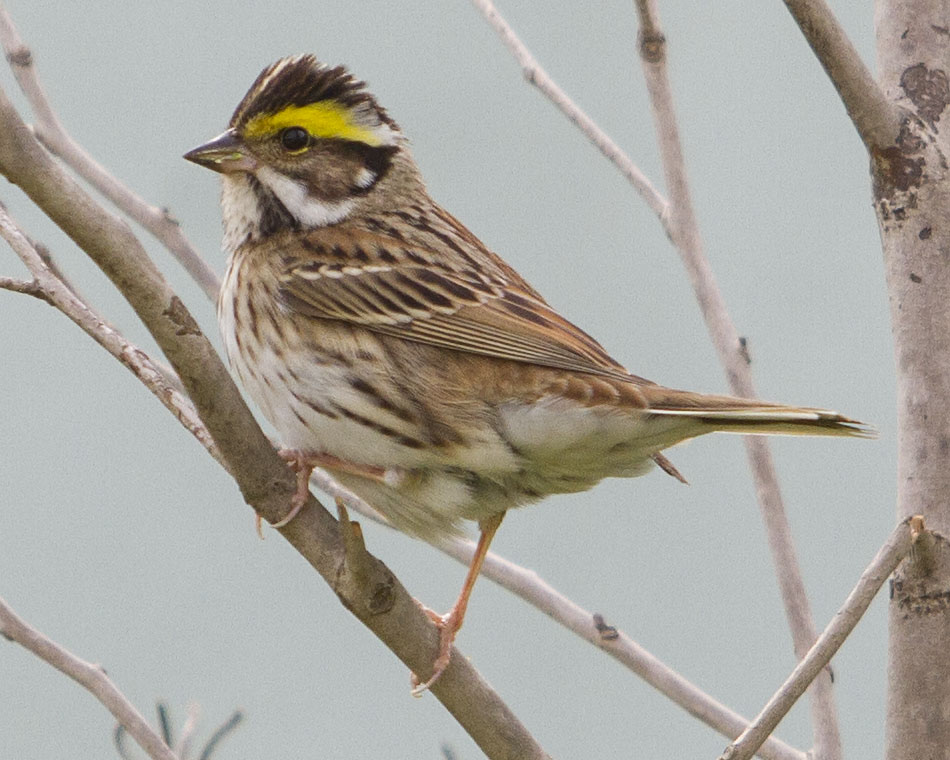
Wikimedia Commons
About the Yellow-browed Bunting
The Yellow-browed Bunting, scientifically known as Emberiza chrysophrys, is a small passerine bird that captivates bird watchers with its distinct facial markings and melodic song. This species belongs to the family Emberizidae, which is widely known for its diversity and adaptability across various habitats. The Yellow-browed Bunting is native to Asia, with a breeding range that primarily covers the temperate regions of eastern Siberia, northern Mongolia, and northeastern China. During the winter months, it migrates southward to warmer climates, predominantly wintering in Southeast Asian countries such as Thailand, Vietnam, and southern China.
This bunting plays a significant role in its native ecosystems, contributing to seed dispersal and serving as a prey species for larger predators. Its presence in mixed-species foraging flocks during migration highlights its ecological role in maintaining the balance within avian communities. The Yellow-browed Bunting's ability to adapt to a variety of habitats, from open woodland and scrub to cultivated areas and gardens, underscores its ecological versatility.
In terms of behavior, the Yellow-browed Bunting exhibits remarkable seasonal adaptations. During the breeding season, it forms monogamous pairs and becomes highly territorial, defending its nesting and foraging grounds vigorously. In contrast, during migration and winter, it becomes more sociable, often seen joining mixed flocks that wander across open fields and forest edges in search of food. This seasonal shift in behavior underscores the bird's adaptability to changing environmental conditions and resource availability.
The Yellow-browed Bunting's migratory patterns also contribute to its ecological importance, as it acts as a bioindicator of environmental health across its migratory routes. Changes in its population dynamics, migration timings, or distribution can reflect broader ecological shifts, making it an important species for ornithologists and conservationists to monitor. Despite facing habitat loss in parts of its range, the species remains relatively resilient, benefiting from conservation efforts aimed at preserving key habitats along its migratory corridors and wintering grounds.
The Yellow-browed Bunting belongs to the family Emberizidae, within the order Passeriformes. These birds typically live average 3-4 years, with a maximum recorded of 7 years..
How to Identify a Yellow-browed Bunting
The Yellow-browed Bunting is a small songbird, measuring approximately 14 to 15 cm in length. Its most distinguishing feature is the vibrant yellow stripe above the eye, which contrasts with a dark brown or black crown. The rest of its head is marked with a warm chestnut color, extending to the cheeks and throat. The upperparts are mostly brown, with a pronounced streaking pattern, while the underparts are paler with finer streaks.
Juvenile Yellow-browed Buntings resemble adults but have more subdued coloration, lacking the vividness of the yellow brow and the chestnut markings. Males and females are similar in appearance, though females may have slightly duller plumage. In flight, the bird's silhouette is characterized by its pointed wings and slightly notched tail, typical of many bunting species.
When perched, the Yellow-browed Bunting has a characteristic upright posture, often seen flicking its tail and wings. This behavior, combined with its distinctive facial markings, aids in distinguishing it from similar species such as the Rustic Bunting, which lacks the pronounced yellow brow and has a different color pattern on the head.
Having trouble telling birds apart? Upload a photo to our bird identification tool for an instant species match.
Yellow-browed Bunting Habitat and Range
Preferred Habitat
The Yellow-browed Bunting thrives in a variety of habitats, ranging from open woodlands and forest edges to scrublands and agricultural fields. During the breeding season, it prefers the deciduous and mixed forests of eastern Siberia and northern China, often at elevations ranging from 500 to 2,000 meters. These areas provide ample cover and food resources for nesting and rearing young.
In winter, the bird migrates to lower elevations and more temperate regions, frequenting open areas with scattered trees, such as rice paddies, grassy fields, and gardens in Southeast Asia. The Yellow-browed Bunting is adaptable, occasionally venturing into urban parks and gardens, particularly when natural habitats are disturbed. Seasonal habitat shifts allow the species to exploit different food sources and climatic conditions throughout the year.
Geographic Range
The Yellow-browed Bunting breeds in a relatively narrow band across eastern Siberia, northeastern China, and northern Mongolia. During the winter months, the species migrates southwards, primarily to Southeast Asia, where it is found in countries such as Thailand, Vietnam, southern China, and occasionally as far west as Myanmar.
Migration corridors are extensive, with birds traveling across the eastern Asian flyway. This migration is characterized by a passage through eastern China and the Korean Peninsula. Population density is highest along these migratory routes and in wintering areas with abundant food and shelter. The species' ability to cover large distances during migration highlights its adaptability and resilience in the face of environmental challenges.
Want to know which birds visit your area? Browse our backyard birds by location guides for region-specific species lists.
What Does the Yellow-browed Bunting Eat?
The Yellow-browed Bunting primarily feeds on seeds, which make up the bulk of its diet throughout the year. During the breeding season, it supplements this seed-based diet with insects and other invertebrates to meet the increased nutritional demands of nesting and chick-rearing. Common prey items include beetles, caterpillars, and spiders, which are abundant in its forest-edge habitats.
In winter, the bird's diet shifts back to a predominantly seed-based regime, foraging in agricultural fields and grasslands. The bunting employs a variety of foraging techniques, including gleaning from the ground and low vegetation, as well as occasionally capturing insects in flight. Its feeding schedule is diurnal, with peaks in activity during the early morning and late afternoon when temperatures are cooler and prey is more active.
Yellow-browed Bunting Behavior and Social Structure
The Yellow-browed Bunting exhibits a complex social structure that varies seasonally. During the breeding season, it is predominantly monogamous and territorial, with pairs establishing and defending nesting territories against intruders. Courtship displays are subtle yet important, involving song and mutual preening.
Outside the breeding season, the bird's behavior changes markedly as it becomes more gregarious. It joins mixed-species flocks during migration and winter, enhancing foraging efficiency and predator detection. The Yellow-browed Bunting is generally a ground forager, but it also frequents low bushes, especially when seeds are abundant.
The species responds to predators with alarm calls and evasive flight, often retreating to dense cover. Daily activity patterns include periods of intense foraging interspersed with rest and preening. These behaviors highlight the bird's adaptability and its ability to navigate complex social dynamics across different seasons.
Yellow-browed Bunting Nesting and Reproduction
The Yellow-browed Bunting builds a cup-shaped nest using a variety of natural materials, including grasses, twigs, and moss, often lined with feathers or animal hair for insulation. These nests are typically situated on or near the ground, hidden among dense vegetation at the edges of forests or shrubs.
A typical clutch consists of 4 to 6 eggs, which are incubated primarily by the female over a period of 12 to 14 days. During this time, the male assists by providing food and defending the territory. Once hatched, the chicks remain in the nest for about 10 to 12 days before fledging. Both parents share in feeding the young and protecting them from potential threats.
The Yellow-browed Bunting usually raises one brood per year, although in optimal conditions, a second brood may occur. This reproductive strategy ensures the continuation of the species in its varied and sometimes challenging habitats.
Yellow-browed Bunting Sounds and Vocalizations
The Yellow-browed Bunting is known for its pleasant and melodic song, often described as a series of clear whistles and trills. The primary song, delivered from a perch, consists of a rhythmic pattern with a mixture of high-pitched and sweet notes. This song serves both to attract a mate and to establish territorial boundaries during the breeding season.
In addition to its song, the Yellow-browed Bunting produces a variety of call notes, including a sharp 'chip' sound used in communication between mates or as an alarm call when predators are nearby. During the pre-dawn and early morning hours, the bird contributes to the dawn chorus, a symphony of avian voices marking the start of a new day.
Interesting Facts About the Yellow-browed Bunting
- 1The Yellow-browed Bunting can travel over 3,000 kilometers during its migratory journey from breeding to wintering grounds.
- 2Despite its name, the Yellow-browed Bunting is not closely related to true buntings found in Europe and the Americas, showcasing convergent evolution.
- 3During migration, the Yellow-browed Bunting often joins mixed-species flocks, enhancing its chances for survival through collective vigilance.
- 4The species' song is often compared to that of the Yellowhammer, another bunting, due to its similar melodic structure.
- 5Yellow-browed Buntings are known to occasionally hybridize with other closely related buntings, though such occurrences are rare.
Yellow-browed Bunting Conservation Status
The Yellow-browed Bunting is currently classified as of Least Concern by the IUCN, with a stable global population trend. However, habitat loss due to agricultural expansion and deforestation in both breeding and wintering areas poses ongoing threats. Conservation efforts focus on protecting critical habitats and maintaining migratory corridors. Historically, populations have been resilient, yet localized declines may occur if pressures from human activities intensify. Engaging local communities in conservation initiatives and promoting sustainable land-use practices can help mitigate these threats and ensure the long-term survival of the species.


