
Yellow-eared Parrot
Ognorhynchus icterotis
Order: Psittaciformes / Family: Psittacidae
Wikimedia Commons
About the Yellow-eared Parrot
The Yellow-eared Parrot (Ognorhynchus icterotis) is a vibrant and charismatic member of the Psittacidae family that stands out due to its distinct yellow ear patches. Endemic to Colombia, this bird primarily resides in the montane cloud forests, where it plays a vital ecological role as both a seed disperser and a pollinator. Historically, the species occupied a larger range across the Andes, but habitat destruction and other anthropogenic pressures have significantly reduced its numbers and distribution. Currently, this parrot is found in fragmented populations within select areas, such as the Central and Western Andes. The species' survival is closely linked to the availability of the wax palm (Ceroxylon quindiuense), which it relies on for roosting and nesting. The Yellow-eared Parrot participates in a mutually beneficial relationship with these palms, as it aids in the dispersal of their seeds. Beyond its ecological contributions, the parrot is a cultural symbol, representing the interconnectedness of Colombia's natural heritage. Seasonally, the Yellow-eared Parrot demonstrates notable behavioral adaptations. During the breeding season, which spans from March to July, pairs engage in elaborate courtship displays that include synchronized flight patterns and vocal duets. Outside the breeding period, these parrots are often observed in large, noisy flocks that navigate the forest canopy in search of food. Their loud calls make them easy to identify despite their declining numbers. The Yellow-eared Parrot's role in the ecosystem and its endangered status have made it the focus of significant conservation efforts, emphasizing the urgency of protecting its habitat and ensuring its survival.
The Yellow-eared Parrot belongs to the family Psittacidae, within the order Psittaciformes. These birds typically live average 15-20 years, with a max recorded over 25 years..
How to Identify a Yellow-eared Parrot
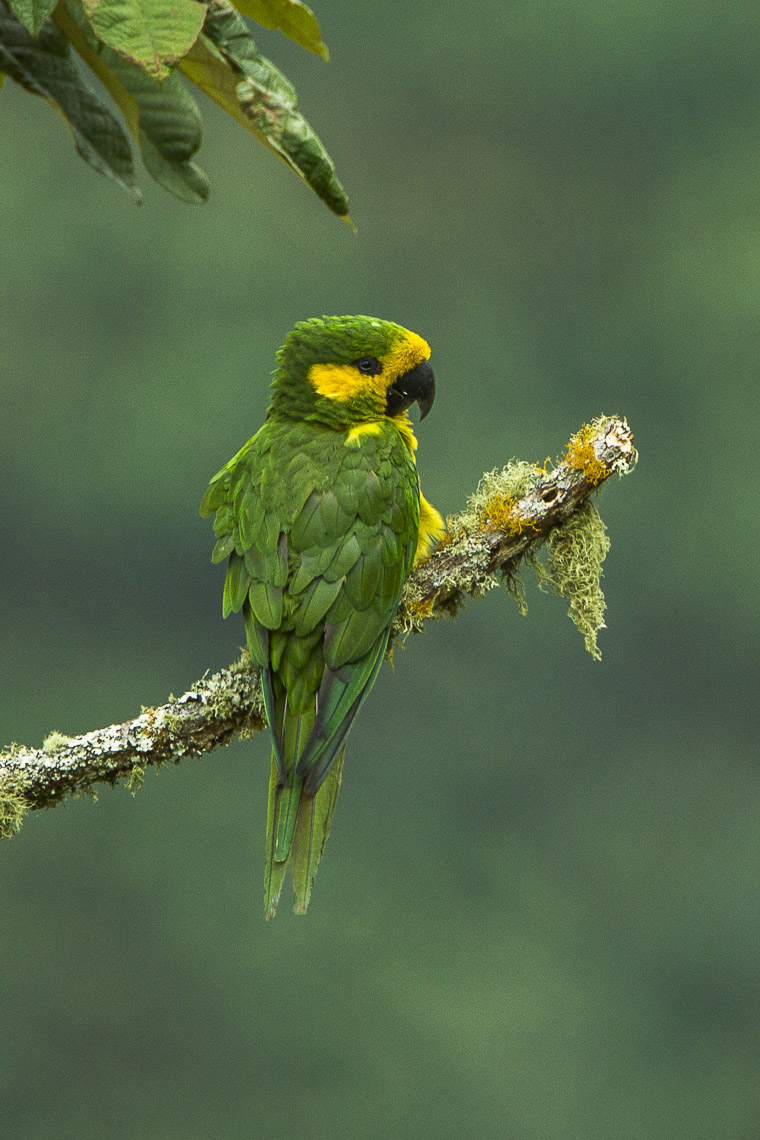
Adult Yellow-eared Parrots are large, robust birds with a predominantly green plumage that provides excellent camouflage in their forest habitats. The most distinctive feature is the bright yellow patch located just behind each eye, which contrasts sharply with the surrounding green feathers. The underparts of the bird are lighter green, while the wings and tail exhibit darker hues. Juveniles, while similar in appearance, tend to have a duller yellow marking and more muted overall coloration. There is little sexual dimorphism in this species; both males and females appear similar in plumage, making it challenging to distinguish between the sexes in the field. In flight, the Yellow-eared Parrot displays a characteristic silhouette, with broad wings and a long, graduated tail. These features, combined with its large size, help differentiate it from other sympatric parrot species, such as the smaller and more uniformly colored Blue-winged Parrotlet. When perched, the parrot maintains an upright posture and frequently engages in social preening, strengthening the bonds within its flock.
Having trouble telling birds apart? Upload a photo to our bird identification tool for an instant species match.
Yellow-eared Parrot Habitat and Range
Preferred Habitat
The Yellow-eared Parrot inhabits montane cloud forests, primarily between elevations of 1,800 and 3,000 meters. These forests, characterized by high humidity and frequent cloud cover, provide the ideal conditions for the wax palms essential to the parrot's survival. The parrot shows a marked preference for areas with dense stands of these palms, which offer both food and nesting sites. There is limited evidence of the species adapting to altered landscapes, although small populations have been observed in secondary forests. Seasonal habitat shifts are minimal, as the parrot remains within the montane forests year-round, only moving locally in response to food availability.
Geographic Range
The Yellow-eared Parrot's current range is restricted to a few isolated regions in Colombia's Andes, notably in the Central and Western mountain ranges. Historically, its range extended into Ecuador, but there have been no recent confirmed sightings there. The parrot is non-migratory, with populations remaining within their home range throughout the year. The largest population densities are found in areas where conservation efforts have been most concentrated, such as the municipalities of Jardin and Roncesvalles. These areas serve as critical strongholds for the species, where coordinated habitat restoration and protection measures are in place.
Want to know which birds visit your area? Browse our backyard birds by location guides for region-specific species lists.
What Does the Yellow-eared Parrot Eat?
The Yellow-eared Parrot's diet consists primarily of wax palm fruits, which provide both sustenance and hydration. Seasonally, the parrot supplements its diet with seeds, flowers, and occasionally small insects. The parrots exhibit a unique foraging technique, often hanging upside down from branches to access food that might otherwise be out of reach. They typically feed in the early morning and late afternoon, spending the hotter parts of the day resting in the canopy. This feeding schedule aligns with the availability of ripe palm fruits, which are a staple throughout the year. During periods of scarcity, the parrot may travel further afield in search of alternative food sources, although they remain largely dependent on the palms.
Yellow-eared Parrot Behavior and Social Structure
Yellow-eared Parrots are social creatures that exhibit complex social structures within their flocks. Outside of the breeding season, they form large, gregarious groups that can number over a hundred individuals. Within these flocks, parrots maintain strong social bonds, often observed engaging in mutual preening and synchronized vocalizations. The parrot's territorial behavior becomes more pronounced during the breeding season, with pairs defending their nesting sites from intruders. Courtship displays are elaborate, involving acrobatic flight patterns and vocal exchanges between partners. Flocking patterns shift seasonally, with smaller groups breaking off during the breeding season to establish breeding territories. When threatened by predators, such as hawks or owls, these parrots emit loud alarm calls that alert the flock to the danger, often resulting in a coordinated evasive flight. Daily activity patterns are diurnal, with the parrots most active during the cooler parts of the day.
Yellow-eared Parrot Nesting and Reproduction
Yellow-eared Parrots nest primarily in the cavities of wax palms, which provide a safe and stable environment for raising their young. These palms, with their tall, sturdy trunks, are ideal for cavity excavation, a task typically undertaken by the male. Nests are lined with soft materials such as feathers and plant matter to cushion the eggs. A typical clutch consists of two to three eggs, which the female incubates for approximately 26 days. During this period, the male plays a crucial role in provisioning food for the female. After hatching, both parents are actively involved in feeding and nurturing the chicks. Fledging occurs around 60 days post-hatching, although young parrots often remain with their parents for extended periods to learn essential survival skills. The species generally raises one brood per year, with a breeding season that aligns with the peak fruiting period of the wax palms.
Yellow-eared Parrot Sounds and Vocalizations
The Yellow-eared Parrot's vocalizations are distinct and varied, serving as an important communication tool within its social structure. Its primary song consists of a series of harsh, metallic calls that can carry over long distances. These calls are often delivered in rapid succession, creating a cacophony that resonates through the forest. In addition to their song, the parrots use a variety of call notes to convey different messages, such as contact calls to locate flock members and alarm calls to warn of approaching predators. The rhythm and pitch of these calls can vary, providing nuanced means of communication. During the breeding season, pairs often engage in vocal duets, reinforcing their pair bond. The dawn chorus of the Yellow-eared Parrot is particularly notable, as it marks the beginning of their active foraging period and serves to establish territory within the flock.
Interesting Facts About the Yellow-eared Parrot
- 1The Yellow-eared Parrot can live up to 20 years in the wild, but its lifespan is closely tied to the availability of the wax palm.
- 2In 1999, the Yellow-eared Parrot population was estimated to be as low as 81 individuals, highlighting the urgency of conservation efforts.
- 3The parrot's strong beak is adapted to crack open hard palm fruits, a crucial adaptation for its survival.
- 4Yellow-eared Parrots are one of the few parrot species that form strong lifelong pair bonds, often observed preening each other.
- 5The species has become a flagship for conservation in Colombia, symbolizing the importance of preserving the country's unique ecosystems.
- 6Despite their critical status, Yellow-eared Parrots are rarely kept in captivity due to their specialized habitat and dietary needs.
- 7The parrot's striking yellow ear patches are not just for show, as they play a role in social signaling within flocks.
Yellow-eared Parrot Conservation Status
The Yellow-eared Parrot is currently listed as Critically Endangered by the IUCN, with population numbers showing a precarious trend. The primary threats to its survival include habitat loss due to agriculture, logging, and palm harvesting. Conservation efforts have focused on habitat restoration and protection, particularly the reestablishment of wax palm populations. Successful initiatives have increased awareness and engagement among local communities, leading to collaborative conservation strategies. Historically, the parrot's population experienced severe declines, but recent efforts have halted this trend in key areas, offering hope for recovery. Ongoing monitoring and conservation actions remain vital to safeguard the future of this iconic species.
Other Psittacidae Species


Birds Similar to the Yellow-eared Parrot
These species are often confused with the Yellow-eared Parrot due to similar appearance or overlapping range.

