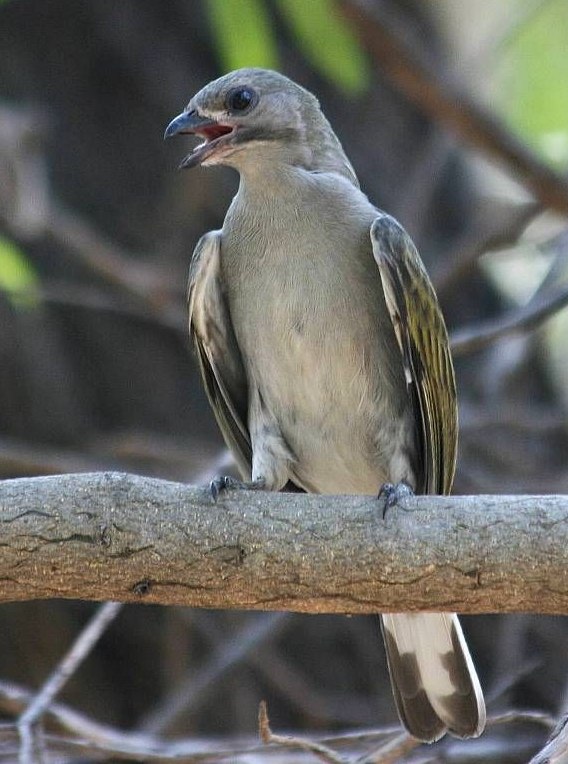
Yellow-footed Honeyguide
Melignomon eisentrauti
Order: Piciformes / Family: Indicatoridae

Wikimedia Commons
About the Yellow-footed Honeyguide
The Yellow-footed Honeyguide, scientifically known as Melignomon eisentrauti, is a fascinating bird belonging to the Indicatoridae family. This bird is primarily found in the dense forests of West-Central Africa, including regions in Cameroon, Gabon, and the Republic of Congo. Its habitat spans across lowland tropical rainforests, where the high humidity and dense foliage provide an ideal environment. The Yellow-footed Honeyguide plays a unique ecological role as a brood parasite, laying its eggs in the nests of other bird species. This behavior is critical for its survival, as it allows the species to focus on finding food without the demands of rearing its young.
This bird is an indicator of healthy forest ecosystems, given its reliance on the presence of bees and their hives for food. Its diet primarily consists of beeswax and honey, which it skillfully extracts from hives with its robust bill. During the breeding season, the Yellow-footed Honeyguide's foraging behavior becomes more pronounced as it seeks out additional resources to support its reproductive needs. The bird is most active in the early morning and late afternoon when it forages energetically through the forest canopy.
The Yellow-footed Honeyguide's presence in a region can signify a well-balanced ecosystem, as it requires a diverse array of other bird species to act as hosts for its eggs. Conservation of its habitat is vital, as deforestation and habitat fragmentation pose significant threats to its survival. The bird's ecological significance extends beyond its unique reproductive strategy; it also contributes to the pollination of various plant species indirectly through its interactions with bees. Seasonal changes in the forest, such as flowering and fruiting cycles, influence the availability of resources for the Yellow-footed Honeyguide, prompting shifts in its activity and distribution within its habitat.
The Yellow-footed Honeyguide belongs to the family Indicatoridae, within the order Piciformes. These birds typically live typically lives 4-6 years, with some individuals reaching up to 8 years..
How to Identify a Yellow-footed Honeyguide
The Yellow-footed Honeyguide is distinguished by its medium size and distinctive coloration. Adult birds showcase a subtle yet striking appearance with olive-green upperparts and a contrasting lighter underbelly. The most notable feature is its bright yellow legs and feet, which provide a key identification mark in the field. These yellow extremities are not only unique but also serve as a quick visual cue for birders.
Juveniles differ slightly in plumage, exhibiting a more muted version of the adults' coloration, with the yellow on the legs less pronounced until maturity. Both sexes are similar in appearance, though males tend to have slightly more vibrant coloration, particularly during the breeding season. In terms of flight, the Yellow-footed Honeyguide exhibits a steady, direct flight pattern, often seen darting through the canopy in search of food.
The bird's perching posture is typically upright and alert, making it easier to spot despite its forested habitat. It is often confused with similar species within the Indicatoridae family due to overlapping territories and shared ecological niches. However, its distinctive yellow legs and preference for dense forest settings help differentiate it from its relatives.
Having trouble telling birds apart? Upload a photo to our bird identification tool for an instant species match.
Yellow-footed Honeyguide Habitat and Range
Preferred Habitat
The Yellow-footed Honeyguide inhabits the lush, dense forests of West and Central Africa. These tropical rainforests provide the high humidity and abundant resources necessary for the bird's survival. The species thrives in lowland forests, often at elevations ranging from sea level to about 1,500 meters.
Within these forests, the Yellow-footed Honeyguide favors areas rich in flowering plants and bee activity, as these are critical components of its diet. It does not typically venture into urban or heavily disturbed areas, preferring the seclusion of the forest canopy and understory. Seasonal habitat shifts occur in response to the availability of food resources, particularly during the flowering and fruiting seasons when bee activity is at its peak.
The bird's presence is primarily rural, as it requires large, contiguous tracts of forest to support its ecological needs. Conservation of these habitats is crucial, as deforestation poses one of the biggest threats to its continued existence.
Geographic Range
The Yellow-footed Honeyguide's range is primarily confined to the forests of West and Central Africa. It is found in countries such as Cameroon, Gabon, and the Republic of Congo. These regions provide the dense forest habitats that the species relies on for breeding and foraging.
The bird's range does not extend into northern or southern Africa, as it avoids arid and semi-arid regions, preferring the moist, tropical climates of its central African range. The Yellow-footed Honeyguide is a resident species, meaning it does not undertake long migrations. Instead, it may perform local movements within its range in response to seasonal changes in food availability and habitat conditions.
Population density hotspots are typically located in areas with high bee activity and minimal human disturbance, such as protected reserves and national parks within its range. These areas support the highest known concentrations of the Yellow-footed Honeyguide, making them critical for conservation efforts.
Want to know which birds visit your area? Browse our backyard birds by location guides for region-specific species lists.
What Does the Yellow-footed Honeyguide Eat?
The Yellow-footed Honeyguide has a specialized diet that primarily consists of beeswax and honey. It is one of the few bird species that can digest beeswax, a trait that defines its ecological niche. The bird uses its strong bill to extract honey and wax from bee nests, often following bee colonies to locate their hives.
In addition to beeswax and honey, the Yellow-footed Honeyguide also consumes insects and larvae found in and around the hives. This supplemental diet provides additional protein, particularly during the breeding season. Seasonal changes in the availability of flowering plants can influence bee activity, indirectly affecting the honeyguide’s food supply.
The bird employs a foraging technique that involves both visual and auditory cues to locate active hives. It is most active during early morning and late afternoon when bee activity is highest. This timing allows the honeyguide to maximize its foraging efficiency while avoiding the hottest parts of the day.
Yellow-footed Honeyguide Behavior and Social Structure
The Yellow-footed Honeyguide exhibits fascinating behavioral traits, particularly its brood parasitism. Unlike most birds, it does not build its own nest. Instead, it lays its eggs in the nests of other bird species, relying on them to incubate and rear its young. This unique reproductive strategy allows the honeyguide to invest more time in foraging and less in parental care.
Socially, the Yellow-footed Honeyguide is generally solitary, although it may be seen in loose associations with other honeyguides or bird species when foraging. Territorial behavior is minimal, as the species primarily focuses on resource availability rather than defending a specific territory.
During the breeding season, the bird's behavior becomes more secretive and elusive, as it strategically selects host nests for its eggs. The Yellow-footed Honeyguide is diurnal, with peak activity occurring in the early mornings and late afternoons. It responds to predators primarily through evasive flight, relying on its familiarity with the forest canopy to escape threats.
Yellow-footed Honeyguide Nesting and Reproduction
As a brood parasite, the Yellow-footed Honeyguide does not construct its own nest. Instead, it lays eggs in the nests of other bird species, which then incubate and rear the young honeyguides. This strategy allows the honeyguide to allocate more energy to foraging and survival.
The choice of host species is crucial for the success of the honeyguide's reproductive strategy. It typically selects small passerines with similar nesting timelines to ensure the young honeyguides are reared successfully. Clutch size generally consists of one egg to avoid detection and rejection by the host species.
The incubation period aligns with that of the host species, varying slightly depending on the specific bird chosen as a host. Once the young honeyguides hatch, they often exhibit aggressive behaviors, ensuring they receive the majority of the food provided by the host. The fledging timeline is synchronized with that of the host's own young, ensuring the honeyguides leave the nest at an optimal time.
Yellow-footed Honeyguide Sounds and Vocalizations
The Yellow-footed Honeyguide's vocalizations are subtle yet distinctive. Its primary song consists of a series of soft, melodious whistles, with a rhythmic and repetitive quality that echoes through the forest canopy. This song is most often heard during the early morning hours, coinciding with peak foraging times.
In addition to its song, the bird produces a variety of call notes, including short, sharp chips used for communication with conspecifics. Alarm calls are less frequent, but when given, they are harsh and abrupt, serving to alert other birds of potential threats.
The honeyguide's vocal repertoire plays a key role in its interactions with other birds, particularly during the breeding season when locating and selecting host nests is critical. Its calls and songs blend harmoniously with the forest soundscape, adding to the auditory richness of its habitat.
Interesting Facts About the Yellow-footed Honeyguide
- 1The Yellow-footed Honeyguide is one of the few bird species that can digest beeswax, allowing it to thrive on a diet that most birds cannot utilize.
- 2This honeyguide species engages in brood parasitism, laying its eggs in the nests of other birds, a behavior shared with only a few bird families worldwide.
- 3Yellow-footed Honeyguides have a unique relationship with bees, often following them to locate their hives for food, yet they are not aggressive towards the bees themselves.
- 4Despite their specialized diet, Yellow-footed Honeyguides are capable of consuming a wide range of insects, showcasing their adaptability within their niche.
- 5These birds are integral to forest ecosystems, as their presence indicates healthy bee populations and well-preserved habitats, critical for biodiversity.
Yellow-footed Honeyguide Conservation Status
The Yellow-footed Honeyguide is currently classified as Least Concern by the IUCN, though its population trends warrant attention. Habitat loss due to deforestation and land conversion for agriculture poses significant threats to the species. The bird's reliance on intact forest ecosystems makes it vulnerable to habitat fragmentation and degradation. Conservation efforts focus on preserving large tracts of forest habitat, particularly in protected areas where bee populations are healthy. Initiatives aimed at sustainable forestry practices and community engagement in conservation can help mitigate the impacts of habitat loss. Historically, the Yellow-footed Honeyguide has maintained stable population numbers, but ongoing environmental pressures necessitate continued monitoring and conservation action. Protecting its habitat ensures the survival of this unique brood parasite and the myriad species it interacts with.