
Yellow-shouldered Parrot
Amazona barbadensis
Order: Psittaciformes / Family: Psittacidae
Wikimedia Commons
About the Yellow-shouldered Parrot
The Yellow-shouldered Parrot (Amazona barbadensis) is a striking member of the Psittacidae family, notable for its vibrant plumage and engaging behaviors. This parrot primarily inhabits the arid coastal regions of northern Venezuela, including Margarita Island, and the islands of the Netherlands Antilles. It plays a crucial role in its ecosystem by aiding in seed dispersal, thanks to its fruit-heavy diet. The parrot's presence is vital in maintaining the balance of the local flora. Seasonal behaviors include a relatively sedentary lifestyle with slight movements dictated by food availability. The Yellow-shouldered Parrot is of particular interest due to its limited range and the ecological pressures it faces, such as habitat destruction and illegal pet trade. Conservation programs have been implemented to protect this species, reflecting its ecological significance and the need for sustainable interaction with its habitat.
The Yellow-shouldered Parrot belongs to the family Psittacidae, within the order Psittaciformes. These birds typically live average 20-30 years, with some individuals reaching 50 years in captivity..
How to Identify a Yellow-shouldered Parrot
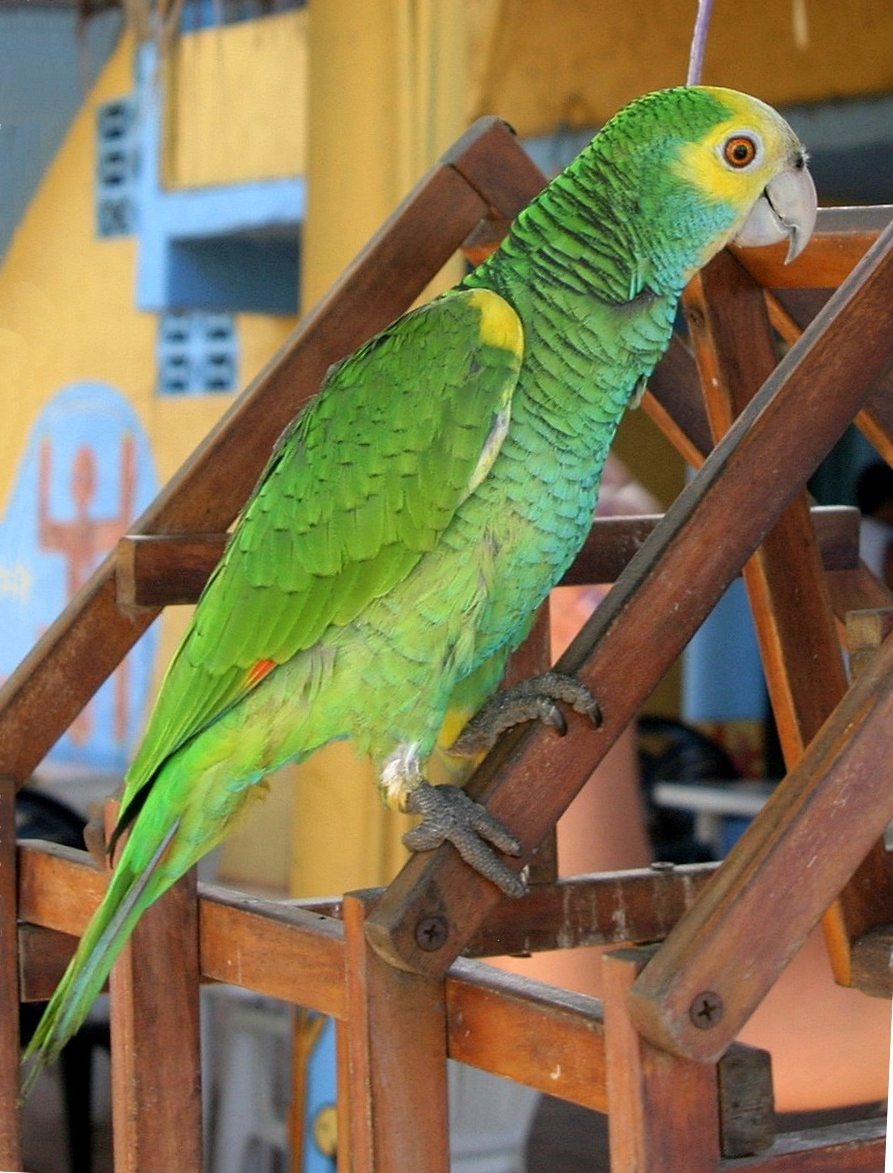
Adult Yellow-shouldered Parrots exhibit a distinctive combination of green plumage and yellow patches on their shoulders, a feature that distinguishes them from other parrots in their range. The head is a lighter, more muted green, often with a hint of yellow around the cheeks. Juveniles resemble adults but have less pronounced yellow markings, which develop as they mature. Males and females are visually similar, making sex determination challenging without behavioral observation. In flight, their broad wings and short tail create a compact silhouette, while perched, they maintain an upright posture with a noticeable, curved bill. This species can sometimes be confused with the Yellow-headed Amazon, but the latter has a more extensive yellow coverage on the head.
Having trouble telling birds apart? Upload a photo to our bird identification tool for an instant species match.
Yellow-shouldered Parrot Habitat and Range
Preferred Habitat
The Yellow-shouldered Parrot thrives in arid, coastal regions, often among thorn scrub and dry deciduous forests. These habitats provide the necessary resources for nesting and foraging. Typically found at low elevations, they may venture into nearby agricultural lands. While the species primarily resides in rural areas, it occasionally adapts to urban environments where suitable nesting sites are available. Seasonal shifts in habitat are minimal, primarily driven by food resource distribution rather than temperature changes.
Geographic Range
The breeding range of the Yellow-shouldered Parrot is limited to northeastern Venezuela, including Margarita Island, and the smaller neighboring islands. The species does not migrate, maintaining a year-round presence in these areas. Population density hotspots include the coastal regions of Venezuela, where the climate and habitat conditions support their lifestyle. Despite their limited range, certain islands like La Blanquilla and Bonaire host significant populations.
Want to know which birds visit your area? Browse our backyard birds by location guides for region-specific species lists.
What Does the Yellow-shouldered Parrot Eat?
The Yellow-shouldered Parrot's diet predominantly consists of fruits, seeds, and nuts, with a preference for those from native trees and shrubs. Seasonal variations affect their diet, as they adapt to the availability of different fruits and seeds throughout the year. Foraging usually occurs in the early morning or late afternoon when temperatures are cooler. This species employs a methodical approach to foraging, using its strong bill to crack open hard seeds and access nutritious kernels.
Yellow-shouldered Parrot Behavior and Social Structure
Yellow-shouldered Parrots exhibit social behavior, often seen in small flocks outside the breeding season. They display territorial behavior, especially during breeding periods, with pairs defending their nesting sites from intruders. Courtship involves elaborate vocal exchanges and mutual preening. The species is diurnal, with peak activity periods during cooler parts of the day. When threatened by predators, they rely on their agility and communal alertness to evade danger.
Yellow-shouldered Parrot Nesting and Reproduction
The nesting habits of the Yellow-shouldered Parrot involve selecting cavities in trees or cliffs. Preferred nest sites are often reused over multiple seasons. A typical clutch comprises three to four eggs, with an incubation period of about 28 days. Both parents participate in feeding the chicks, which fledge approximately eight weeks after hatching. The Yellow-shouldered Parrot usually raises one brood per year, though favorable conditions may yield a second.
Yellow-shouldered Parrot Sounds and Vocalizations
The Yellow-shouldered Parrot's vocalizations include a series of sharp, repeated squawks and chattering calls. Its primary song features a rhythmic pattern of high-pitched notes. Alarm calls are harsher and more urgent, serving as an alert to nearby flock members. During dawn and dusk, their calls become more frequent and can be heard across distances, adding a lively aspect to their habitat.
Interesting Facts About the Yellow-shouldered Parrot
- 1The Yellow-shouldered Parrot can live up to 50 years in the wild, showcasing its longevity.
- 2This parrot's strong, curved beak allows it to crack open even the toughest seeds.
- 3Despite its limited range, the Yellow-shouldered Parrot is an important seed disperser.
- 4Flocks of Yellow-shouldered Parrots can number up to 30 individuals in non-breeding seasons.
- 5The species' vibrant yellow shoulder patches are not just for show; they play a role in mate selection.
- 6The Yellow-shouldered Parrot's adaptability to urban environments highlights its resilience.
- 7Habitat protection on Margarita Island has become a focal point for conservation efforts.
Yellow-shouldered Parrot Conservation Status
The Yellow-shouldered Parrot is currently classified as vulnerable by the IUCN. The population is decreasing, largely due to habitat loss and illegal trapping for the pet trade. Conservation efforts include habitat protection and legal measures to curb the illegal trade. Historically, the population has faced significant declines, prompting increased awareness and protection measures.


