
Zoe Imperial-Pigeon
Ducula zoeae
Order: Columbiformes / Family: Columbidae
Wikimedia Commons
About the Zoe Imperial-Pigeon
The Zoe Imperial-Pigeon, Ducula zoeae, is a remarkable bird native to the lush tropical forests of New Guinea and nearby islands. As a member of the Columbidae family, it plays a crucial role in seed dispersal, significantly contributing to the health and regeneration of its forest habitat. This pigeon is notable for its large size, measuring up to 42 cm in length, and its vibrant plumage, which features a mix of greens, grays, and subtle purples. The Zoe Imperial-Pigeon is primarily found in lowland rainforests, although it occasionally ventures into montane forests at elevations up to 1500 meters. Its presence in these ecosystems highlights its adaptability and its importance in maintaining forest dynamics. The species is of significant ecological importance due to its seed-dispersing habits. By feeding on a variety of fruits, the Zoe Imperial-Pigeon facilitates the spread of plant species, thus ensuring the continuity of its habitat. In terms of behavior, the Zoe Imperial-Pigeon is a relatively quiet bird, often seen alone or in small groups. It exhibits seasonal movements within its range, likely in response to food availability. This bird's subtlety in movement and feeding habits underscores its integral role in the delicate balance of tropical forest ecosystems. Despite its vital ecological role, the Zoe Imperial-Pigeon faces challenges from habitat loss and fragmentation, primarily due to logging and agricultural expansion. Conservation efforts are essential to ensure the survival of this species and the health of the ecosystems it supports.
The Zoe Imperial-Pigeon belongs to the family Columbidae, within the order Columbiformes. These birds typically live average 10-12 years with a max recorded of 14 years..
How to Identify a Zoe Imperial-Pigeon
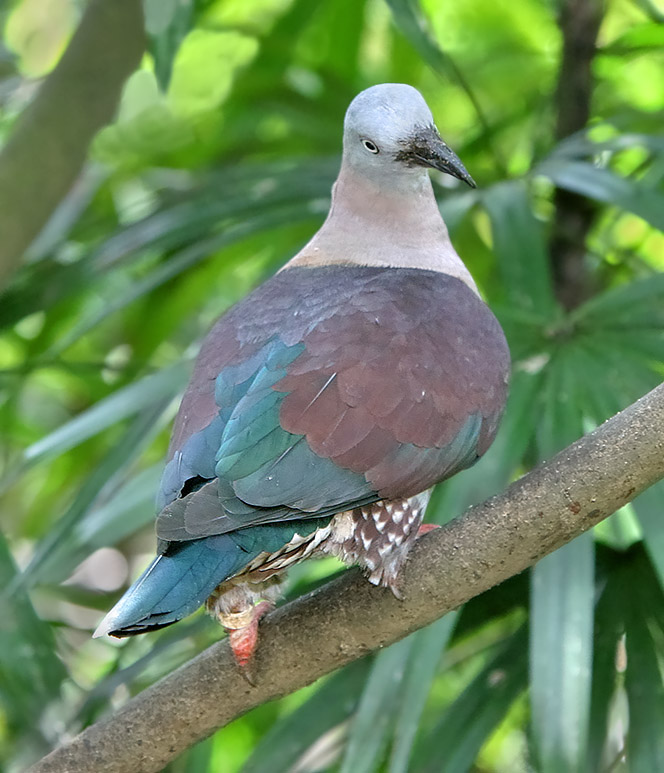
The Zoe Imperial-Pigeon is a large bird, readily identifiable by its robust size and striking plumage. Adults feature a glossy green back with a slight iridescent quality, transitioning to a more subdued gray on the underparts. The head is a pale gray, providing a subtle contrast to the darker body. Males and females exhibit similar plumage, making gender differentiation in the field challenging. Juvenile birds, however, can be distinguished by their duller coloration and lack of sheen. When perched, the Zoe Imperial-Pigeon maintains an upright posture, often remaining still for extended periods as it surveys its surroundings. In flight, its broad wings and short tail create a distinctive silhouette, characterized by slow, deliberate wingbeats. This species is occasionally confused with other large pigeons in its range, such as the Pinon Imperial-Pigeon, but careful observation of the Zoe's unique plumage and size can aid in accurate identification.
Having trouble telling birds apart? Upload a photo to our bird identification tool for an instant species match.
Zoe Imperial-Pigeon Habitat and Range
Preferred Habitat
The Zoe Imperial-Pigeon primarily inhabits lowland rainforests, thriving in dense, humid environments that provide ample food resources. It is often found at elevations ranging from sea level to about 1500 meters, although it shows a preference for flat or gently sloping terrain. Seasonal movements may lead the pigeon to higher altitudes in search of fruiting trees. While it predominantly resides in rural forested areas, occasional sightings occur near forest edges and secondary growth, demonstrating some degree of adaptability to habitat changes. However, it avoids urban areas where suitable habitats are scarce.
Geographic Range
The Zoe Imperial-Pigeon is endemic to New Guinea, including both the Indonesian and Papua New Guinea territories. Its range extends to several nearby islands, such as the Bismarck Archipelago and the Louisiade Archipelago. The species does not undertake long-distance migrations but may exhibit local movements within its range in response to fruit availability. Populations are most dense in the expansive lowland forests of New Guinea, where food resources are abundant, and human disturbance is minimal. Monitoring efforts continue to assess population stability across its range.
Want to know which birds visit your area? Browse our backyard birds by location guides for region-specific species lists.
What Does the Zoe Imperial-Pigeon Eat?
The diet of the Zoe Imperial-Pigeon primarily consists of fruits, with a strong preference for figs, which are abundant in its habitat. It also consumes berries and occasionally small invertebrates, supplementing its diet with a variety of seeds. The bird exhibits a methodical foraging technique, often plucking fruit directly from branches while perched. Seasonal variations in fruit availability prompt shifts in diet composition, with the pigeon adjusting its foraging behavior to capitalize on abundant resources. Feeding typically occurs in the early morning and late afternoon, coinciding with peak fruit ripening times.
Zoe Imperial-Pigeon Behavior and Social Structure
The Zoe Imperial-Pigeon is generally solitary or found in small family groups, rarely forming large flocks. It exhibits a strong territorial instinct, with individuals often defending fruiting trees from rival pigeons. During courtship, males perform subtle displays, such as bowing and cooing, to attract females. The species shows a moderate level of vocalization, with soft coos and calls primarily used during mating seasons. The pigeon is diurnal, actively foraging and interacting during daylight hours, and seeking refuge in the forest canopy at night. Its calm demeanor belies a keen awareness of predators, with quick, direct flights utilized to escape threats.
Zoe Imperial-Pigeon Nesting and Reproduction
Zoe Imperial-Pigeons build simple platform nests, constructed from twigs and leaves, typically situated high in the forest canopy to avoid ground-based predators. Preferred nesting sites include the sturdy forks of tall trees, which provide stability and concealment. The female lays a single white egg per breeding cycle, ensuring focused parental care. Both parents share incubation duties over approximately 28 days, followed by cooperative feeding and care of the chick. The fledging period lasts about 35 days, during which the young bird develops flight capabilities and independence. Generally, the species raises one brood per year, aligning reproductive efforts with peak fruiting seasons to ensure ample food supply.
Zoe Imperial-Pigeon Sounds and Vocalizations
The vocalizations of the Zoe Imperial-Pigeon include a series of soft, low-pitched coos that serve as communication between mates and territorial signals to other pigeons. Its primary song consists of a rhythmic sequence of cooing notes, often delivered at dawn and dusk. Alarm calls are higher-pitched and more staccato, alerting conspecifics to potential threats. The pigeon’s subtle vocal presence blends harmoniously with the forest soundscape, making it an auditory hallmark of its habitat. Compared to other pigeons, its calls are relatively understated yet distinctive to those familiar with the species.
Interesting Facts About the Zoe Imperial-Pigeon
- 1The Zoe Imperial-Pigeon can consume fruits nearly as large as its own head, thanks to its strong bill and expandable throat.
- 2This species is named after the wife of French ornithologist Jules Verreaux, reflecting its historical discovery.
- 3Zoe Imperial-Pigeons are vital for maintaining forest biodiversity, dispersing seeds over vast areas as they travel.
- 4Despite their size, these pigeons are remarkably agile, able to maneuver through dense foliage with ease.
- 5Their distinctive green plumage provides excellent camouflage among the canopy leaves, aiding in predator evasion.
- 6The Zoe Imperial-Pigeon has a relatively long lifespan for a wild bird, often living over 10 years in its natural habitat.
Zoe Imperial-Pigeon Conservation Status
The Zoe Imperial-Pigeon is currently listed as Least Concern by the IUCN, with populations deemed stable. However, habitat destruction and fragmentation pose ongoing threats. Logging, agriculture, and infrastructure development contribute to habitat loss, necessitating targeted conservation measures. Efforts to protect key forest areas and promote sustainable land use practices are crucial to ensure the long-term survival of the species. While historical data indicate some population resilience, continued monitoring is essential to detect and mitigate potential declines.


