
Aglaiocercus kingii
Aglaiocercus kingii
Order: Apodiformes / Family: Trochilidae
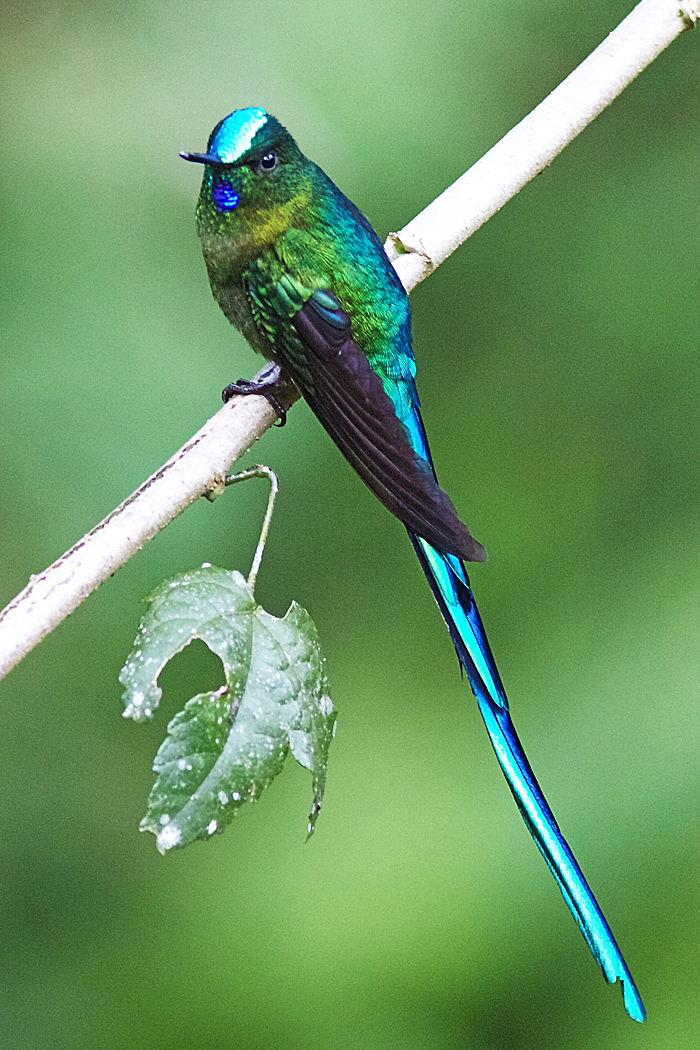
Wikimedia Commons
About the Aglaiocercus kingii
The Long-tailed Sylph, scientifically known as Aglaiocercus kingii, is a captivating species of hummingbird renowned for its striking appearance and agile flight. Residing predominantly in the Andean regions of South America, this bird is an emblem of the high-altitude cloud forests. Its presence contributes significantly to the biodiversity and ecological balance of these montane ecosystems. As a member of the Trochilidae family, it plays a crucial role in pollination, aiding the reproduction of various flowering plant species endemic to its habitat.
Found at elevations ranging from 1,500 to 3,500 meters, the Long-tailed Sylph is a common sight in countries such as Colombia, Venezuela, Ecuador, and Peru. The dense, humid forests and edges of these regions provide the perfect backdrop for its acrobatic foraging displays. Seasonally, the sylph may venture slightly lower in elevation during colder months, but it largely remains a resident species, exhibiting limited migratory behavior.
The ecological importance of the Long-tailed Sylph extends beyond its pollination duties. As it navigates the forest canopy and understory, it helps control insect populations, maintaining a delicate balance within its ecosystem. Despite its vital ecological roles, the Long-tailed Sylph faces threats from habitat loss due to deforestation and land use changes. Conservation efforts focused on preserving cloud forests are essential for ensuring the survival of this and many other species that depend on these unique habitats.
The Aglaiocercus kingii's ability to thrive in diverse montane forest environments underscores the importance of conserving these ecosystems. Protecting the sylph's habitat not only safeguards a visually stunning species but also supports the broader ecological networks that rely on these vibrant forests. By preserving its natural habitat, we are, in effect, conserving an entire ecosystem that caters to a multitude of flora and fauna, ensuring biodiversity continues to flourish in the Andes.
The Aglaiocercus kingii belongs to the family Trochilidae, within the order Apodiformes. These birds typically live average 4-6 years with a maximum recorded lifespan of 8 years..
How to Identify a Aglaiocercus kingii
The Long-tailed Sylph is a medium-sized hummingbird, characterized by its vivid iridescent plumage and exceptionally long tail. Males exhibit a striking blue-green head and throat, complemented by a glittering emerald body. Their most distinctive feature is the elongated tail feathers, which can measure up to twice the length of their body, tapering into a striking blue hue. In contrast, females are slightly more subdued, with a shorter tail and predominantly green plumage, distinguished by a white throat patch.
Juvenile Long-tailed Sylphs resemble the female but may lack the fully developed iridescence seen in adults. The visual distinction between male and female sylphs is pronounced, allowing for easy field identification. When perched, the male's lengthy tail feathers often dangle gracefully below the branch, whereas the female's tail is more compact.
Although similar in appearance to other sylph species, the Long-tailed Sylph's distinct tail length and coloration set it apart. Its flight silhouette is unmistakable, with rapid wing beats and a streamlined body accentuated by a trailing tail. These features, coupled with its vibrant plumage, make it a standout among hummingbirds.
Having trouble telling birds apart? Upload a photo to our bird identification tool for an instant species match.
Aglaiocercus kingii Habitat and Range
Preferred Habitat
The Long-tailed Sylph predominantly inhabits high-altitude cloud forests, thriving in the humid, dense foliage characteristic of these environments. Found at elevations between 1,500 and 3,500 meters, it prefers the verdant ecosystems of the Andes, notably within Colombia, Venezuela, Ecuador, and Peru. These birds are often located near forest edges and clearings, where flowering plants are abundant.
Seasonal shifts in temperature may prompt the sylph to descend slightly in elevation, seeking warmer climates within its range, but it generally remains within montane forest zones year-round. Unlike some hummingbirds, the Long-tailed Sylph does not typically venture into urban areas, maintaining a strong affinity for undisturbed natural habitats.
Geographic Range
The Long-tailed Sylph's range stretches across the northern Andes, with a presence firmly established in Colombia, Venezuela, Ecuador, and Peru. It is a resident breeder across these regions, exhibiting little in the way of long-distance migration. The sylph thrives in the montane cloud forests that characterize the Andes, where it finds suitable conditions for breeding and feeding.
While the sylph occupies a relatively narrow elevational band, it is widespread within its preferred habitat, particularly in areas where flowering plants are plentiful. The bird's population density is highest in undisturbed forests, where its ecological needs are met in abundance.
Want to know which birds visit your area? Browse our backyard birds by location guides for region-specific species lists.
What Does the Aglaiocercus kingii Eat?
The diet of the Long-tailed Sylph primarily consists of nectar from a variety of flowering plants, which it accesses using its long, specialized bill. The sylph is adept at hovering in place while feeding, a behavior known as traplining, where it visits a circuit of flowers in a regular sequence. This feeding strategy allows it to efficiently exploit floral resources throughout its territory.
In addition to nectar, the sylph supplements its diet with small insects and spiders, which provide essential proteins and nutrients. These prey items are typically captured in flight, demonstrating the sylph's agility and precision. Seasonal variations in flower availability may lead to shifts in diet composition, with insects becoming more prominent during certain times of the year.
Aglaiocercus kingii Behavior and Social Structure
The Long-tailed Sylph displays a solitary and territorial demeanor, particularly during the breeding season. Males aggressively defend their feeding territories, using vocalizations and aerial displays to ward off intruders. These displays are not only a show of dominance but also a courtship behavior aimed at attracting females.
Courtship involves elaborate aerial maneuvers, where males showcase their iridescent plumage and tail length in flight. The sylph's response to predators includes high-speed evasive tactics and utilizing dense foliage for cover. Daily activities are centered around feeding, with peak activity occurring during the early morning and late afternoon.
Despite their territorial nature, Long-tailed Sylphs may occasionally be observed in loose associations around abundant food sources, where competition is outweighed by the availability of resources.
Aglaiocercus kingii Nesting and Reproduction
The Long-tailed Sylph constructs its nest in secluded locations, typically choosing the fork of a tree or bush within its forest habitat. The nest is a small cup-shaped structure, crafted from plant fibers, moss, and spider silk, providing both camouflage and flexibility. Females are solely responsible for nest construction.
A typical clutch consists of two white eggs, which the female incubates for approximately 16-19 days. During the incubation period, the male may continue to defend the territory but does not participate in nesting duties. Once hatched, the chicks are altricial, requiring significant parental care before fledging at around 20-24 days of age. The Long-tailed Sylph usually raises one to two broods per year, depending on environmental conditions and food availability.
Aglaiocercus kingii Sounds and Vocalizations
The vocal repertoire of the Long-tailed Sylph is somewhat limited compared to other hummingbirds. Its primary song consists of a series of high-pitched, metallic notes delivered in rapid succession, often described as a tinkling melody. These vocalizations serve both territorial and courtship functions.
In addition to its song, the sylph produces sharp call notes used for communication between individuals, particularly during aggressive encounters. Alarm calls, characterized by short, sharp chirps, are emitted in response to perceived threats, alerting nearby birds to potential danger.
Interesting Facts About the Aglaiocercus kingii
- 1The Long-tailed Sylph's tail length can exceed its body length by up to two times, making it uniquely adapted for display purposes.
- 2Despite its long tail, the Long-tailed Sylph is a master of maneuverability, capable of rapid aerial acrobatics.
- 3The iridescent plumage of the Long-tailed Sylph changes color depending on the angle of light, a feature common among hummingbirds.
- 4Long-tailed Sylphs are known to visit over 1000 flowers per day, showcasing their critical role in pollination.
- 5The Long-tailed Sylph plays a vital role in controlling insect populations, consuming numerous small arthropods daily.
- 6Their nests are often camouflaged with lichen and moss, blending seamlessly with their forest surroundings.
- 7The Long-tailed Sylph's habitat spans multiple countries, but its presence is confined to specific montane forest zones.
Aglaiocercus kingii Conservation Status
The Long-tailed Sylph is currently listed as Least Concern by the IUCN, reflecting a stable population across much of its range. However, ongoing threats such as habitat destruction and fragmentation due to agricultural expansion and logging pose risks to its habitats. Conservation efforts focus on preserving the cloud forests of the Andes, ensuring the protection of this and other species reliant on these ecosystems. Historically, the Long-tailed Sylph has shown resilience in adapting to certain habitat changes, yet continued vigilance is necessary to prevent future declines. Conservation initiatives aimed at sustainable land use and the establishment of protected areas are crucial for maintaining the ecological integrity of the sylph's habitat.
Other Trochilidae Species


Birds Similar to the Aglaiocercus kingii
These species are often confused with the Aglaiocercus kingii due to similar appearance or overlapping range.

