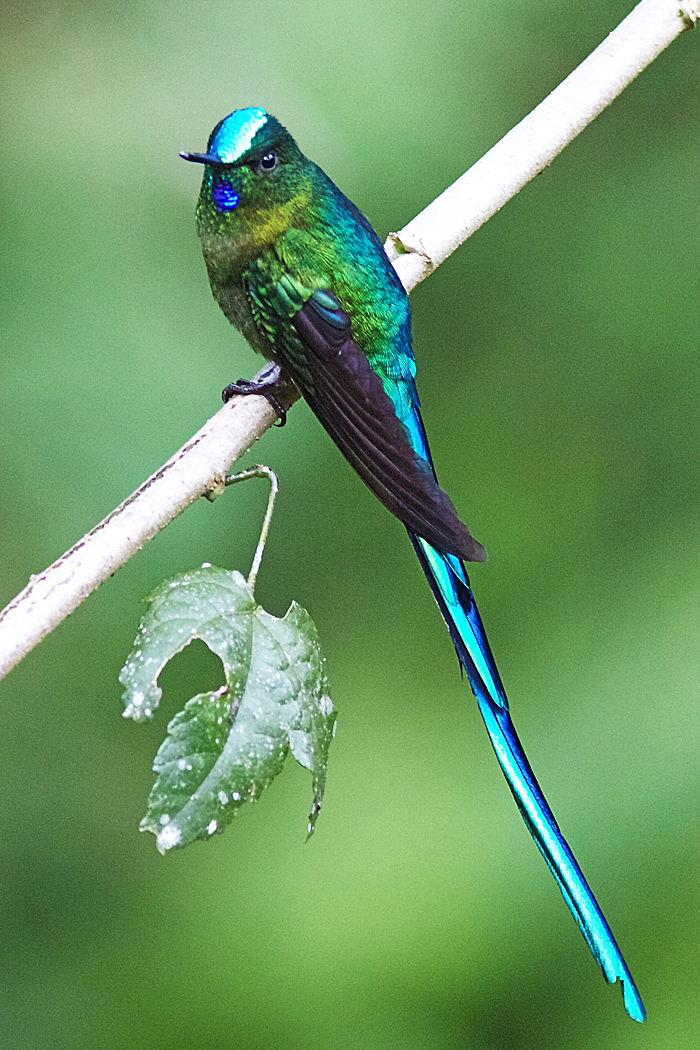
Venezuelan Sylph
Aglaiocercus berlepschi
Order: Apodiformes / Family: Trochilidae

Wikimedia Commons
About the Venezuelan Sylph
The Venezuelan Sylph, known scientifically as Aglaiocercus berlepschi, is a small yet dazzling hummingbird endemic to Venezuela. This species inhabits the montane cloud forests of the coastal mountain ranges, primarily within the Cordillera de la Costa. The sylph plays a vital role in its ecosystem as a pollinator, assisting in the reproduction of various plant species, many of which are endemic to these cloud forests. Its presence indicates a healthy ecosystem, thriving in environments where mist and high humidity support diverse flora.
The Venezuelan Sylph's significance extends beyond its ecological role. It is a symbol of the rich biodiversity found in Venezuela's unique forests. These birds are primarily found at elevations between 1,200 and 2,400 meters, where they contribute to the genetic diversity of the flora. They exhibit seasonal movements, often dictated by the availability of flowering plants, which influences their foraging patterns and territorial behavior.
During the breeding season, the sylphs become more territorial, seeking out areas abundant with nectar-rich flowers. Their ability to hover in mid-air while feeding on nectar is not only a marvel to observe but also a crucial behavior that facilitates cross-pollination. As seasonal changes affect the blooming of plants, these hummingbirds adjust their territories and foraging routes, ensuring they meet their energetic needs throughout the year.
The Venezuelan Sylph is a vital component of its native habitat, serving as both a pollinator and a subject of fascination for ornithologists and birdwatchers alike. Its presence in these cloud forests underscores the importance of conserving such habitats, which face threats from deforestation and climate change. The sylph's adaptability to seasonal changes highlights the intricate balance of the ecosystem it inhabits.
The Venezuelan Sylph belongs to the family Trochilidae, within the order Apodiformes. These birds typically live average 3-5 years with a maximum recorded lifespan of 7 years..
How to Identify a Venezuelan Sylph
The Venezuelan Sylph is distinguished by its vibrant iridescent plumage and long, slender tail feathers, which can be as long as the bird's body. Adult males feature a striking combination of metallic green and blue on the head and back, contrasted by a purplish-blue throat and chest. Their elongated tail feathers, which extend well beyond the rest of their body, end in spatula-like tips.
Female sylphs, while still beautiful, exhibit more subdued coloration compared to the males. They possess a green back with a paler underbelly, and their tail feathers are shorter and lack the spatula tips seen in males. Juveniles resemble females but have more muted colors, lacking the full iridescence of adult plumage.
In flight, the Venezuelan Sylph displays a silhouette characterized by rapid wing beats and a distinctive long tail that trails behind, often appearing as a blur due to its speed. When perched, the bird maintains an upright posture, often with the tail feathers drooping elegantly below the branch. Confusion with other species is minimal due to its unique tail features and color patterns.
Having trouble telling birds apart? Upload a photo to our bird identification tool for an instant species match.
Venezuelan Sylph Habitat and Range
Preferred Habitat
The Venezuelan Sylph predominantly inhabits montane cloud forests within Venezuela, particularly in the Cordillera de la Costa. These forests, blanketed in mist and high humidity, provide the ideal environment for the sylph, offering abundant flowering plants year-round. The sylph thrives at elevations ranging from 1,200 to 2,400 meters, where the flora is rich in nectar sources.
While primarily a forest dweller, the sylph occasionally ventures into adjacent edge habitats, where flower-rich clearings provide additional foraging opportunities. The species does not typically inhabit urban areas, preferring the dense, undisturbed forest environment.
Seasonal shifts in flowering plant availability due to climatic changes may prompt the sylph to adjust its habitat use slightly, but it remains largely tied to the cloud forest ecosystem throughout the year.
Geographic Range
The Venezuelan Sylph is endemic to Venezuela, with its range largely confined to the Cordillera de la Costa mountain range. This range spans from the coastal regions near the Caribbean Sea to the interior highlands, offering a variety of habitats within the montane cloud forests.
The sylph's distribution is highly localized due to its specific habitat requirements, and it does not undertake long-distance migrations. Instead, it engages in altitudinal movements within its range, following the seasonal availability of nectar sources. Population density hotspots are found in areas with abundant flowering plants, particularly in undisturbed forest tracts.
While the Venezuelan Sylph's range is limited, it is concentrated in regions that provide the necessary ecological conditions for its survival, making conservation efforts in these areas crucial to its continued existence.
Want to know which birds visit your area? Browse our backyard birds by location guides for region-specific species lists.
What Does the Venezuelan Sylph Eat?
The primary diet of the Venezuelan Sylph consists of nectar from a variety of flowering plants. It exhibits a preference for tubular flowers, which accommodate its specialized feeding apparatus. This hummingbird uses its long, slender bill to access nectar deep within flowers, playing a crucial role in pollination.
Seasonal changes in flower availability affect its diet, prompting shifts in foraging behavior. During times of nectar scarcity, the sylph may supplement its diet with small insects and spiders, which provide essential proteins and nutrients. These prey items are typically captured in mid-air or gleaned from foliage.
The sylph's foraging technique involves hovering efficiently in front of flowers using rapid wing beats, allowing precise feeding without disturbing the plant. It feeds primarily during daylight hours, with peaks in activity during the early morning and late afternoon when nectar levels are highest.
Want to attract Venezuelan Sylphs to your yard? See our recommended feeders and seed types for the best results.
Venezuelan Sylph Behavior and Social Structure
The Venezuelan Sylph exhibits a solitary lifestyle outside the breeding season, although it may be seen in loose aggregations where food sources are abundant. During the breeding season, males become territorial, defending flowering territories from rivals through aerial displays and vocalizations.
Courtship involves elaborate displays where males fan their tails and perform acrobatic flights to attract females. Once a pair forms, the male's role diminishes, while the female takes on the responsibilities of nest building and chick rearing.
These hummingbirds are active throughout the day, with peak activity during the cooler morning and late afternoon hours. Their rapid flight and agility allow them to evade predators effectively, while their cryptic coloration provides some camouflage when perched. The sylph remains vigilant against aerial predators like hawks and often retreats to dense foliage when threatened.
Venezuelan Sylph Nesting and Reproduction
The Venezuelan Sylph builds a small, cup-shaped nest made from plant down, spider silk, and lichen. These materials provide both insulation and camouflage, blending seamlessly into the forest environment. Nests are typically situated on slender branches or in forked tree limbs, often overhanging streams or ravines for added security.
Clutch size usually consists of two white eggs, which the female incubates alone for about 15-19 days. After hatching, she continues to care for the chicks, feeding them regurgitated nectar and insects. The fledging period lasts approximately 20-25 days, during which the female remains vigilant against potential threats.
The Venezuelan Sylph typically raises one, sometimes two, broods per year, depending on environmental conditions and food availability. The single-parent nesting strategy is common among hummingbirds, with the female solely responsible for the offspring's survival and development.
Venezuelan Sylph Sounds and Vocalizations
The Venezuelan Sylph produces a series of sharp, metallic notes that form its primary song. The rhythm is quick, with a melodic sequence that varies in pitch and tone. These vocalizations serve as both territorial markers and mating calls.
In addition to its song, the sylph emits short, rapid call notes that alert other birds to potential dangers or intrusions. These calls, often described as a high-pitched 'chip' or 'tsee,' are common during feeding and when the bird interacts with its peers.
During the dawn chorus, the sylph's vocalizations become more pronounced, blending with the sounds of the forest to create a vibrant auditory tapestry. Their calls are distinct yet harmonious with the ambient sounds of their natural habitat.
Interesting Facts About the Venezuelan Sylph
- 1The Venezuelan Sylph's tail feathers are so long that they can make up more than half of the bird's total length, creating a striking appearance in flight.
- 2Unlike many other hummingbirds, the Venezuelan Sylph exhibits sexual dimorphism, with males displaying more vivid colors and longer tails than females.
- 3The sylph's rapid wing beats help it hover in place while feeding, a behavior essential for pollinating flowers that are adapted specifically to hummingbirds.
- 4Despite its small size, the Venezuelan Sylph can travel significant distances within its range in search of nectar-rich flowers, demonstrating remarkable endurance.
- 5This species' courtship displays are elaborate, with males performing aerial maneuvers and showing off their iridescent plumage to attract mates.
- 6The sylph's long tail feathers are not just ornamental; they play a crucial role in its aerodynamic capabilities during flight.
- 7Venezuelan Sylphs contribute to the genetic diversity of plants in their habitat by cross-pollinating flowers, ensuring the continued survival of various plant species.
Venezuelan Sylph Conservation Status
Currently, the Venezuelan Sylph is classified as Near Threatened on the IUCN Red List, with its population trend showing signs of decline. The primary threats to its survival include habitat loss due to deforestation and land conversion for agriculture and urban development. Conservation efforts focus on protecting remaining forest tracts and promoting sustainable land-use practices. Historical population changes reflect the increasing pressures on its habitat, emphasizing the need for targeted conservation actions. Preservation of cloud forests is critical for maintaining the sylph's habitat, and initiatives involving local communities play a role in fostering awareness and protection of these areas. Continued monitoring and research are vital to adapting conservation strategies effectively.
Attracting Venezuelan Sylphs to Your Feeder
The Venezuelan Sylph is a regular visitor to backyard bird feeders across its range. At the Eye On The Fly feeding station, we observe Venezuelan Sylphs regularly and capture footage with our feeder cameras.
Other Trochilidae Species


Birds Similar to the Venezuelan Sylph
These species are often confused with the Venezuelan Sylph due to similar appearance or overlapping range.