
Amazilia Hummingbird
Amazilis amazilia
Order: Apodiformes / Family: Trochilidae
Wikimedia Commons
About the Amazilia Hummingbird
The Amazilia Hummingbird (Amazilia amazilia) is a strikingly vibrant species within the Trochilidae family, well-known for its iridescent green plumage and dynamic behaviors. This hummingbird is an integral part of the ecosystems in which it resides, particularly across the western regions of South America, including Peru, Ecuador, and northern Chile. Its presence in these regions signifies healthy habitats due to its role as a pollinator. The Amazilia Hummingbird frequents diverse environments, from coastal scrublands to the edges of tropical forests, contributing to the pollination of various flowering plants. Throughout the year, the Amazilia Hummingbird exhibits distinct seasonal behaviors. During the breeding season, typically from August to March in regions like Peru, the species becomes more territorial, aggressively defending feeding territories rich in nectar-producing flowers. During non-breeding seasons, these hummingbirds may exhibit more nomadic movements, searching for abundant food sources. This seasonal behavior highlights the Amazilia Hummingbird's adaptability to changing environmental conditions. Furthermore, the species plays a critical ecological role not only as a pollinator but also as a prey species for larger avian predators. By transferring pollen as they feed on nectar, they aid in the reproduction of flowering plants, thereby supporting the broader ecological networks within their habitats. The Amazilia Hummingbird's vibrant presence is a testimony to the rich biodiversity of South America, and its ecological contributions underscore the importance of conserving these regions.
The Amazilia Hummingbird belongs to the family Trochilidae, within the order Apodiformes. These birds typically live typically lives around 4-6 years, with some reaching up to 9 years..
How to Identify a Amazilia Hummingbird
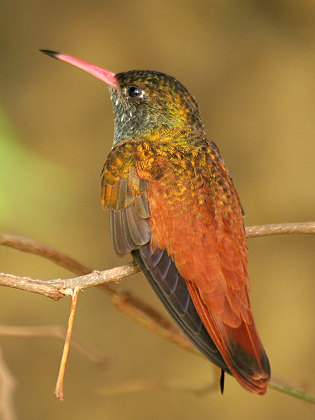
Recognizing the Amazilia Hummingbird in the field involves noting several key features. Adult males display a dazzling metallic green on their upperparts, with a similarly bright green throat and chest that often catch the sunlight. Their underparts are typically whitish, providing a stark contrast to their colorful upper plumage. Females share this coloration but tend to have less brilliant hues, often appearing slightly more subdued. Juveniles resemble females but may appear even duller due to their immature plumage. One might confuse the Amazilia Hummingbird with other similar species, such as the Green-and-white Hummingbird. However, distinguishing features like the Amazilia's specific green shades and slightly larger size help set it apart. In flight, the Amazilia Hummingbird presents a distinctive silhouette with rapid, darting movements typical of many hummingbirds. When perched, the bird often holds its body upright, with its tail slightly fanned, another characteristic posture that aids in identification.
Having trouble telling birds apart? Upload a photo to our bird identification tool for an instant species match.
Amazilia Hummingbird Habitat and Range
Preferred Habitat
The Amazilia Hummingbird thrives in a variety of habitats, predominantly favoring arid and semi-arid zones. It is commonly found in coastal scrublands, dry forests, and even in urban gardens where flowering plants are abundant. Its preferred elevation range extends from sea level up to about 2,500 meters, although it occasionally ventures higher. Seasonal shifts in habitat use occur as the hummingbird moves between breeding and feeding grounds, often gravitating towards areas with a reliable supply of nectar. In urban settings, the Amazilia Hummingbird has adapted well, frequently visiting gardens and parks, thus bridging the gap between wild and human-altered environments.
Geographic Range
The range of the Amazilia Hummingbird spans several countries in South America. It is primarily found in Peru, Ecuador, and northern Chile, with some populations extending into southern Colombia. The bird’s range encompasses both breeding and non-breeding areas, with relatively short-distance movements dictated by food availability rather than long migrations. Within these countries, the Amazilia Hummingbird is most populous in coastal and lowland regions, although it can also be found in highland areas during certain times of the year. These regions host burgeoning populations of the species, forming hotspots of biodiversity where the hummingbird can thrive.
Want to know which birds visit your area? Browse our backyard birds by location guides for region-specific species lists.
What Does the Amazilia Hummingbird Eat?
The diet of the Amazilia Hummingbird is chiefly composed of nectar from a variety of flowering plants, which provides the energy needed for its high metabolism. This hummingbird favors flowers with tubular shapes, as its long bill is well-suited for accessing nectar deep within blossoms. Besides nectar, the Amazilia Hummingbird also consumes small insects and spiders, which supply essential proteins and nutrients. Seasonal changes in diet occur as different flowers bloom throughout the year, prompting shifts in foraging strategies. The bird’s feeding schedule is diurnal, with peak activity observed during morning and late afternoon when floral nectar is most abundant.
Want to attract Amazilia Hummingbirds to your yard? See our recommended feeders and seed types for the best results.
Amazilia Hummingbird Behavior and Social Structure
The Amazilia Hummingbird exhibits intriguing behavioral patterns, particularly in its social and territorial interactions. During the breeding season, males become fiercely territorial, often engaging in aerial displays to deter intruders and establish dominance over feeding areas. These displays involve rapid flights, sudden dives, and elaborate wing beats. Courtship involves the male performing impressive aerial maneuvers to attract females, which include displaying its iridescent feathers in the sunlight. Outside of breeding season, the Amazilia Hummingbird is less territorial and may be seen in loose, non-breeding flocks. Its response to predators is swift and agile, often involving evasive flight techniques and seeking cover within dense vegetation. Daily activity patterns revolve around feeding, with periods of rest during the hottest parts of the day.
Amazilia Hummingbird Nesting and Reproduction
The nesting habits of the Amazilia Hummingbird involve the construction of a delicate cup-shaped nest, typically made from plant materials like moss and spider silk. These nests are often situated on the branches of shrubs or small trees, usually at a moderate height above ground to avoid predators. The typical clutch size consists of two small, white eggs. The female solely incubates the eggs over a period of approximately 14 to 19 days. Once hatched, the chicks receive continuous care and feeding from the mother, fledging after about 20 to 26 days. The species may raise two or more broods per year, depending on environmental conditions and food availability.
Amazilia Hummingbird Sounds and Vocalizations
The primary song of the Amazilia Hummingbird is a series of rapid, high-pitched chips and trills that can be heard during territorial displays and courtship. These vocalizations have a rhythmic quality, often described as a metallic or buzzy sound. In addition to their song, Amazilia Hummingbirds produce call notes that are sharper and used for communication between individuals. Alarm calls are harsher and more abrupt, employed in response to threats. During the dawn chorus, these sounds contribute to the vibrant soundscape of their habitat, echoing the lively ecosystem they inhabit.
Interesting Facts About the Amazilia Hummingbird
- 1The Amazilia Hummingbird can beat its wings up to 80 times per second, a feat that allows for impressive aerial agility.
- 2This species can visit hundreds of flowers in a single day, playing a crucial role as a pollinator in its ecosystem.
- 3Despite their small size, Amazilia Hummingbirds migrate locally, moving to areas with abundant flowers as seasons change.
- 4The iridescent green color of the Amazilia Hummingbird is due to microscopic platelets that reflect light, rather than pigments.
- 5During courtship, males perform elaborate aerial displays that can last several minutes to impress potential mates.
- 6The heart of the Amazilia Hummingbird beats up to 1,260 times per minute, supporting its high-energy lifestyle.
- 7These hummingbirds have been observed to remember the locations of individual flowers and their nectar content.
Amazilia Hummingbird Conservation Status
The IUCN currently lists the Amazilia Hummingbird as a species of Least Concern, with a stable population trend. However, ongoing threats such as habitat loss due to agricultural expansion, urbanization, and climate change pose significant risks. Conservation efforts focus on preserving natural habitats and promoting sustainable land use practices. Historically, this species has maintained stable population levels, although localized declines have occurred in areas heavily impacted by human activities. Continued monitoring and habitat protection are essential for ensuring the long-term survival of the Amazilia Hummingbird.
Attracting Amazilia Hummingbirds to Your Feeder
The Amazilia Hummingbird is a regular visitor to backyard bird feeders across its range. At the Eye On The Fly feeding station, we observe Amazilia Hummingbirds regularly and capture footage with our feeder cameras.
Other Trochilidae Species


Birds Similar to the Amazilia Hummingbird
These species are often confused with the Amazilia Hummingbird due to similar appearance or overlapping range.

