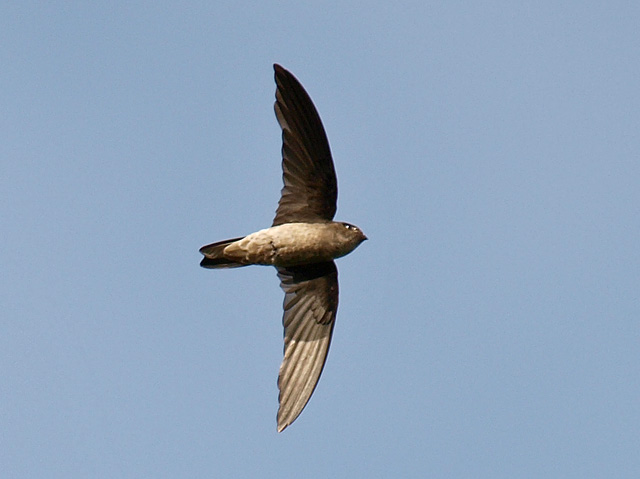
Ameline Swiftlet
Aerodramus amelis
Order: Apodiformes / Family: Apodidae

Wikimedia Commons
About the Ameline Swiftlet
The Ameline Swiftlet, scientifically known as Aerodramus amelis, is a remarkable member of the Apodidae family, notable for its extraordinary flight skills and ecological significance. Found predominantly in the lush, tropical regions of Southeast Asia, this bird plays a critical role in the ecosystem by contributing to insect population control and pollination. The swiftlet's presence in forests from Malaysia to the Philippines highlights its adaptability to various subtropical environments. These birds often inhabit dense forests, where their acrobatic flight patterns enable them to navigate the complex canopy with ease. The Ameline Swiftlet is an integral part of the forest ecosystem, as it aids in controlling insect populations by consuming a significant number of flying insects daily. This not only benefits the swiftlets but also assists in maintaining the balance of the ecosystem. As a seasonal breeder, the Ameline Swiftlet breeds during the wet season, when food resources are abundant. During this time, their nesting behavior becomes apparent, with colonies forming in suitable locations such as caves and tree hollows. By utilizing such sites, the swiftlets ensure the safety of their offspring from predators. The bird's ecological role extends beyond its immediate environment. By participating in the pollination of certain plant species, the Ameline Swiftlet supports the growth and propagation of native flora. This interaction underscores the interconnectedness of the swiftlet within its habitat, as both a predator and a facilitator of plant reproduction. Despite the swiftlet's adaptations, its population faces challenges from habitat destruction and climate change. Conservation efforts are crucial to preserving its natural habitats and ensuring the species' survival. Monitoring and protection of breeding sites can help stabilize populations, allowing the Ameline Swiftlet to continue its vital ecological contributions.
The Ameline Swiftlet belongs to the family Apodidae, within the order Apodiformes. These birds typically live typically up to 8 years in the wild..
How to Identify a Ameline Swiftlet
Identifying the Ameline Swiftlet in the field requires attention to its subtle yet distinctive features. Adults exhibit a predominantly gray-brown plumage with slightly lighter underparts, allowing them to blend seamlessly into the forested backgrounds they typically inhabit. Their slender, sickle-shaped wings and forked tails are characteristic of the swift family, offering agility in flight. Juveniles resemble adults but may display slightly duller plumage, lacking the sheen seen in mature birds. Both males and females appear similar in coloration and size, making sex differentiation in the field challenging. The Ameline Swiftlet can occasionally be confused with other swift species, such as the Edible-nest Swiftlet. However, the Ameline's more uniform coloration and distinct flight pattern, characterized by rapid, fluttering wingbeats interspersed with gliding, can aid in differentiation. In flight, these birds exhibit a streamlined silhouette, with their wings held stiffly at times, a posture that facilitates swift maneuvers through dense vegetation. When perched, which is a rare sight, they cling vertically to surfaces, a typical behavior among swifts.
Having trouble telling birds apart? Upload a photo to our bird identification tool for an instant species match.
Ameline Swiftlet Habitat and Range
Preferred Habitat
The Ameline Swiftlet thrives in a range of habitats, primarily favoring tropical and subtropical forests. These birds are commonly found at elevations ranging from sea level to about 2,000 meters, although they prefer areas that provide ample insect prey and suitable nesting sites. In addition to forests, they may be observed along coastal regions where cliffs provide ideal roosting and nesting locations. The swiftlet's adaptability also allows it to inhabit urban areas, particularly where old structures mimic their natural cave environments. Seasonal habitat shifts occur as these birds follow insect populations, moving to areas of higher food availability during breeding seasons. However, they generally remain within the confines of their preferred forested or habitat-rich environments.
Geographic Range
The Ameline Swiftlet's range spans the tropical regions of Southeast Asia, with significant populations in countries like Malaysia, Indonesia, and the Philippines. Their breeding range primarily overlaps with these areas, where they find optimal conditions for nesting and feeding. While not known for long-distance migrations, the swiftlets do exhibit localized movements, often dictated by food availability and breeding requirements. Populations tend to be denser in areas with abundant nesting sites, such as limestone caves found in Borneo and Sumatra. These regions act as hotspots for the species, supporting large colonies. The swiftlet's range may extend into adjacent regions, but they are predominantly concentrated within these Southeast Asian territories.
Want to know which birds visit your area? Browse our backyard birds by location guides for region-specific species lists.
What Does the Ameline Swiftlet Eat?
The Ameline Swiftlet's diet consists mainly of small flying insects, which they catch during swift aerial pursuits. Their primary prey includes flies, beetles, and moths, which are abundant in their tropical habitats. During the wet season, when insect populations surge, the swiftlet takes advantage of the increased food supply to support its breeding activities. The bird's foraging technique involves rapid, agile flight maneuvers, allowing it to snatch insects mid-air with precision. Swiftlets typically feed throughout the day, with peaks in activity during early morning and late afternoon when insect activity is at its highest. This feeding schedule ensures they maximize their energy intake to sustain their high metabolism and demanding flight patterns.
Ameline Swiftlet Behavior and Social Structure
The Ameline Swiftlet exhibits fascinating social and territorial behaviors. These birds are highly social, often forming large colonies that can number in the thousands, especially during the breeding season. Within these colonies, individuals maintain loose territories, primarily centered around nesting sites. Courtship displays are subtle, typically involving synchronized flight patterns and vocalizations to strengthen pair bonds. The swiftlet's flocking behavior is a key aspect of its social structure, offering protection from predators and facilitating efficient foraging. In response to potential threats, the swiftlets rely on their exceptional agility, quickly dispersing and regrouping to evade capture. Daily activity patterns are heavily influenced by the availability of food, with swiftlets remaining active throughout the daylight hours.
Ameline Swiftlet Nesting and Reproduction
The nesting habits of the Ameline Swiftlet are intriguing and complex. These birds construct their nests in sheltered locations, such as caves or the eaves of buildings, using a combination of saliva and plant materials. The nests are small, cup-shaped structures that adhere to vertical surfaces, providing security from predators. A typical clutch consists of two to three eggs, which the female incubates for about 18 to 23 days. Both parents participate in feeding and caring for the chicks, which fledge approximately 40 to 45 days after hatching. The swiftlets often produce two broods per year, taking advantage of periods when food is plentiful and conditions are optimal for raising young.
Ameline Swiftlet Sounds and Vocalizations
The Ameline Swiftlet produces a series of high-pitched, rapid notes that can be described as a soft chattering. These vocalizations serve various purposes, from communication within colonies to echolocation in dark nesting sites. The call notes are typically short and repetitive, with a slightly metallic quality. Alarm calls are sharper and more insistent, alerting others to potential danger. During the dawn chorus, the swiftlets contribute a constant background of sound, blending with the calls of other early risers. Compared to the melodious songs of passerine birds, the swiftlet's vocalizations are more functional than musical.
Interesting Facts About the Ameline Swiftlet
- 1The Ameline Swiftlet can spend nearly its entire life on the wing, landing primarily for nesting.
- 2Swiftlets use echolocation, similar to bats, to navigate dark caves where they often nest.
- 3A single Ameline Swiftlet can consume several hundred insects per day, aiding in pest control.
- 4During breeding season, Ameline Swiftlets form colonies that can number up to several thousand birds.
- 5The nests of some swiftlet species are used to make bird's nest soup, a delicacy in some cultures.
- 6Swiftlets have a unique adaptation allowing them to cling to vertical surfaces with ease.
- 7The Ameline Swiftlet's flight speed and agility make it one of the most adept aerial hunters among birds.
Ameline Swiftlet Conservation Status
The Ameline Swiftlet is currently classified as Least Concern by the IUCN, but its population trend is decreasing, primarily due to habitat loss and degradation. Deforestation and urban development threaten the swiftlet's natural habitats, particularly the caves and forested areas crucial for nesting. Conservation efforts focus on protecting key habitats and managing sustainable practices in areas where swiftlet populations are significant. Historical population changes have shown declines in some regions, emphasizing the need for ongoing monitoring and habitat conservation to ensure the species' long-term survival.
Other Apodidae Species


Birds Similar to the Ameline Swiftlet
These species are often confused with the Ameline Swiftlet due to similar appearance or overlapping range.