
Black-nest Swiftlet
Aerodramus maximus
Order: Apodiformes / Family: Apodidae
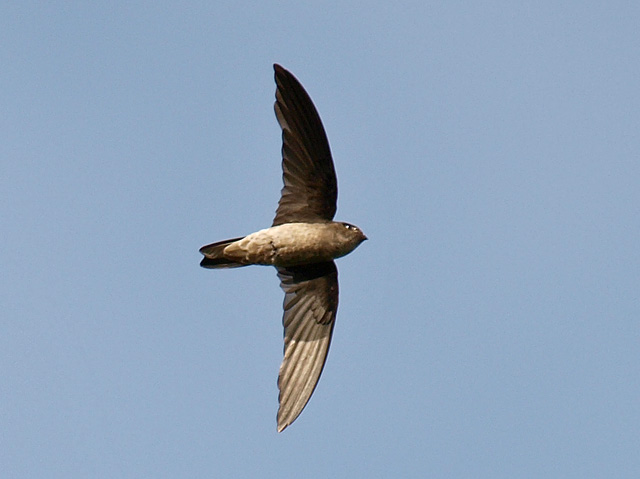
Wikimedia Commons
About the Black-nest Swiftlet
The Black-nest Swiftlet (Aerodramus maximus) is a remarkable bird, notable for its unique nesting behavior and the economic significance of its nests. Found predominantly in Southeast Asia, this swiftlet constructs its nests almost entirely from its own hardened saliva, which are harvested for bird's nest soup, a delicacy in Chinese cuisine. The species thrives in the humid, forested environments of countries like Malaysia, Thailand, Indonesia, and parts of the Philippines. These birds are primarily found in coastal and lowland areas where limestone caves are abundant, which provide the necessary conditions for their nesting sites. The Black-nest Swiftlet plays a crucial ecological role as an insectivore, helping control populations of flying insects. Their presence also indicates healthy ecosystems, as they are sensitive to environmental changes. During breeding season, these swiftlets are highly active, with increased foraging flights to support their young. Outside of breeding, they maintain a consistent presence in their habitats, although local movements may occur in response to food availability. The swiftlet's adaptation to life on the wing is evident in their agile flight patterns and ability to navigate through dark caves using echolocation, a trait shared with bats. This echolocation ability is not only fascinating but also vital for their survival, allowing them to find nesting sites and avoid obstacles in complete darkness. Despite their contribution to biodiversity, Black-nest Swiftlets face pressures from over-harvesting of nests and habitat destruction. Conservation efforts are increasingly important to ensure their populations remain stable and their ecological functions within their habitats are preserved.
The Black-nest Swiftlet belongs to the family Apodidae, within the order Apodiformes. These birds typically live average 5-7 years with a max recorded of 10 years.
How to Identify a Black-nest Swiftlet
The Black-nest Swiftlet is a medium-sized bird, measuring about 12 cm in length, with a wingspan of approximately 27 cm. Its plumage is predominantly dark gray to black, with a slight gloss that can be seen in good lighting. Unlike many other bird species, there is no significant sexual dimorphism, meaning males and females look alike. Juveniles resemble adults but may have slightly duller plumage. This species can be confused with other swiftlets, such as the Edible-nest Swiftlet, but the Black-nest Swiftlet is distinguished by its darker coloration and the structure of its nests. In flight, the Black-nest Swiftlet has a distinctive silhouette, characterized by long, pointed wings and a short, slightly forked tail. They are strong fliers, capable of sustaining long periods of aerial activity without rest. When perched, which is rare, they have a crouched posture with wings held close to the body. Observers should focus on the bird's flight patterns and vocalizations to differentiate it from similar species.
Having trouble telling birds apart? Upload a photo to our bird identification tool for an instant species match.
Black-nest Swiftlet Habitat and Range
Preferred Habitat
Black-nest Swiftlets inhabit limestone caves in tropical and subtropical regions, where they find the ideal conditions for nesting. These caves are typically located in coastal and lowland forested areas. The swiftlets prefer caves with high humidity and a stable temperature, which are crucial for the hardening of their saliva-based nests. They are often found at elevations ranging from sea level up to 1000 meters. In urban areas, the swiftlets may adapt to man-made structures if natural caves are unavailable. Seasonal habitat shifts are minimal for this species, as they are not migratory, but local movements occur based on food availability.
Geographic Range
The Black-nest Swiftlet's range is primarily within the Southeast Asian region, including countries such as Malaysia, Thailand, Indonesia, and the Philippines. They breed year-round in these areas, utilizing the numerous limestone caves for nesting. Unlike many bird species, the Black-nest Swiftlet does not undertake long migratory journeys. Instead, they may move locally between caves and feeding areas based on the abundance of insect prey. Population densities are highest in areas with abundant nesting sites, such as the limestone-rich regions of Borneo and Sumatra. Although non-migratory, the swiftlets may extend their range slightly during periods of food scarcity.
Want to know which birds visit your area? Browse our backyard birds by location guides for region-specific species lists.
What Does the Black-nest Swiftlet Eat?
The diet of the Black-nest Swiftlet consists primarily of small flying insects, which they catch in flight. These include various species of flies, beetles, and ants. The swiftlets exhibit a high degree of aerial agility, allowing them to capture prey with precision. During the breeding season, their dietary intake increases to meet the nutritional demands of their growing chicks. The feeding schedule is largely diurnal, with peak foraging occurring in the early morning and late afternoon. Swiftlets may adjust their foraging patterns in response to weather conditions, with increased activity observed during rainy periods when insect populations are more abundant. Foraging often occurs at heights ranging from 5 to 50 meters above ground, though they can fly higher if necessary.
Black-nest Swiftlet Behavior and Social Structure
Black-nest Swiftlets are social birds, often found in large flocks both during foraging and roosting. They exhibit limited territorial behavior, primarily defending their nest sites within communal nesting caves. Courtship displays are subtle, involving aerial chases and vocalizations. The species is known for its cooperative breeding behavior, where multiple pairs may share a nesting site within a cave. Swiftlets respond to predators such as raptors with rapid, evasive flight maneuvers. They are most active during dawn and dusk, although some activity can continue into the night, especially within the safety of caves. Their use of echolocation is a key behavioral trait, enabling them to navigate and communicate within the dark confines of their nesting habitats.
Black-nest Swiftlet Nesting and Reproduction
The Black-nest Swiftlet constructs unique nests made almost entirely of hardened saliva, strategically placed on the walls and ceilings of limestone caves. These nests are bowl-shaped, providing a secure environment for the eggs and chicks. The preferred nesting locations are high in humidity, which aids in the nest construction process. A typical clutch consists of 1 to 2 eggs, which are incubated by both parents for about 18-23 days. After hatching, the chicks remain in the nest for approximately 40 days before fledging. Parental care involves both males and females, with feeding duties shared equally. The species is capable of producing up to three broods per year if conditions allow.
Black-nest Swiftlet Sounds and Vocalizations
The Black-nest Swiftlet produces a series of high-pitched clicks and chirps, primarily used for echolocation within the dark caves they inhabit. These sounds are rhythmic and vary in pitch and intensity, depending on the bird's activity and location. Outside the caves, swiftlets use softer calls for communication within the flock. Alarm calls are sharper and more urgent, serving to alert other birds of potential threats. While they do not participate in a dawn chorus like many songbirds, their continuous vocalizations contribute to the ambient soundscape of their habitats.
Interesting Facts About the Black-nest Swiftlet
- 1The Black-nest Swiftlet uses echolocation, similar to bats, allowing it to navigate in complete darkness.
- 2Its nests are highly valued in the culinary world, with some fetching prices of up to $3,000 per kilogram.
- 3The saliva-based nests harden due to the high humidity conditions found in limestone caves.
- 4Despite their small size, Black-nest Swiftlets can sustain flight for long periods, covering vast areas in search of food.
- 5These swiftlets have been observed sharing nesting sites, sometimes with hundreds of nests in a single cave.
- 6Echolocation clicks emitted by swiftlets have a frequency range of 1.5 to 7 kHz.
- 7The swiftlet's reliance on caves for nesting makes them vulnerable to changes in cave environments and human disturbance.
Black-nest Swiftlet Conservation Status
Currently, the Black-nest Swiftlet is classified as Near Threatened by the IUCN due to habitat loss and over-harvesting of nests for commercial purposes. Population trends show a slight decline, with primary threats including deforestation and unsustainable nest collection. Conservation efforts focus on sustainable harvesting practices and habitat protection, with some areas implementing restrictions on nest collection to allow populations to recover. Historically, the swiftlet populations were more stable, but increasing demand for bird's nest products has led to greater pressures on these birds.
Other Apodidae Species


Birds Similar to the Black-nest Swiftlet
These species are often confused with the Black-nest Swiftlet due to similar appearance or overlapping range.

